Forgotten Dairies
From NADECO Hero to Propaganda Machine: Shaming Bayo Onanuga’s Trail of Falsehoods -By Jeff Okoroafor
An opinion analysis of Bayo Onanuga’s evolution from NADECO activist to presidential spokesman, examining controversial statements, political messaging and questions of credibility.

Some people spend a lifetime building a reputation. Others, like Bayo Onanuga, spend their twilight years methodically dismantling one. The man who once carried a NADECO placard against military tyranny now carries water for a government whose relationship with the truth is, at best, transactional. His latest performance—falsely accusing social media critic Martins Otse (VeryDarkMan) of disseminating a fake audio of President Bola Tinubu—is not an aberration. It is a ritual. Onanuga has become the presidency’s chief dispenser of falsehoods, a one-man disinformation factory whose output is as prolific as it is unaccountable. And in three years, he has never apologised for a single lie.
Let us be clear about what happened last week. On 27 May, Bayo Onanuga took to X—his preferred pulpit for prosecuting reputations—and declared that VDM “needs to face the weight of the law for being the conveyor and disseminator of a fake audio of President Tinubu.” The post was definitive, prosecutorial, and utterly false. VDM’s lawyers demonstrated that the influencer had neither created nor shared the audio. A simple verification would have confirmed this. Bayo Onanuga did not verify. He accused. And when the truth caught up with him, he did what he has always done: he retreated into a curated silence, deleting nothing, retracting nothing, apologising for nothing.
This is not the conduct of a public servant. It is the conduct of a political operative who has internalised the most toxic assumption of the Tinubu presidency: that facts are malleable, that accountability is optional, and that the only currency that matters is loyalty to the principal, not fidelity to the public.
The Case File: A Chronology of Unrepentant Falsehood
To understand how thoroughly Onanuga has corrupted the office of Special Adviser on Information and Strategy, one need only review the record. It is a catalogue of inventions so brazen, so frequently debunked, that it would be comical if it were not attached to the highest office in the land.
August 2023: The Phantom Protest Photo. During the run-up to the off-cycle governorship elections, Bayo Onanuga posted a photograph of a crowd holding placards, one of which read “Jagaban Must Go.” He claimed it was evidence that supporters of Peter Obi were planning to disrupt the elections. Fact-checkers at Dubawa quickly identified the image as a file photograph from a protest in 2012—a decade earlier—unrelated to either Obi or the 2023 elections. Confronted with the debunking, Bayo Onanuga neither deleted the post nor corrected the record. The false claim remained online, continuing to circulate among his followers long after its fraudulence was established.
September 2023: The Fictional Foreign Reserve Boom. In an attempt to burnish the administration’s economic credentials, Onanuga tweeted that Nigeria’s foreign reserves had surged to a record high under President Tinubu, implying that the administration’s policies were bearing immediate fruit. Data from the Central Bank of Nigeria told a different story: reserves had not reached a record high; the claim was statistical fantasy. Africa Check published a detailed rebuttal. Bayo Onanuga’s response? Silence. No correction. No apology. The post remains online to this day, a monument to official dishonesty.
October 2023: The Anambra School That Wasn’t. In a swipe at Peter Obi’s tenure as governor of Anambra State, Bayo Onanuga shared a photograph of a dilapidated school building, captioning it as evidence of the former governor’s legacy of neglect. Within hours, digital sleuths and journalists identified the structure not as an Anambra school, but as a primary school in Niger State—a state that had never been governed by Peter Obi. The misattribution was not a minor error of detail; it was a deliberate attempt to weaponise a lie for political advantage. Yet again, no apology was forthcoming. The post was allowed to rot online, its stench wafting through the public discourse unchallenged.
November 2023: The Banditry That Was “Cleared.” Bayo Onanuga announced that the Tinubu administration had successfully cleared all bandits from Zamfara State, painting a picture of decisive military triumph. In the weeks that followed, bandits attacked no fewer than a dozen communities in Zamfara, killing scores and abducting dozens more. The brazenness of the falsehood—a claim of total victory while massacres continued—was staggering. The presidency did not walk back the statement. Bayo Onanuga did not explain himself. The victims of Zamfara were simply sacrificed on the altar of propaganda.
March 2023: The Ethnic Arson. Just weeks before the presidential election, Onanuga posted a warning: “Let 2023 be the last time the Igbos will interfere in Lagos politics.” The statement was not merely a falsehood; it was an incitement, a naked appeal to ethnic chauvinism designed to stoke division in Nigeria’s most cosmopolitan city. It was also, as lawyer Marshal Abubakar has noted, potentially in breach of the Cybercrimes Act’s provisions against xenophobic expressions. No sanction followed. No reprimand was issued. Instead, Onanuga was rewarded with one of the most sensitive communications roles in the new administration.
June 2024: The Ghost of Lekki. During a television appearance, Bayo Onanuga repeated the long-discredited claim that no protesters were killed at the Lekki Toll Gate during the October 2020 #EndSARS demonstrations. The Judicial Panel of Inquiry established by the Lagos State government had documented multiple casualties, and Amnesty International had compiled extensive evidence of fatalities. Bayo Onanuga dismissed it all. His assertion was contradicted by sworn testimony, forensic reports, and the findings of his own government’s panel. Yet he has never retracted the claim, never apologised to the families of the victims, and continues to be treated as a credible spokesman by the presidency.
This is a partial list. The full catalogue would stretch this page beyond breaking point. But the pattern is unmistakable: Bayo Onanuga makes a false claim, fact-checkers debunk it, and he responds with contemptuous silence, moving on to the next fabrication without consequence. It is the behavioural profile not of an adviser but of a propagandist, and a clumsy one at that.
The Man Who Forgot His Own Story
What makes Bayo Onanuga’s descent into shameless mendacity particularly nauseating is the biography he has chosen to betray. As a young journalist, he was a prominent voice in the National Democratic Coalition (NADECO), the pro-democracy movement that confronted the murderous regime of Sani Abacha. He risked detention. He faced exile. He stood, or claimed to stand, for the principle that citizens had a right to speak truth to power, that governments should be held to account, that the free flow of information was a bulwark against tyranny.
Marshal Abubakar captured the tragedy with precision: “The man who once indicted power now propagates its abuse in its cruelest form.” This is not a political evolution; it is a moral collapse. The young activist who once demanded that military dictators tell Nigerians the truth has become the aging courtier who manufactures falsehoods to shield an elected autocrat from scrutiny. History will not be kind to this transaction.
The Culture Tinubu Has Built
Bayo Onanuga does not operate in a vacuum. He is a product of the political culture that President Tinubu has cultivated over decades: a culture in which loyalty trumps competence, in which sycophancy is rewarded while integrity is sidelined, and in which the truth is regarded as a nuisance to be managed rather than a foundation to be respected.
Consider the company Bayo Onanuga keeps in the upper echelons of this administration. Former Aviation Minister Femi Fani-Kayode, who has a well-documented history of making inflammatory and unsubstantiated claims—including the assertion that opposition politicians were plotting a coup, a claim that security agencies themselves declined to corroborate—remains a trusted voice in the presidential circle. Festus Keyamo, Minister of Aviation and Aerospace Development, has spent years on television defending positions that collapse under the mildest cross-examination, yet his star has only risen. The common denominator is not a commitment to public service; it is a willingness to say anything, no matter how demonstrably false, in defence of the principal.
This is not an administration that simply tolerates dishonesty; it is an administration that runs on it. When Bayo Onanuga posts a fabrication, he is not freelancing. He is executing a brief that has been implicitly approved by a president who has never once—not once in three years—publicly corrected, rebuked, or sanctioned a subordinate for lying to Nigerians. Tinubu’s silence is not neutrality; it is endorsement. Every day that Onanuga retains his office without being compelled to account for his serial falsehoods, the presidency sends a message: we do not care about the truth, and we dare you to do anything about it.
The Cost of Official Dishonesty
This is not an abstract debate about political ethics. Official falsehoods have consequences. When a presidential aide falsely claims that banditry has been eradicated, communities lower their guard, and people die. When a government spokesman falsely accuses a critic of disseminating fake audio, the chilling effect on free expression is immediate and measurable. When ethnic arson is broadcast from a verified government account, the seeds of communal violence are planted in soil that is already fertile with grievance. Bayo Onanuga is not merely an embarrassment to his office; he is a danger to the republic.
The 1999 English case of Redmond-Bate v DPP, cited by lawyer Marshal Abubakar, affirmed that freedom of expression protects speech that is provocative or offensive, provided it does not incite violence. Nigerian courts, in IGP v ANPP and Arthur Nwankwo v The State, have similarly upheld the right to peaceful dissent. But these protections are rendered hollow when a government official can falsely accuse a citizen of a crime without consequence. Bayo Onanuga’s attack on VDM was not merely a factual error; it was a thinly veiled threat, a signal that critics of the administration will be branded as criminals. That is the tactic of a police state, not a democracy.
What Must Happen
President Tinubu should fire Bayo Onanuga. Not transfer him. Not reprimand him quietly. Fire him. Publicly. With a statement that explicitly acknowledges the pattern of deception and affirms that the presidency will no longer tolerate the weaponisation of falsehood against Nigerian citizens.
We will not hold our breath. The president who has tolerated this behaviour for three years is unlikely to suddenly discover a conscience. But the demand must be made, and it must be repeated until it becomes impossible to ignore. The Nigerian Bar Association, civil society organisations, and the media must document every false claim that emerges from Bayo Onanuga’s office and hold both the adviser and his principal accountable.
For Nigerians watching this spectacle, the lesson is clear. A government that lies to you about small things will lie to you about large things. An administration that permits its senior officials to peddle falsehoods without consequence has made peace with dishonesty as a governing philosophy. The Bayo Onanuga pattern—accuse, fabricate, delete nothing, apologise for nothing, and retreat into the impunity of the presidential villa—is a microcosm of the Tinubu presidency itself.
When the truth becomes a casualty of power, the republic itself is on life support. Bayo Onanuga is holding the pillow. President Tinubu is refusing to call the nurse. Nigerians must do what the president will not: demand that the lies stop, that the liar be removed, and that the office of the presidency be reclaimed from the propagandists who have made it a factory of deceit.
The man who once marched against tyranny now wears its livery. There is a word for that. History knows it well.

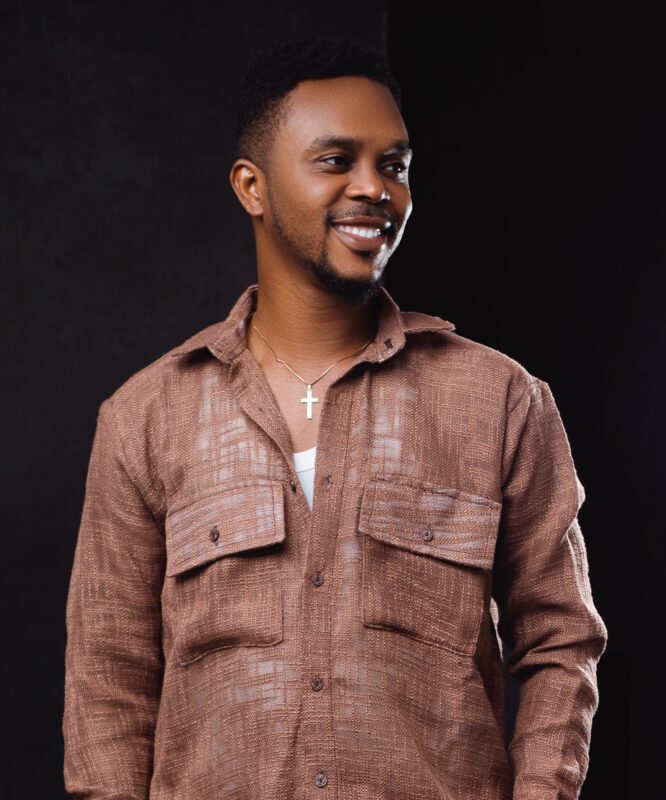
Jeff Okoroafor
Jeff Okoroafor is a social accountability advocate and a political commentator focused on governance, accountability, and social justice in West Africa.