National Issues
The Indistinguishable Irony: When Social Media Mistakes a Speech Stumble for a Measure of Intelligence -By Psychologist John Egbeazien Oshodi, PhD
The real question is whether we, as citizens, can distinguish between a mispronunciation and ignorance, between speech and intelligence, between human imperfection and human worth.

Recently, a video clip of Imo State Governor Hope Uzodinma spread rapidly across social media platforms in Nigeria. During a public speech, the governor appeared to struggle momentarily with the pronunciation of the word indistinguishable. Within hours, the clip had gone viral.
The reaction was swift.
Social media users created memes.
Videos were edited and reposted.
Comment sections filled with laughter.
Political opponents joined the chorus.
Countless Nigerians shared the clip as evidence of what they believed was a lack of intelligence, education, competence, or intellectual ability.
For many, the verdict was immediate.
The governor stumbled over a word.
Therefore, he must not be intelligent.
The governor mispronounced a word.
Therefore, he must not be educated.
The governor struggled briefly during a speech.
Therefore, he must not be competent.
But before we join the crowd, perhaps we should pause and ask a more important question:
What exactly happened?
Did Nigerians witness evidence of intellectual deficiency?
Did they witness evidence of incompetence?
Did they witness evidence of poor leadership?
Or did they simply witness something that happens every day to millions of human beings, including professors, lawyers, physicians, judges, broadcasters, journalists, university vice-chancellors, and even professors of English language and literature?
The answer matters.
Because what happened during that speech reveals something much larger than a governor struggling with a word.
It reveals a widespread misunderstanding of language itself.
It reveals a misunderstanding of intelligence.
And perhaps most importantly, it reveals the growing tendency of social media to reward ridicule over reflection.
Before discussing the governor, let us first discuss language.
Many people assume that speaking is simple.
It is not.
In fact, language production is one of the most complex activities the human brain performs.
Before a single word leaves the mouth, the brain must retrieve vocabulary from memory, organize thoughts, construct sentences, select sounds, coordinate breathing, activate dozens of muscles, monitor grammar, regulate emotions, and maintain attention—all within fractions of a second.
What appears effortless is actually extraordinarily complicated.
Linguists have spent decades studying the various components of language.
One of those components is phonology.
Phonology refers to the sound system of language. It involves pronunciation, sound patterns, syllables, stress placement, and the production of speech sounds.
When someone struggles to pronounce a word, the issue often involves phonological processing.
It does not automatically involve intelligence.
Another component is syntax.
Syntax refers to sentence structure.
It governs how words are arranged to create meaning.
A person may mispronounce a word while demonstrating sophisticated syntactic ability.
In other words, a person can speak imperfectly yet think brilliantly.
Another component is semantics.
Semantics concerns meaning.
Did the speaker understand the concept being communicated?
Did the speaker use the word appropriately within the context of the sentence?
Those questions relate to meaning, not pronunciation.
Another component is morphology.
Morphology examines how words are formed.
The word indistinguishable is itself a linguistically complex word containing multiple structural elements and sound transitions that can challenge speakers, especially during live presentations.
Then there is pragmatics.
Pragmatics concerns the practical use of language in real-life situations.
It includes persuasion, communication effectiveness, audience engagement, social awareness, and contextual understanding.
Interestingly, many successful leaders are judged primarily through pragmatics—their ability to communicate ideas, motivate people, and navigate complex social situations—not through their ability to pronounce every word flawlessly.
Yet social media frequently ignores all of these dimensions.
Instead, it reduces intelligence to pronunciation.
That is neither linguistically accurate nor scientifically defensible.
The truth is simple.
Mispronunciation does not define intelligence.
It never has.
A professor with a PhD in English can mispronounce a word.
A professor of literature who has spent decades teaching Shakespeare, Milton, Achebe, and Soyinka can mispronounce a word.
A linguistics professor can mispronounce a word.
A physician can mispronounce a word.
A judge can mispronounce a word.
A university president can mispronounce a word.
A Nobel Prize winner can mispronounce a word.
Human beings are not dictionaries.
Human beings are not computers.
Human beings are not reading devices.
Human beings speak under pressure.
Human beings become nervous.
Human beings become distracted.
Human beings experience cognitive overload.
Human beings occasionally stumble.
The governor’s momentary difficulty therefore tells us very little about his intelligence.
What is more revealing is the reaction.
The irony is that many individuals who mocked the governor’s pronunciation have themselves sent messages containing spelling errors, grammatical mistakes, punctuation mistakes, sentence fragments, and communication problems.
Some who laughed at a speech error would struggle to explain the difference between phonology and syntax.
Some who ridiculed pronunciation could not define semantics, morphology, pragmatics, psycholinguistics, or discourse analysis.
Some who mocked a linguistic event likely do not understand the linguistic event they are mocking.
That is the true irony.
The situation becomes even more interesting when viewed through Nigeria’s multilingual reality.
Millions of Nigerians function daily across multiple languages.
An individual may speak an indigenous language at home, another language in the marketplace, and English in professional settings.
The brain continuously shifts among these systems.
Researchers have long demonstrated that multilingual speakers may occasionally experience pronunciation variations, word retrieval difficulties, accent influences, speech interruptions, and verbal hesitations.
These are normal features of language processing.
They are not indicators of low intelligence.
Yet social media often transforms ordinary human experiences into public spectacles.
Why?
Because mockery is profitable.
Humiliation generates clicks.
Embarrassment creates engagement.
Ridicule travels faster than education.
A thoughtful discussion about language science receives little attention.
A ten-second clip of someone struggling with a word spreads across the nation.
The result is a culture increasingly attracted to spectacle rather than substance.
While millions focused on a pronunciation error, far fewer discussed governance, public policy, economic development, healthcare, education, infrastructure, security, or leadership performance.
Whether one supports Governor Uzodinma politically is irrelevant.
Citizens should absolutely evaluate leaders.
Citizens should absolutely criticize leaders.
Citizens should absolutely demand accountability.
But serious accountability examines decisions, policies, ethics, performance, transparency, and outcomes.
It does not confuse a speech stumble with a leadership failure.
To those who shared the clip, laughed at it, reposted it, and transformed it into entertainment, this article is not written to condemn you.
It is written to challenge you.
It is written to educate you.
And perhaps it is written to invite something deeper—reflection.
Every human being has experienced embarrassment.
Every human being has searched for a word and failed to find it.
Every human being has spoken incorrectly at some point.
Every human being has experienced moments when anxiety, pressure, fatigue, excitement, or stress interfered with performance.
The only difference is that most of us do not experience those moments before cameras and millions of viewers.
Imagine if every mistake you made were recorded.
Imagine if every verbal slip became a national joke.
Imagine if strangers judged your intelligence based on ten seconds of your life.
Would you survive that judgment?
Would any of us?
Perhaps before sharing the next viral clip, we should ask ourselves:
Am I contributing to understanding or merely amplifying humiliation?
Am I evaluating ideas or celebrating embarrassment?
Am I strengthening public discourse or weakening it?
Because every repost teaches society what to value.
Every share sends a message.
Every laugh shapes culture.
If we reward mockery, we will become a culture of mockery.
If we reward understanding, we will become a culture of understanding.
The real question is not whether Governor Uzodinma could pronounce indistinguishable perfectly on that day.
The real question is whether we, as citizens, can distinguish between a mispronunciation and ignorance, between speech and intelligence, between human imperfection and human worth.
For many on social media, that may be the more difficult lesson to learn.
And that, perhaps, is the greatest indistinguishable irony of all.

About the Author
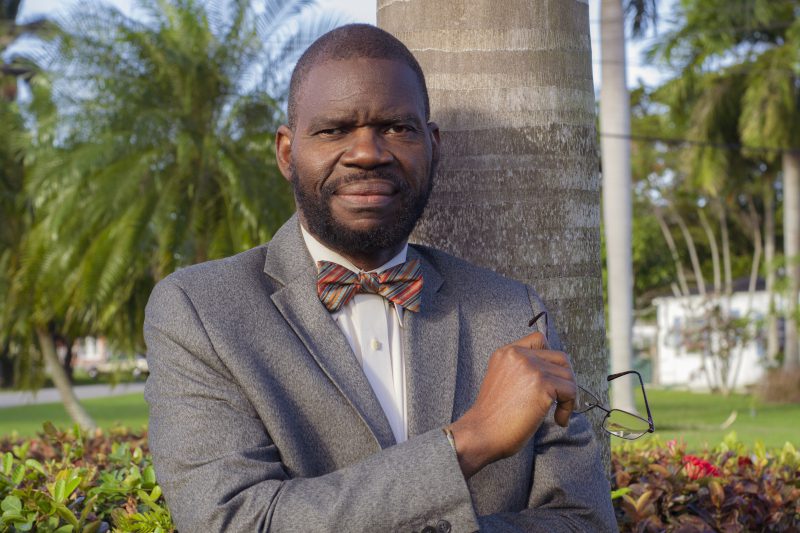
Prof. John Egbeazien Oshodi is an American psychologist and educator with expertise in forensic, legal, clinical, and cross cultural psychology, as well as policing, corrections, and public ethical policy. A native of Uromi, Edo State, Nigeria, he works at the intersection of psychology, justice, and governance. He teaches at Nova Southeastern University and Walden University and serves as a visiting virtual professor at Nasarawa State University. He is the founder of Psychoafricalysis, a culturally grounded psychological framework. Prof. Oshodi has authored more than 700 articles and several books on Africentric psychology, governance, and social development.