Forgotten Dairies
Paradise or Public Health Mirage? The Maldives and the Unfulfilled Promise of the Right to Health -By Fransiscus Nanga Roka
The country’s economic growth, as driven by tourism, has certainly also brought benefits. However, revenue generating development is not in and of itself enough to bring social equity. The real test of a society’s advance is whether wealth serves to raise living standards for all its members-not just those who come from outside or live primarily in cities.


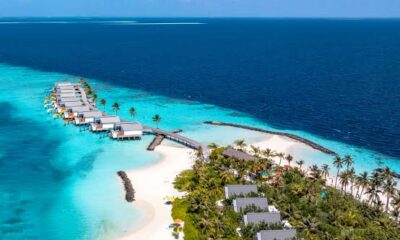
It is a Maldives to from the air, like dream into pieces scattered on; Indian ocean blue lagoons, coral atolls and high end hotels are built to resemble pure water dropped out of crystal clear waterfall. Working well in practice if not in theory, this island nation has for decades managed to sell itself as the one stop paradise. Every year, millions of tourists travel here following footage of secluded beaches and options for world class hospitality. The Maldives, which over two decades has made great progress in its development. By transforming the entire national economy tourism raised living standards and invested in infrastructure. By many economic measures, this small island state held up as a beacon among its neighbours. But as the adage goes, a high GDP can prove misleading. Knowing that wealth is shared would require another set of indicators: poverty rates, access to education and health coverage, etc. Geographically speaking, the Maldives is both its biggest beauty and obstacle. This is almost 1200 islands strung out over more than 800 km of ocean. There are just around 200 inhabited islands and those residents who live outside the capital region must often travel by boat or air for costly and lengthy journeys to reach comprehensive medical treatment. In an emergency these distances may prove fatal. Health provision in the Maldives is heavily concentrated in Malé, one of the world’s most densely populated cities. Although there are regional hospitals and health centres on islands, many specific treatments from complex diagnostics to complicated surgery exist only room the capital or abroad. For patients who live on remote islands it could be a journey hundreds of kilometers long in order to get treatment. Matters are further complicated by the fact that those patients who come from less wealthy families may find themselves unable to devote time for Medical problems due purposes on both ends in this respect.
Important human rights issues arise from this travesty in geographical distribution : International law commits governments to the realization of the right to the best feasible health, as concluded by including it exacdy in international treaties like United Declaration on Human Rights of 1948 and Economic, Social Cultural Rights(1966). The right to health does not mean simply the existence of hospitals; it requires accessibility, availability and acceptability of health services as well as with quality standards high enough for all.
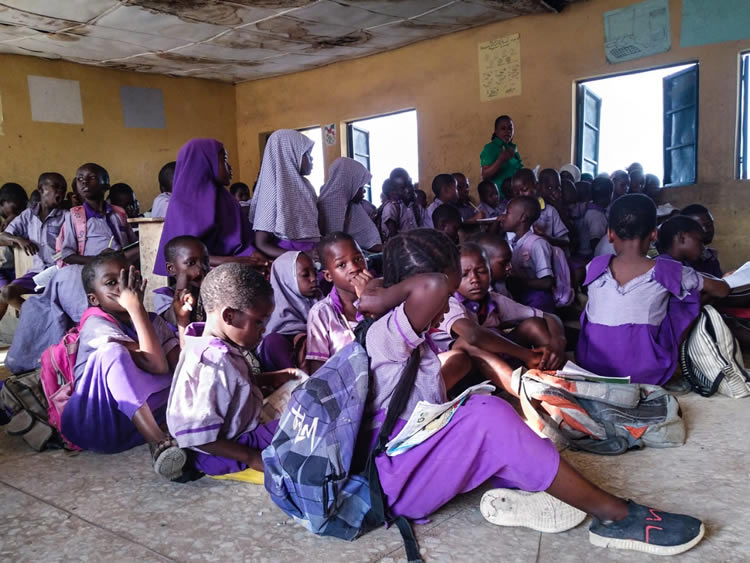
In an archipelago, creating a health care system available to all is an effort that few other countries need put forth. But social inequities still divide it. Doctors in some cases are lacking for small islands; there is limited diagnostic equipment and no consistent ability to respond quickly in emergencies. These gaps are not purely practical their existence represents a failure to realize of fundamental rights.
Another aspect of the Maldives’ health picture is the involvement of public services in tourism business. The luxury hotels are equipped with advance medical facilities to deal with troubles that arise when tourists fall ill. Nevertheless these services are not intended for any wider market. The difference between medical readiness at the high end in tourist enclaves and more sparse services which must suffice for outlying settlements thus points out a sharp contradiction.
The country’s economic growth, as driven by tourism, has certainly also brought benefits. However, revenue generating development is not in and of itself enough to bring social equity. The real test of a society’s advance is whether wealth serves to raise living standards for all its members-not just those who come from outside or live primarily in cities.
The Maldives also faces a number of new health problems, brought on by changes in the environment. It is one of the countries in the entire world which lies closest to sea level; it is thus on the front lines when today’s global climate crisis comes knocking at our doors. Rising sea levels, more shoreline erosion and ever greater stress on natural surroundings all promise to threaten water supplies and bases for public health too. Climate change is not just an environmental issue for the Maldives. Rather it brings a new public health and national economic challenge with it that must be won.
This does not detract from what the Maldives have achieved in dramatically promoting living standards and expanding public services. The government has initiated national health insurance programs and established facilities for regional health care. This is evidence of its dedication to promoting a health system But the enormity of the geographical and structural challenges means that progress remains uneven.There is a strong lesson in the Maldives for the international community about development in small islands. Economic success and world acclaim for style can live side by side with continued inequality. A country that is called a paradise can still be plagued by real difficulties guaranteeing equal access to basic services.The question now facing policy makers goes beyond whether the Maldives is beautiful or wealthy that is already a foregone conclusion. The question is had its development model enabled full satisfaction of the right to health for every inhabitant, regardless of which island he or she calls home? Yet for the Maldives to be truly a paradise for residents and not just a destination visited by tourists. It also should be a place where people are able to live on an equal footing with others, unhindered by fundamental needs for their survival. Until that promise is realized, Maldives will continue to feel a big dilemma: is it really paradise or just a phony paradise of public health for many residents?