
Olympics
How and Why does China Host a “Domestic Olympics”? -By Yang Guang
Some other nations typically lack both the centralized mobilization capability and the dedicated, state-funded sports infrastructure necessary to finance an event of comparable scale. Their sports investments tend to be more focused on certain sports and often depend on mixtures of public and private initiatives rather than coordinated national strategies.

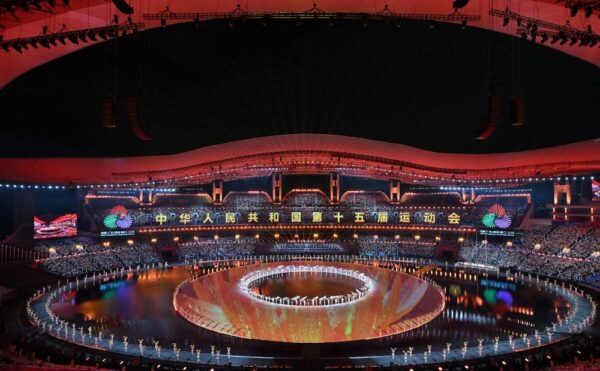
Every four years, a spectacular sporting event unfolds across China that equals the Olympic Games in both scale and intensity. What the world is witnessing now is the 15th National Games, hosted throughout the Guangdong-Hong Kong-Macao Greater Bay Area for the first time.
The games boast a competitive program featuring 34 sports disciplines with 419 individual events. With participation from more than 14,000 athletes and infrastructure development typically associated with the international games, the National Games essentially functions as an Olympics within a single nation.
When looking beyond China’s borders, few countries organize such extensive multi-sport events domestically. The close equivalents might be the Commonwealth Games or the European Games, though these are regional rather than national competitions. This contrast raises a compelling question: Why does China host a “Domestic Olympics,” while this model remains virtually unseen in some other major countries?
The Ultimate Olympic Proving Ground
The National Games operate within China’s unique sports management framework, organized primarily by provincial-level sports bureaus. Through a systematic process of local selections and centralized competitions, these games effectively serve as an Olympic “talent pool.” The current edition’s competitive events, for instance, are strategically aligned with those scheduled for the upcoming Los Angeles Olympics.
At nearly every Olympic Games, we witness Chinese athletes coming from nowhere to achieve stunning performances across various sports. Many of these established champions first made their mark at the National Games.
The ongoing competition has already revealed promising new talents such as 18-year-old swimmer Zhang Zhanmo, who recently beat an Olympic champion at the Games, or 2.26-meter tall women’s basketball prodigy Zhang Ziyu. These emerging athletes represent the future backbone of China’s Olympic endeavors.
With participating provinces, autonomous regions and municipalities all fielding their strongest teams, this comprehensive system ensures a continuous pipeline of elite talent, making the Games genuinely national in scope and intensely competitive in nature. In highly contested disciplines like table tennis, athletes have remarked that “winning a National Games title proves more difficult than winning an Olympic gold medal.” This domestic pressure cooker serves as a crucial factor behind China’s consistent success on the international sporting stage.
Promotion of Mass Sports Participation
Simultaneously, the National Games successfully integrate elite competitive sports with mass participation. The current games include a public sports segment comprising 23 major categories with 166 events, drawing approximately 11,000 amateur athletes into formal competition. These mass participation events encompass 19 competitive categories featuring public favorites like table tennis, badminton and football, alongside demonstration categories such as dragon and lion dance and tai chi.
This approach enables citizens to create their own National Games experiences. Data indicates that hundreds of thousands of people participated in preliminary rounds of mass events and related activities.
The games also showcase traditional sports that provide a window into China’s diverse cultural heritage, including dragon boat racing, Go, and Wushu. This serves as an important reminder that China’s sporting culture is both ancient and multifaceted. The National Games thus function not only as a competitive platform but also as a means of preserving and celebrating physical cultural traditions that rarely receive international exposure.
A Regional Development Catalyst
China’s National Games represent far more than an enlarged version of a domestic sports championship. The event significantly boosts host cities’ development, enhances regional connectivity, and accelerates urban transformation.
The current Guangdong-Hong Kong-Macao National Games breaks new ground as the first edition to be jointly hosted by three regions, moving from the past practice of having a single province or municipality serve as host.
Operating under the “One Country, Two Systems” framework, where Hong Kong and Macao maintain separate legal systems and customs territories, coordinating operations across 19 cities and three distinct customs zones represents an exceptionally complex integration of resources spanning different administrative jurisdictions and social systems.
The games have pioneered innovative operational models featuring seamless customs clearance, effectively addressing challenges related to cross-border movement of personnel and equipment across different administrative systems.
In a first for the National Games, the event features a men’s road cycling race linking all three regions via the Hong Kong-Zhuhai-Macao Bridge, as well as a marathon running across Shenzhen and Hong Kong. These cross-border competitions are designed to foster interconnectivity, drive coordinated development.
The Contrast: Why don’t Other Nations Do This?
The few amounts of comparable events in other large nations highlight the uniqueness of China’s approach. Hosting a National Games constitutes a challenge that demands immense capacity for mobilizing national resources. Such an endeavor would be nearly unimaginable without robust administrative mobilization capabilities forming its foundation. The Chinese model enables the state to mobilize resources and coordinate efforts across provincial and municipal governments with an efficiency level that many other nations would find challenging to match.
Meanwhile, in nations like the United States, Germany, or Australia, sports governance remains fragmented, with primary focus placed on collegiate systems or professional leagues. Throughout Western countries, the sports engine is predominantly driven by commercialized professional leagues like the NFL, NBA, and English Premier League.
Some other nations typically lack both the centralized mobilization capability and the dedicated, state-funded sports infrastructure necessary to finance an event of comparable scale. Their sports investments tend to be more focused on certain sports and often depend on mixtures of public and private initiatives rather than coordinated national strategies.






















You must be logged in to post a comment Login