
National Issues
Subsidy Regime: Atiku’s Promises Vs Tinubu’s Real Reforms -By Sani Danaudi Mohammed
At the same time, former Vice-President Atiku Abubakar’s proposal to restore subsidy deserves serious scrutiny. Rather than simply promising Nigerians cheaper petrol, he should explain the fiscal cost of returning to a system that previously consumed trillions of naira. He should also allow Nigerians to examine his own record during the years he served in government, particularly what his period of influence delivered to ordinary citizens of the North-East. The 2027 election should not be a contest between promises and emotions; it should be a comparison of records, policies, costs and measurable results.

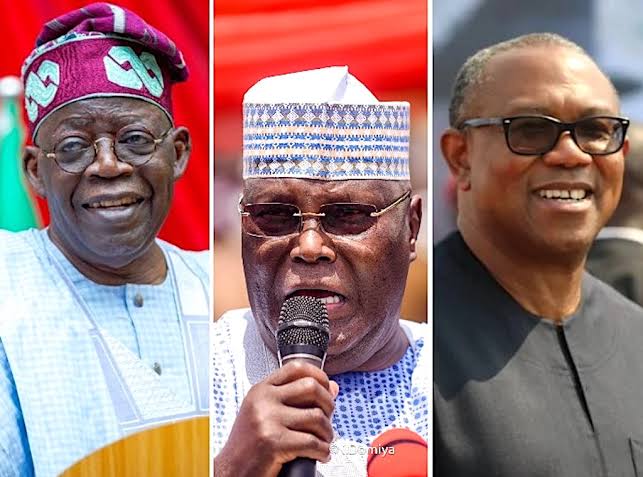
The debate over Nigeria’s subsidy regime is no longer simply about the price of petrol; it is about the difference between political promises and difficult economic decisions. While former Vice-President Atiku Abubakar is proposing a return to fuel subsidy as part of his 2027 agenda, President Asiwaju Ahmed Tinubu GCFR chose to remove the subsidy despite understanding the political resistance and economic hardship that would follow.
This article examines both positions through facts, figures and records particularly the trillions of naira involved, the increased allocations to State and Local Governments, the broader fiscal impact of the reform, and Atiku’s record in government—so that Nigerians can judge not only what politicians promise, but what they are prepared to do when difficult decisions must be taken.
The debate over the removal of Nigeria’s petrol subsidy should be approached through evidence rather than sentiment, because the policy was never simply about the price Nigerians paid at filling stations; it was fundamentally about how scarce public resources were being allocated. Nigeria spent more than ₦8.6 trillion on petrol subsidies between 2019 and 2022, according to the World Bank, an average of more than ₦2 trillion annually, while the system was also associated with smuggling, arbitrage and disproportionate benefits to higher fuel consumers.
The World Bank subsequently estimated that removing the subsidy could generate more than ₦11 trillion in fiscal savings between 2023 and 2025 compared with continuing the old regime. The significance of these figures becomes clearer when viewed through Nigeria’s federal structure: money saved at the national level affects the pool available for distribution through the Federation Account. FAAC distributions rose from approximately ₦10.14 trillion in 2023 to ₦15.12 trillion in 2024, while distributions subsequently moved toward the ₦20 trillion level.
The increase was not exclusively available to the Federal Government; states and local governments also received larger allocations. For example, official NBS data for November 2023 recorded approximately ₦379.41 billion for state governments and ₦278.04 billion for local governments, alongside ₦407.27 billion for the Federal Government. This is why the subsidy debate must include the fiscal consequences for the second and third tiers of government. State governments that receive substantially higher FAAC allocations have greater resources to pay salaries, construct roads, finance schools and hospitals, support agriculture and undertake grassroots development.
The important question is therefore no longer simply whether petrol was cheaper under subsidy; Nigerians should also ask how much was being spent to maintain that cheaper price, how much additional revenue has become available to the federation since the reform, how much has reached states and local governments, and what those governments have done with the additional resources. Subsidy removal created fiscal space, but fiscal space only becomes development when governments at every level use it responsibly and transparently.
The strongest argument for maintaining the reform is not that subsidy removal has been painless it has not. Petrol prices increased dramatically after the May 2023 announcement, transportation costs rose and inflation placed serious pressure on household incomes. Those consequences must be acknowledged rather than dismissed. The economic argument, however, is that short-term adjustment costs should be weighed against the long-term fiscal cost of maintaining a system that consumes enormous public resources without effectively targeting the poorest Nigerians.
International experience provides useful evidence. Indonesia, after major fuel-subsidy reforms, reduced energy-subsidy expenditure from around 4 percent of GDP to approximately 1.5 percent of GDP in 2015, with a significant portion of the savings redirected toward infrastructure, rural development and social programmes. India also reduced its petroleum subsidy burden substantially, with the World Bank reporting a decline from about 1.4 percent of GDP in 2012–13 to around 0.2 percent in 2015–16 following fuel-pricing reforms. Egypt, meanwhile, implemented extensive energy-subsidy reforms that eventually reduced energy subsidies to approximately 0.3 percent of GDP by 2019/20.
These examples do not mean that removing subsidy automatically makes a country prosperous; rather, they demonstrate that subsidy reform can create fiscal space for development when the savings are properly deployed. The relevant lesson for Nigeria is therefore not that citizens should simply accept hardship, but that government must demonstrate where the savings are going. The Federal Government should show the public how much has been saved, how much has entered the Federation Account, what has been spent on infrastructure and social protection, and how much has been absorbed by debt servicing and other obligations. States and local governments must equally explain how increased FAAC receipts are being converted into tangible development.
This is particularly important in the North-East, where the need for investment in roads, education, healthcare, agriculture, electricity, employment and security is enormous. A poor citizen in Bauchi, Gombe, Adamawa, Taraba, Borno or Yobe ultimately needs more than a cheap litre of petrol; that citizen needs an economy that creates jobs, infrastructure that lowers the cost of doing business and public institutions capable of delivering essential services.
It is against this background that former Vice-President Atiku Abubakar’s current position that petrol subsidy should be restored if he becomes President in 2027 deserves a serious, evidence-based examination. Atiku is entitled to change, refine or defend his economic position, but Nigerians are equally entitled to ask him to explain the fiscal mathematics behind the proposal and compare it with his own record in government.
Atiku served as Vice-President from 1999 to 2007 and chaired important institutions, including the National Economic Council and the National Council on Privatisation, where he played a significant role in the economic reform programme of the Obasanjo administration. For accuracy, however, he should not be described as the formal chairman of Obasanjo’s Economic Management Team; that position was held by President Olusegun Obasanjo, while Ngozi Okonjo-Iweala played a central coordinating role.
Atiku’s record should instead be assessed on the responsibilities he actually held and the reforms with which he was associated, including privatisation and liberalisation initiatives. But if he is now asking Nigerians to reverse a major economic reform, then the natural question is what measurable economic transformation Nigerians can identify from his years in government, especially citizens in the North-East. Those of us from the region have every right to ask what happened to employment, industrial development, federal infrastructure, electricity, agricultural productivity, roads, education and healthcare during the period in which he occupied one of the most powerful political offices in Nigeria.
The question should not be personal or emotional; it should be numerical. How much federal capital expenditure went to Bauchi, Gombe, Adamawa, Borno, Yobe and Taraba? How many major projects were completed? How many sustainable jobs were created? What was the poverty rate before and after the period? What measurable improvement occurred in electricity supply, road infrastructure and industrial capacity? And if subsidy was an economically desirable policy, what was its fiscal cost and who actually benefited from it? .
These questions are particularly relevant because Atiku’s present proposal involves a policy whose annual cost could run into trillions of naira. Before asking Nigerians to return to the subsidy regime, he should explain precisely how his administration would finance it, how it would prevent smuggling and corruption, how it would protect FAAC allocations to states and local governments, and how it would ensure that the subsidy primarily benefits poor Nigerians rather than households and businesses that consume the largest quantities of fuel.
Ultimately, the 2027 election should not be reduced to a contest over who can promise the cheapest petrol; it should be a referendum on competing economic records, policies and measurable outcomes. President Tinubu should be held accountable for the real hardship generated by his reforms, but he should also be judged on whether the fiscal space created by subsidy removal is producing stronger public finances, higher allocations to states and local governments, improved infrastructure, targeted social intervention, investment and sustainable economic growth.
The World Bank has reported measurable improvements in Nigeria’s fiscal position following the reforms, including a reduction in the fiscal deficit from 6.2 percent of GDP in the first half of 2023 to 4.4 percent in the first half of 2024, alongside an increase in foreign-exchange reserves from $32.9 billion at the end of 2023 to more than $38.8 billion by October 2024, although it has also stressed that significant challenges remain. These figures do not mean Nigerians should ignore inflation or hardship, nor do they automatically prove that every naira saved from subsidy has been efficiently used.
They mean that the reform has changed the country’s fiscal structure and created an opportunity that should be measured by what government does with it. Atiku, likewise, should be judged not merely by his promise to restore subsidy but by the economic record of the government in which he served and by the concrete numbers supporting his present proposal. For those of us from the North-East, this is especially important: political leaders should tell us not only what they promise to do tomorrow, but what they did when they had the opportunity yesterday.
The proper question for 2027 is therefore not whether Nigerians enjoyed cheaper petrol under the old subsidy regime; they did. The question is whether Nigeria can sustainably finance such a regime, whether it is the best way to help the poor, what it costs the federation, what states and local governments gain or lose from it, and what alternative investment could be financed with the same resources. Tinubu should therefore not be judged by subsidy alone, just as Atiku should not be judged by promises alone. Records must be compared with records, policies with policies, and above all, figures with figures.
The subsidy debate should no longer be reduced to the price Nigerians paid for petrol before and after May 2023. The more important question is what Nigeria gained from removing a subsidy that consumed trillions of naira, and how the additional revenues have been utilised by the Federal, State and Local Governments. With FAAC distributions rising substantially after the reform, states and local governments have also received significantly more resources.
Nigerians therefore have a legitimate right to ask their governors and local authorities what they have done with the additional billions and trillions available to them—how much has gone into roads, schools, hospitals, water, agriculture, employment and other measurable development. Subsidy removal created fiscal space; the responsibility of every tier of government is to convert that space into tangible improvement in the lives of citizens.
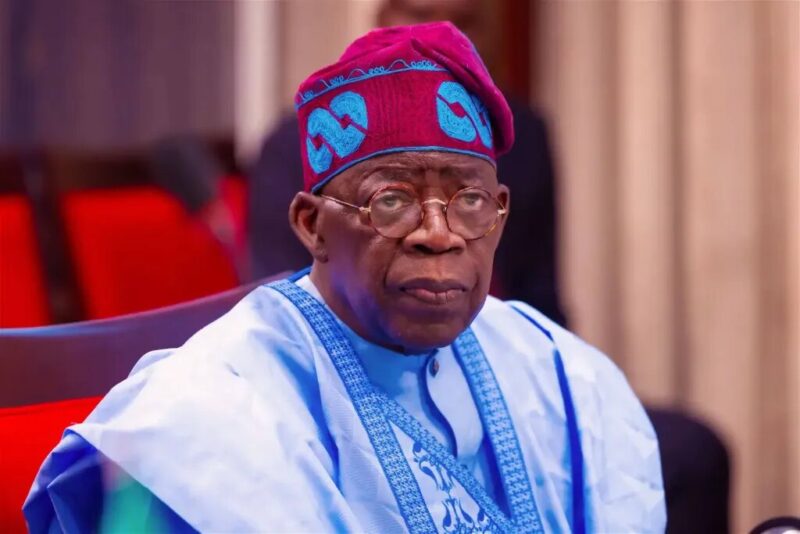
President Asiwaju Ahmed Tinubu GCFR should equally be judged with fairness. He understood that subsidy removal would generate resistance and hardship, yet he chose to confront the problem rather than postpone it for political convenience. The experience of the late President Muhammadu Buhari’s administration, which ultimately backed away from a proposed subsidy reform in the face of intense resistance, demonstrates how politically difficult the decision was.
Leadership is sometimes about making decisions that are unpopular today because they are considered necessary for tomorrow. Tinubu’s second-term ambition should therefore not be judged solely by the temporary hardship associated with subsidy removal, but by whether the reforms ultimately produce stronger public finances, investment, infrastructure, jobs and sustainable economic growth.
At the same time, former Vice-President Atiku Abubakar’s proposal to restore subsidy deserves serious scrutiny. Rather than simply promising Nigerians cheaper petrol, he should explain the fiscal cost of returning to a system that previously consumed trillions of naira. He should also allow Nigerians to examine his own record during the years he served in government, particularly what his period of influence delivered to ordinary citizens of the North-East. The 2027 election should not be a contest between promises and emotions; it should be a comparison of records, policies, costs and measurable results.
The fundamental lesson is simple: Nigeria cannot build a sustainable future by continuously spending enormous public resources to subsidise consumption while neglecting investment in production. Subsidy removal may have been painful, but postponing necessary reforms does not make the underlying problem disappear.
What matters now is accountability, accountability for the savings, accountability for FAAC allocations, accountability for state and local government spending, and accountability for the results of the reforms. President Tinubu should be judged by the totality of his economic record, not by subsidy alone; Atiku should equally be judged by his record, not merely by his promises.
In 2027, Nigerians deserve to compare figures with figures, records with records and results with results.
Danaudi, Writes From Bauchi Via danaudicomrade@gmail.com



















You must be logged in to post a comment Login