
Forgotten Dairies
Lekki Toll Gate Shooting: Where is Accountability After Six Years? -By Princess Egieya
Six years after the Lekki toll gate shooting, accountability has not been served. Disputed death tolls and unanswered questions rob Nigerians of peace and closure. For the families of the survivors and those of the dead, and for Nigerians who need to know whether the democratic institutions and the officials they voted into office are worth their trust and support.


Six years after the 20th October 2020 Lekki toll gate shooting, there is no shortage of questions, opinions, arguments, and positions on what occurred that night.
The Lagos judicial panel’s investigation found that nine people died at the tollgate. It said the incident could, in context, be described as a massacre, a finding which the Lagos State Government’s White Paper rejected. Amnesty International claimed that at least 12 people were killed, based on video footage and eyewitness accounts. Yet, the Federal Government claims there had been no ‘massacre’ at all.
In July 2024, the ECOWAS Court of Justice found Nigeria guilty of violating the rights of three survivors and ordered compensatory payments and a new investigation. Yet, details of such an investigation and its findings do not appear to exist.
For six years, each figure and claim has been defended, but what is more troubling is the fact that survivors, families of the victims, and Nigerians have not received a credible account that identifies who takes responsibility for that night, and the consequences that follow. This is a failure of accountability that Nigeria is not a stranger to.
In a 309-page report submitted to the state government on 15 November 2021, the Lagos investigative panel recorded dozens of casualties, including nine deaths at the toll gate, and made 32 recommendations. On 30 November 2021, the Government’s White Paper followed, accepting 11 recommendations in full, six modifications, rejecting one, and referring 14 to the Federal Government, stating matters outside its powers.
Lagos State based its objection to the figure of nine deaths on the testimony of a pathologist, Prof. John Obafunwa, who claimed that only one person had died of gunshot wounds, and the fact that the panel heard no contrary evidence.
When a panel and the government disagree about the figures of such a major incident, it is proof that a loophole exists in public records. This should be a reason for further investigation, not a reason to close the case file.
Recommendations and Judgments, but where is the action?
Lagos State forwarded 14 recommendations to the Federal Government, but they have not gotten much attention. Which has been acted on? Which has been declined, and why? Has a status report been published since then? Recommendations from a public inquiry are public business, and Nigerians are entitled to ask and receive answers from the government.
The ECOWAS court judgment was also supposed to be the beginning of something more. On the 10th of July 2024, the court ruled on a case brought by three applicants, Perpetual Kamsi, Obianuju Catherine, and Dabiraoluwa Adeyinka, who were at the toll gate on the 20th and 21st of October 2020, and found the Nigerian government guilty of violations of the rights to free expression, assembly and association, personal security, freedom from torture and ill-treatment. It found the government guilty of failing in its duty to investigate and provide an effective remedy, and ordered compensation of two million naira for each violation, as well as a new investigation, and a report presented to the court within six months.
Human rights organisation, REDRESS says implementation of the ECOWAS judgment is still pending and moving slowly. Corporate Accountability and Public Participation Africa (CAPPA) has demanded a public apology from the Federal and Lagos State governments, and the publication of a transparent report on compliance. These are modest demands that do not require invoking the Freedom of Information Act. Yet, the government continues to be silent.
What About the Army?
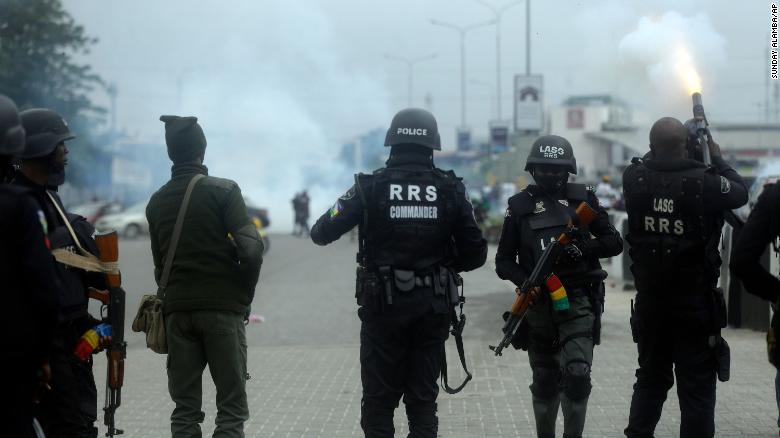
The Nigerian Army, which is the face behind the Lekki toll gate incident, has also failed to answer the questions that matter. The investigative panel recorded that the Nigerian Army was deployed to the toll gate that day for an intervention, and army officials repeatedly failed to answer summons, establish who was behind their deployment, and who gave the orders on that day. If such an important detail, which rests at the centre of this accountability process, remains unknown, true accountability has not happened.
Those questions need to be answered, and can only be answered by an independent investigation that has the legal authority to compel response and evidence from the Nigerian Army, and follow the process to the end without interference. ECOWAS ordered Nigeria to conduct such an investigation, but it is yet to see the light of day.
The Investigation and Accountability Nigerians Need
The new investigation is needed to fix the problem of contrasting claims and evidence. It needs to independently authenticate CCTV footage, video and audio recordings from that period, along with hospital admissions and mortuary records from 20th and 21st October 2020. It should also account for every person reported missing at the incident, whether dead or alive. The public should know how the numbers published were counted and the method used.
It should also offer witness protection. Intimidation and prolonged official denial have sent some witnesses into exile or hiding. If their safety is not guaranteed, they cannot provide their statements to the panel.
Six years after the Lekki toll gate shooting, accountability has not been served. Disputed death tolls and unanswered questions rob Nigerians of peace and closure. For the families of the survivors and those of the dead, and for Nigerians who need to know whether the democratic institutions and the officials they voted into office are worth their trust and support.
As Nigerians remember the Lekki toll gate incident six years later, what is needed is much more than marking a date. Remembrance without answers is justice delayed, and probably denied. The test of every institution involved in that incident is what it has done since 2020 to provide answers to Nigerians and ensure accountability for actions taken.
Until questions are answered, Nigeria remains in its citizens’ debt, and the government’s failure reverberates as the sounds of the gunshots heard on that fateful night.









You must be logged in to post a comment Login