
Economy
Economic Hardship And The APC’S Battle For Voters’ Confidence -By Kenechukwu Aguolu
Ultimately, if the 2027 election will be determined by the free and fair expression of Nigerians’ choices, as promised by the Independent National Electoral Commission (INEC) it is responsibility of the APC is to earn public confidence through results, not assume that political loyalty will guarantee electoral success. Economic hardship may yet prove more formidable than any opposition campaign. The time to respond is now. Listening to Nigerians, easing avoidable suffering and demonstrating measurable progress would serve both the public interest and the government’s political future.


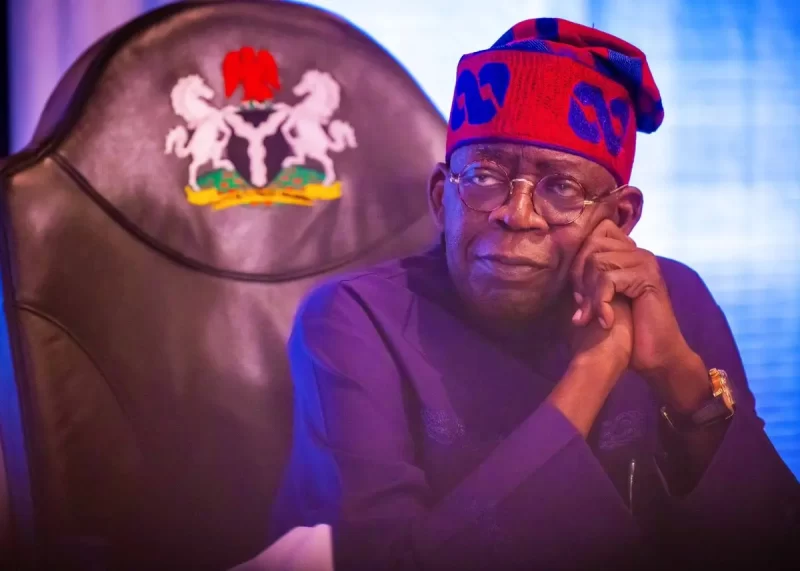
As the 2027 general election draws nearer, Nigeria’s persistent economic hardship, compounded by rising costs of petrol (PMS) and cooking gas, presents a significant challenge for President Bola Ahmed Tinubu and the All Progressives Congress (APC). While the administration may point to its economic reforms and other achievements, it must not underestimate how the daily struggles of ordinary Nigerians could influence the outcome of the election.
President Tinubu assumed office in May 2023 at a time when Nigeria faced considerable economic challenges. His administration introduced major reforms, including the removal of the petrol subsidy and changes to the foreign exchange system, arguing that these measures were necessary to address structural weaknesses and establish a more sustainable economy. These reforms have had important fiscal and market implications, but their immediate costs have placed considerable pressure on households and businesses.
As the cost of living continues to concern Nigerians, increases in petrol and cooking gas prices threaten to intensify the burden. Higher fuel prices affect transportation, food distribution, production and the cost of providing essential services. Cooking gas price increases also place additional pressure on households already struggling to meet basic needs. The effects are interconnected: when transportation and production costs rise, the prices of goods and services often follow.
Although international developments, including tensions arising from the conflict involving the United States and Iran, can influence global energy markets, domestic policies and market conditions also determine how these pressures affect Nigerian consumers. The government should therefore consider temporary, targeted interventions to cushion the impact of external shocks without undermining the broader objectives of economic reform.
History offers important lessons about the relationship between public hardship and electoral outcomes. In the United States, economic concerns, particularly the cost of living, contributed to Donald Trump’s return to the presidency in 2024. Although immigration, political identity and other issues also influenced voters, dissatisfaction with the economy featured prominently in the election.
Nigeria’s experience is equally instructive. In 2015, President Goodluck Jonathan lost his re-election bid amid widespread concerns about insecurity and the management of national affairs. While these factors did not operate in isolation, the election demonstrated how a government’s perceived inability to address citizens’ most pressing concerns can weaken its electoral support.
The lesson is that citizens experiencing prolonged hardship may become receptive to alternative leadership, regardless of the explanations offered by the incumbent government. This can produce what is commonly described as a protest vote: a decision by voters to reject the ruling party to express dissatisfaction with their circumstances or the government’s performance.
For the APC, the danger is not necessarily that the opposition may have a superior campaign strategy, but that widespread frustration could become a political force in its own right. Party structures, political alliances and campaign promises matter, but they may prove insufficient if voters believe their living conditions have deteriorated without adequate relief.
Ultimately, if the 2027 election will be determined by the free and fair expression of Nigerians’ choices, as promised by the Independent National Electoral Commission (INEC) it is responsibility of the APC is to earn public confidence through results, not assume that political loyalty will guarantee electoral success. Economic hardship may yet prove more formidable than any opposition campaign. The time to respond is now. Listening to Nigerians, easing avoidable suffering and demonstrating measurable progress would serve both the public interest and the government’s political future.




















You must be logged in to post a comment Login