
Forgotten Dairies
WE ALL SLIP: If You Laugh at Tinubu’s “Governor” Slip, Check Your Own Memory First -By Professor John Egbeazien Oshodi
As a psychologist, I am not here to defend President Tinubu for political reasons, but to explain something we all experience from time to time. We all make verbal slips, confuse words, or momentarily say something different from what we intended. I have not personally examined him, and one verbal slip cannot establish his mental or cognitive condition. My responsibility is to explain what psychology teaches us about human memory, speech, and everyday mistakes. Nigerians deserve thoughtful explanations grounded in evidence, not judgments driven by ridicule, political emotions, or speculation.

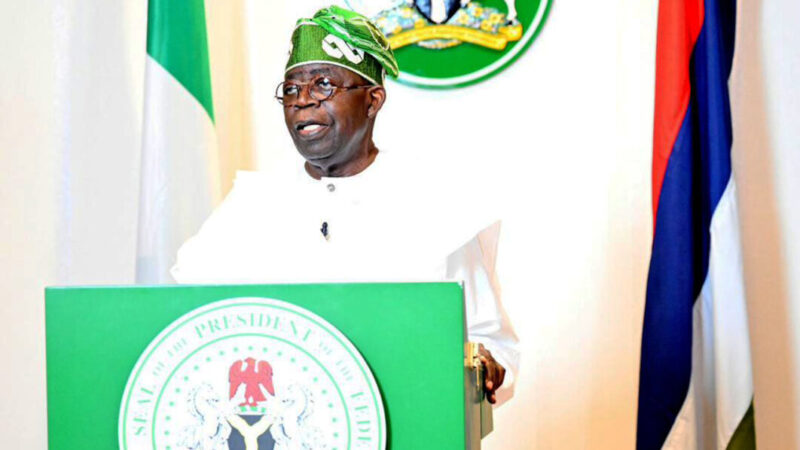
Before we turn another person’s misplaced word into a verdict on his entire mind, we should pause long enough to remember our own.
Somewhere in Nigeria today, a mother will call one child by another child’s name. A lecturer will mention yesterday’s date while writing today’s lesson. A trader will address a customer by the name of someone who has just left. A professional will begin a familiar sentence and discover that the wrong word has arrived first.
Most of these moments will pass without a camera, a headline, or a national argument.
When the person speaking is the president, however, the mistake becomes public property. It is replayed, interpreted, defended, ridiculed, and sometimes stretched far beyond what the evidence can support.
That is why President Bola Tinubu’s reported reference to himself as “Governor” deserves a more thoughtful conversation.
At the inauguration of the All Progressives Congress presidential campaign council in Abuja on Wednesday, October 14, 2026, Tinubu used his former title while referring to his return for another term. He served as governor of Lagos State from 1999 to 2007. He assumed the presidency in May 2023. By October 2026, he had therefore been president for a little over three years, rather than four.
The verbal substitution is a legitimate subject of reporting. What it tells us about his health, memory, or capacity to govern is a different question—one that requires considerably more evidence.
I approach this issue as a forensic and clinical psychologist. My concern is the distance between what people observe and what they claim to know.
A word can be heard clearly while its cause remains uncertain.
That distinction matters.
The Mouth Does Not Always Deliver the Intended Word
Speaking feels effortless because we do so much of it. Yet every sentence requires us to select ideas, retrieve words, arrange them, pronounce them, and monitor what comes out.
Sometimes the intended word loses that competition.
A person can know exactly who someone is and still use the wrong name. A speaker can understand the office he holds and nevertheless produce a previous title. A verbal error does not automatically establish that the underlying knowledge has disappeared.
Research on speech production examines how people generate, detect, and repair such errors. The existence of a slip and the explanation for that slip are separate matters.
Consider a trader who spent years in one part of a market before moving to another. When giving directions, she may briefly mention the old location. Her customer may correct her, and the conversation continues.
That example illustrates how familiar information can intrude. It does not prove why any particular public figure misspoke.
Psychologists use the term proactive interference to describe situations in which earlier learning interferes with newer learning or recall. Anyone who has struggled to remember a new password because an old one keeps coming to mind can appreciate the general idea.
Tinubu’s years as governor make his former title a plausible familiar association. But plausibility is not proof. We cannot watch a brief recording and announce that we have identified the precise mechanism operating in his mind.
Responsible public education must preserve that boundary.
We Do Not Need to Read His Unconscious Mind
People often describe any verbal mistake as a “Freudian slip.” Freud, the founder of psychoanalysis, associated some everyday errors with unconscious wishes and conflicts. That historical interpretation should not be treated as an established explanation for every misplaced word.
We do not need to invent a hidden wish behind this incident. Nor should we announce that Tinubu secretly considers himself a governor or has forgotten that he is president.
The recording gives us an utterance. It does not give us unrestricted access to his thoughts.
The same restraint applies to claims about pressure, distraction, tiredness, or an overloaded mind. These may be reasonable possibilities to consider in discussions of human performance. They are not facts about his condition at that moment merely because cameras and a large audience were present.
Psychology becomes less useful when its terminology is used to make speculation sound like certainty.
Neither a Diagnosis nor a Certificate of Health
Let me state my position plainly: I have not examined President Tinubu. I am not his treating psychologist or physician. I cannot determine his cognitive health from this incident.
I therefore cannot responsibly declare that the slip proves illness.
Equally, I cannot responsibly declare that it proves the absence of illness.
That is the discipline the public deserves from a professional.
A meaningful assessment would require relevant history, appropriate examination, and attention to functioning across time and circumstances. A brief recording cannot provide that information.
This does not mean citizens must surrender their judgment. It means the strength of a conclusion should match the strength of its evidence.
People may reasonably ask whether a leader understands important briefings, weighs competing advice, communicates decisions, responds to emergencies, and carries out the responsibilities of office. Those are serious questions.
Answering them requires a broader record than one substituted title.
Supporters should respect that standard. Opponents should respect it too.
The Public Has a Right to Scrutinize
The presidency is a position of enormous responsibility. Nigerians are entitled to examine the conduct, competence, judgment, and performance of anyone who occupies it.
A psychological explanation should never become a protective wall around political power.
Citizens can question decisions. Journalists can investigate contradictions. Opponents can challenge policies. Satirists can make jokes. Public office does not confer freedom from embarrassment.
But there is a difference between criticizing a leader and attaching a clinical label to him without adequate evidence.
There is also a difference between laughing at an awkward moment and teaching the public that an ordinary human error necessarily signals a disordered mind.
We can defend rigorous scrutiny while insisting on intellectual honesty.
Indeed, scrutiny becomes stronger when it concentrates on what can be demonstrated.
Ask about policy implementation. Ask about public safety. Ask about the management of resources. Ask whether promises correspond with outcomes. Ask how decisions affect households, workers, businesses, schools, and communities.
Those questions do not become less urgent because a president misnames his office. They should not disappear behind the entertainment of the moment.
The Fairness Test Is Whether We Apply It to Everyone
Political loyalty can make our standards remarkably flexible.
When our preferred politician misspeaks, we may supply a generous explanation. When an opponent does the same thing, we may suddenly become certain that the error reveals something devastating.
Before sharing a diagnosis disguised as a joke, we should ask a difficult question: Would I make the same judgment if these words had come from someone I support?
If the answer changes with the party, then we should examine our interpretation more carefully.
This applies beyond Tinubu. It applies to every politician whose supporters demand fairness for their own side while denying it to others.
A credible standard must survive a change of name.
It must also survive a change of office, ethnicity, religion, and political affiliation.
We cannot build a thoughtful public culture by deciding first whom we dislike and then searching for psychological language to justify the dislike.
What Our Children and Families Hear
The language used against public figures travels into ordinary life.
A child who struggles to find a word hears it. An older parent who occasionally mixes up names hears it. A person living with a genuine memory disorder hears it. So does a family quietly trying to understand changes in someone they love.
When we turn cognitive difficulties into insults, the audience is much larger than the politician we intend to embarrass.
We should be able to discuss health without contempt. We should be able to acknowledge impairment, when properly established, without stripping anyone of dignity.
Even if a leader had a confirmed health condition, the relevant public questions would concern its effects on the duties of office and the arrangements needed to protect the public interest.
Humiliation would add nothing to that assessment.
Dignity is not a reward reserved for people whose politics we approve.
Correction Matters Beyond the Microphone
The original discussion of this incident placed considerable emphasis on whether Tinubu corrected himself. I will not build a conclusion on a detail that has not been established here.
More broadly, catching and repairing an error is part of human communication. It is useful, but a single correction cannot establish a person’s overall health or quality of leadership.
The deeper leadership lesson concerns how people respond when errors are demonstrated.
Will a leader acknowledge inaccurate information? Will an administration revise an ineffective decision? Will officials correct a misleading public statement? Will institutions respond when citizens show that something has gone wrong?
Those are forms of correction with consequences far beyond a speech.
A government should cultivate them. Citizens should demand them. Professionals and journalists should practice them.
The willingness to correct ourselves becomes meaningful when it extends to matters that affect other people’s lives.
My Background and My Position
For transparency, I am a Black Republican in the United States. I belong to no political party in Nigeria, and I have never met President Bola Tinubu.
My work in forensic and clinical psychology, education, and criminal justice informs my interest in how people interpret behaviour and make judgments about others.
As a psychologist, I am not here to defend President Tinubu for political reasons, but to explain something we all experience from time to time. We all make verbal slips, confuse words, or momentarily say something different from what we intended. I have not personally examined him, and one verbal slip cannot establish his mental or cognitive condition. My responsibility is to explain what psychology teaches us about human memory, speech, and everyday mistakes. Nigerians deserve thoughtful explanations grounded in evidence, not judgments driven by ridicule, political emotions, or speculation. What happened to Tinubu can happen to any of us, regardless of age, education, profession, or political position.
A Deeper Message for All of Us
Before laughing at another person’s slip, remember the moments when your own mouth failed to keep pace with your intention.
Remember the name that escaped you. The familiar word you could not retrieve. The message you sent before noticing the mistake. The explanation that sounded clear in your head and arrived differently in the room.
That recollection need not silence criticism. It should improve its quality.
We can be demanding citizens without becoming careless judges of another person’s mind. We can recognize vulnerability without excusing failures of government. We can use humor without allowing it to replace evidence.
President Tinubu should be judged seriously because the office he holds is serious.
That judgment should rest on a substantial record of conduct, decisions, and performance. A verbal slip can be reported for what it is. It should not be made to carry conclusions it cannot support.
We all slip.
The deeper test of a society is whether, after the laughter, it can still think clearly, judge fairly, and remember the humanity of the person before it.
About the Author
Professor John Egbeazien Oshodi, PhD, is an American forensic and clinical psychologist, policing and corrections expert, criminal justice educator, researcher, author, and public scholar. His expertise includes forensic, legal, clinical, cross-cultural, and organizational psychology, public safety, leadership, ethics, governance, and institutional accountability.
A native of Uromi, Edo State, Nigeria, and son of a 37-year veteran of the Nigeria Police Force, he has devoted his career to psychology, justice, education, and institutional development. In 2011, he helped introduce advanced forensic psychology into Nigerian higher education through the National Universities Commission and Nasarawa State University, where he served as Associate Professor of Psychology.
He teaches at Nova Southeastern University and Walden University and serves as Visiting Virtual Professor of Forensic and Clinical Psychology at Nasarawa State University, Nigeria. He is also President and Chief Psychologist of the Oshodi Foundation, Center for Psychological and Forensic Services, United States.
Professor Oshodi is a Black Republican in the United States but belongs to no political party in Nigeria. His independent scholarship and public commentary emphasize justice, constitutional democracy, good governance, ethical leadership, and Africa’s development.
He is the founder of Psychoafricalysis (Psychoafricalytic Psychology), a culturally grounded framework integrating African sociocultural realities, historical consciousness, indigenous knowledge, and future-oriented identity into psychological practice.
He has authored more than 1,000 articles, multiple books, and numerous peer-reviewed publications on psychology, criminal justice, governance, education, and African development. His work with diverse populations in the United States, Africa, and the diaspora continues to advance culturally responsive psychology, institutional integrity, and evidence-based public policy.






















You must be logged in to post a comment Login