
Forgotten Dairies
The Golden Triangle Exposes Asia’s Drug War Illusion, by Fransiscus Nanga Roka
The second thing you should do is to follow the money as soon as possible following a seizure. You want to find out who financed the operation, who owns the vessel, and what other people were involved in helping make this happen (corrupt individuals) prior to their ability to hide the money. If you prosecute the people on the ship who are replaceable, but leave the money that was used by the people who organized the trip intact, then you will allow the operation to continue.

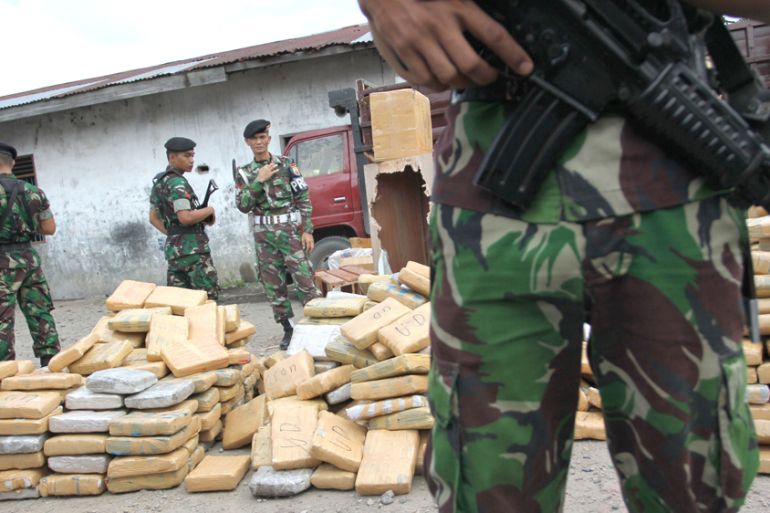
A seized shipment is the basis for a good picture. The growth of a drug market is a very bad sign.
The production of methamphetamine in the Golden Triangle region illustrates the disparity between these two perspectives. Organized crime groups are capitalizing on conflict and lack of government control in Myanmar’s Shan State, as well as along its borders with Laos and Thailand, to increase their drug-making capabilities. In addition, the political instability caused by the February 2021 coup in Myanmar has contributed to an increase in drug trafficking throughout Asia, as well as to other regions.
The UNODC 2026 regional report indicated a total of 349 tons of methamphetamine seized throughout East and Southeast Asia in 2025 – up by some 48% over the previous year. Seizure rates may increase as a result of either increased law enforcement efforts, an increase in supply of methamphetamines, or both. However, increased seizure rates do not necessarily indicate a decrease in the size of the criminal economy.
The interception of the Sea Dragon Tarawa by Indonesia demonstrated both an operational success and strategic uncertainty. The recovery of roughly two tonnes of methamphetamine in May 2025 by BNN, local law enforcement, customs officials, and naval officers, along with the arrest of six individuals, represented a major disruption. However, this did not provide proof that the financing mechanisms for future shipments were disrupted.
Precision is also important in describing Australia’s exposure. Many have made the claim that Australia gets 70% of its methamphetamine supply from Myanmar. However, the Australian Federal Police (AFP) stated in April 2024 that at least 70% of the drug comes from North American production sources. These conflicting statements require updated, comparable evidence — not just confident repetition of a convenient statistic. Australia deals with international supply networks with compositions that may vary.
In addition, the threat posed by marine-based drug trafficking remains. According to UNODC, there are an increasing number of different types of land/sea routing used to transport drugs from Myanmar to other countries such as Australia and New Zealand. Traffickers have multiple options available to them if authorities shut down a particular route.
This creates an unpleasant strategic problem; when enforcement actions stop the flow of drugs by taking away the product but leave behind the funding, protection, and manufacturing aspects of the operation, the enforcement action becomes a recurring cost for the drug traffickers to bear.
ASEAN and Australia need a strategy that reaches beyond the next interception.
First, connect maritime investigations from multiple jurisdictions. Shared intelligence will help identify connections between suspicious cargo, vessel owners, finances and the people who are organizing these crimes. This cooperation will result in admissible evidence that can be used by prosecutors in both countries to prosecute those responsible for the crime, as well as providing protection for sensitive information.
The second thing you should do is to follow the money as soon as possible following a seizure. You want to find out who financed the operation, who owns the vessel, and what other people were involved in helping make this happen (corrupt individuals) prior to their ability to hide the money. If you prosecute the people on the ship who are replaceable, but leave the money that was used by the people who organized the trip intact, then you will allow the operation to continue.
Third, improve precursor controls by confirming end-user status, reporting suspicious orders and providing cross-border notifications. Controls must be able to change as chemicals are substituted but also allow for legitimate business activities.
Fourth, engage in cooperative efforts with Myanmar through accountability. When there are reports of laboratory raids, these should be independently investigated whenever feasible. Assistance for counter-narcotics programs should have safeguards in place to prevent diversion and/or abuse. A military announcement is no replacement for an actual verified disruption.
Fifthly, Australia and local government should invest in treatment, prevention and community rehabilitation in addition to law enforcement. The investment in demand reduction must be ongoing and not based upon what is left over from security spending.
Lastly, publish the measures that show the failures of the program (e.g., availability of drugs; access to treatment; financial confiscations; long-term convictions; and negative impacts on communities).
The most effective drug policy will create obstacles to criminal enterprise growth and facilitate rehabilitation. When drug manufacturers continue to produce, financial backers retain their wealth and illegal substances are still available, the record-breaking number of seizures are simply proof that the war against drugs is generating publicity at a much greater rate than it is producing results.
The greatest export of the Golden Triangle is methamphetamine. The easiest political export is an illusion of having won.
Fransiscus Nanga Roka
Faculty of Law University 17 August 1945 Surabaya and Managing Partner Law Firm Victorious Indonesia




















You must be logged in to post a comment Login