
Economy
Banking’s Cheapest Backdoor: Trust for Sale, by Fransiscus Nanga Roka
In measuring compliance, boards should focus on control effectiveness determined through testing, as well as unsettled alerts and response times. And those measures should be accompanied by a secure whistleblowing channel and mandatory, evidence-based executive accountability. Compliance budgets simply cannot become the disposable commodity of growing business.

Not all criminal networks will hack a bank. It can on occasions even take the person imbued with duty to protect it.
Gerardo Aquino, 40, of Hollywood, Florida, a former employee at TD Bank also pleaded guilty in October 6 to federal money laundering conspiracy and bank bribery charges before U.S. District Judge William H. Walls in Newark, N.J. While accepting over $8,000 in bribes, prosecutors allege he helped transfer more than $4.8 million to Colombia for illegal purposes. The gap is breath-taking: small amounts of money bought entry to a key financial institution.
Aquino supposedly opened about 114 accounts from April 2022 through November 2023 which were utilized for 20,865 Colombian ATM withdrawals that amounted to $4,830,684.08 under the charging document. Variations of a single Miami commercial address were shared by 86 accounts. He provided those debit cards, assisted in unblocking cards that were flagged for suspicious behaviour and cautioned conspirators of monitoring and reporting guidelines.
These had been finance infrastructure transformed into crime infrastructure. The mask was provided by false account information; the distribution network, courtesy of debit cards; and the intervention of insiders helped keep the pipeline open.
The worst part is that, at times, the bank’s defenses sounded the alarm. Restrictions were imposed. Aquino helped reverse them. The lesson has been painful: spotting suspicious transactions is of marginal utility when a corrupt employee can forestall the response.
It would be tempting to brush this off as a case of a rogue employee, but that down-scopes a governance issue into a personnel one. Aquino is guilty, that does not automatically make every other supervisor a criminal. It does require greater scrutiny of permissions, the escalation process and independence of fraud controls.
That kind of scrutiny is a natural consequence of TD Bank’s own history. By October 2024, the bank and its U.S. holding company plead guilty in a more than $1.8 billion Department of Justice resolution. Officials outlined an enduring – in some cases systemic – failure to tackle money-laundering and a cost policy that limited what the company could spend on complying with increasingly stringent requirements under tightened regulation. The earlier findings were on past behavior; Aquino&8217;s later plea should not automatically be offered as evidence that current reforms are ineffectual. But it lays bare the stakes of making those reforms work.
Aquino is subject to a statutory maximum of 20 years in prison for the laundering conspiracy and 30 years on the bank bribery. Scheduling and his sentence not these ceilings for sentencing are in you as of March 23, 2027. Punishment matters. So does preventing the next insider from selling access.
Regulators need to impose independent approval as a condition of lifting fraud restrictions on high-risk accounts. The entire chain of verification, card issuance and suspicious-activity overrides should not be controlled by employees who originate accounts. Each override must leave a non-repudiable log and invoke examination when trends build.
Bridging Banker Behavior and Consumer Experience By having different data (from arbitrary and type) old manner DoJ of in this Both last card issued a The places where set so example two through foreign addresses, groups peculiarly purported activity — over persisted. What we do need, however, are not more alerts but rather clear responsibility for acting on them, in a cohesive way.
U.S. and Colombian authorities alike should expedite lawful exchanges of account, ATM and beneficiary intelligence, trace ultimate recipients, and seek recoverable assets with constitutional due-process guarantees;
In measuring compliance, boards should focus on control effectiveness determined through testing, as well as unsettled alerts and response times. And those measures should be accompanied by a secure whistleblowing channel and mandatory, evidence-based executive accountability. Compliance budgets simply cannot become the disposable commodity of growing business.
The key question is whether banks make corruption hard or literally facilitate it until the money disappears and only prosecute it then.
The bank’s security commitment is dangerously conditional if a trusted employee with access can reopen a criminal pipeline through targeted social engineering. An insider’s treachery may destroy financial integrity.
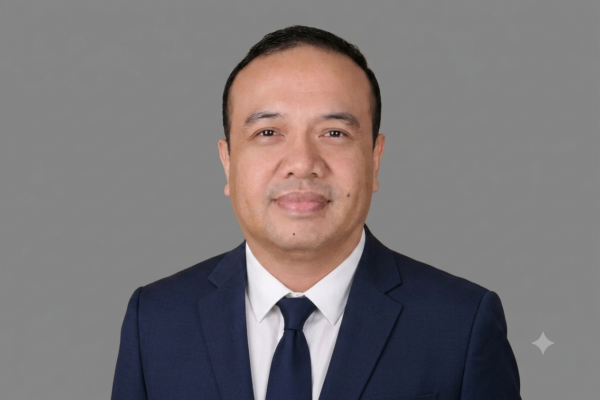
Fransiscus Nanga Roka
Faculty of Law University 17 August 1945 Surabaya and Managing Partner Law Firm Victorious Indonesia


























You must be logged in to post a comment Login