
Opinion
Deepfake Fraud Is Hijacking the Chain of Command, by Fransiscus Nanga Roka
Implementing proportionate safeguards to protect their services against abusive impersonation, keeping appropriate investigative logs and taking action on credible reports of abuse in a timely manner. While legitimate forms of synthetic expression should not be chastised in a criminal manner, accountability should follow demonstrable failures.

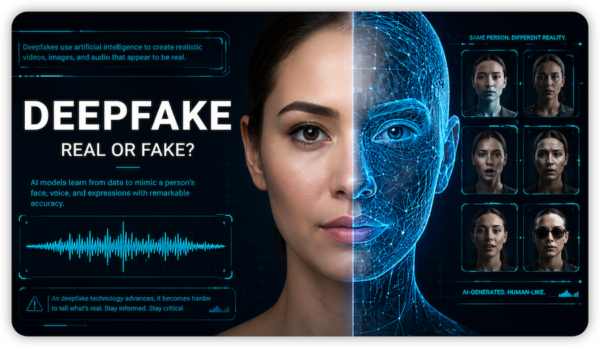
The executive that never makes it to your next video meeting may be the most dangerous person of all. It transforms known faces and voices into means of perpetrating fraud. Institutional compliance is its strongest suit: organisations that require employees be alert to cybersecurity threats at work while teaching them always to obey the boss.
In January 2024 the warning became chillingly concrete. Hong Kong authorities have reported a case where fake video conference footage was used to trick an employee into approving HK$200 million to be transferred to five local bank accounts. The impersonation was aided by media that can be found freely on the internet. The corporate authority had become a fraudulent payment credential.
Boards should view that case as a governance warning after 2026. As of November 2024, America’s Financial Crimes Enforcement Networkhas recorded a surge in suspicious-activity reporting involving suspected deepfake usage, including synthetic IDs intended to evade verification. As of May 2025, the FBI was issuing warnings about how malicious actors were using text and AI-generated voices to trick Americans into disclosing personal account credentials by impersonating senior American officials. Manufactured familiarity is the same vulnerability that faces finance and government.
The modality utilizes synthetic media along with psychological coercion. Criminals impersonate a trusted decision-maker, amplify the fraud throughout messages and phone calls, compel urgency or non-disclosure. The target transfers money or discloses credentials, as the command is authoritative. Organizational hierarchy provides the leverage; generative AI provides the cover.
The threat can traverse borders at every stage: impersonation, communications infrastructure, recipient accounts and laundering. The stolen money carries on elsewhere and the investigators have to piece together a scattered enterprise. A good impersonation of an executive can hence morph into a global asset recovery issue within minutes.
But it is a dangerously theatrical response. Forcing humans to pay attention to the blinking of eyes or imperfect lip movements. That shortcoming is not fixed by purchasing a detector. Studies have shown that detection performance degrades significantly when entering newer generation techniques. Detection must support auditability, it is never a replacement for authorization controls.
A tougher rule that needs to come from boards is, the authorization of a material payment cannot be independently conditioned upon a face meeting or voice video meeting. Insist on separate approvers, externally validated beneficiary information and transaction specific verification with a trusted payment channel. Never trust commands out of the ordinary; use contact information that you set up before receiving any request. Also static secret phrases are to be treated with caution, anything public or intercepted is yet another weapon of impersonation.
Banks need to step up verification of new beneficiaries, detecting atypical payment sequences and providing rapid escalation channels. Policymakers need to assign unambiguous accountability for preventable losses, measured against institutional, employer and customer failures. By blaming the employee who drank a Kool-Aid that made by an imaginary executive, one avoids to expose defective controls.
Internationally, it means accelerating the establishment of legal avenues to preserve online evidence and trace beneficiary accounts with a request for an emergency freeze. Recordings, their metadata and the transaction logs must be safely retained with an auditable chain of custody. But any significant speed must be coupled with judicial oversight and channels to contest unjust freezes.
Implementing proportionate safeguards to protect their services against abusive impersonation, keeping appropriate investigative logs and taking action on credible reports of abuse in a timely manner. While legitimate forms of synthetic expression should not be chastised in a criminal manner, accountability should follow demonstrable failures.
The cultural reform is not complicated: Workers need to be shielded from retaliation when they speak up against a suspicious directive, irrespective of whether it comes from the chief executive[1].
The deepfake fraud that lays bare a system confusing recognition and consent A convincing impersonation may trigger the release of millions, and in that instance, the security breach has effectively occurred long before the counterfeit even gets on stage.
Fransiscus Nanga Roka
Faculty of Law University 17 August 1945 Surabaya and managing Partner Law Firm Victorious Indonesia























You must be logged in to post a comment Login