
Politics
Jerry Adams: The August Visitor and Southern Kaduna’s New Political Dawn -By Jabir T. Usman
As someone who once participated actively in the PDP campaign machinery in Kaduna State and who is today a member of the APC, i consider the transformation i witnessed in Southern Kaduna particularly remarkable. I have seen the political landscape from both sides of the divide. I have seen the days when APC symbols were scarce in parts of Southern Kaduna, and i have now witnessed the enthusiasm with which an APC political figure from the area was received in his own homeland.

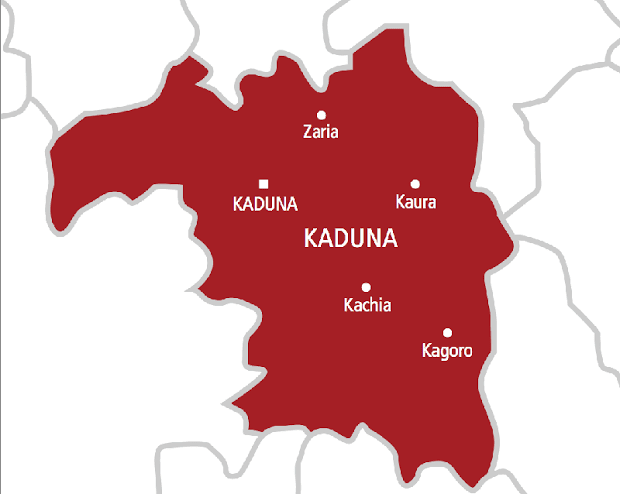
There are moments in politics when a single event becomes more than an ordinary political engagement; it becomes a metaphor for a changing society. There are also occasions when the arrival of one individual in a community tells a much bigger story than the personality of the visitor himself. The recent homecoming of Comrade Jerry Adams to Southern Kaduna was one of such moments. His reception was not merely a political ceremony; it was a powerful indication that the political weather in Southern Kaduna may be changing dramatically.
Governor Uba Sani’s nomination of Comrade Jerry Adams, a prominent son of Southern Kaduna, as his running mate for the 2027 gubernatorial election has undoubtedly introduced a new political dimension into Kaduna State politics. It is a decision capable of reshaping old political calculations and challenging assumptions that have dominated the political landscape of the state for decades. For the APC, it is a strategic political statement; for Southern Kaduna, it represents an opportunity for deeper participation in the affairs of the state.
For those who understand Kaduna politics, the significance of this development cannot be overemphasized. Since the return of democratic rule in 1999, Southern Kaduna has largely been regarded as a stronghold of the Peoples Democratic Party. The political attachment was so deep that when the All Progressives Congress emerged in 2013 and 2014, the party struggled to penetrate the political consciousness of many people in the area. The PDP had built an enduring political identity in the zone, and the APC was, for many years, perceived as an outsider to that established political order.
Indeed, during the eight-year administration of the immediate past government, the political relationship between Southern Kaduna and the PDP remained particularly strong. The emotional attachment to the party was evident in political conversations, campaign activities and even the visibility of party symbols across communities. The APC had to confront not only the traditional strength of the PDP but also years of accumulated political loyalty that could not be dismantled by ordinary campaign rhetoric.
I witnessed this reality firsthand. As a former member of the Kaduna State PDP gubernatorial campaign council media and publicity team in 2019, i was part of the campaign entourage that traversed all 23 local government areas of Kaduna State. Our journey through Southern Kaduna exposed us to the remarkable popularity enjoyed by the PDP in the area. In some communities, it was difficult to find visible signs of APC presence. The PDP appeared almost synonymous with political identity, while identifying openly with another political party could attract considerable social discomfort.
But politics, like society itself, is never static. Political loyalties evolve when people begin to perceive new possibilities, new opportunities and a new sense of inclusion. The Southern Kaduna of yesterday may not necessarily be the Southern Kaduna of today. And that is perhaps the most significant lesson from the recent homecoming of Jerry Adams.
My recent opportunity to accompany Comrade Jerry Adams to Southern Kaduna for his welcoming home reception gave me a firsthand glimpse into this emerging political reality. We traversed about four local government areas, and what i witnessed was both remarkable and instructive. The warmth, enthusiasm and acceptance that greeted him were difficult to reconcile with the old narrative of an area that had historically been resistant to the APC.
What happened during that visit was more than the reception of an individual. It was a political homecoming that appeared to demonstrate that the psychological barriers separating Southern Kaduna from the APC are gradually collapsing. The people were not merely receiving Jerry Adams as an individual; many appeared to be identifying with the political opportunity his emergence represents. The atmosphere suggested that something fundamental may be changing beneath the surface.
Perhaps the most significant game changer came in the form of tangible infrastructural development. The establishment of the Federal University of Applied Sciences in Kachia, a project that was shockingly rejected during the immediate past administration; stands as a monumental achievement. This institution is not just a school, it is a beacon of hope and a testament to the federal government’s commitment to the intellectual and economic empowerment of the zone.
Alongside the university, the establishment of a Federal Medical Centre and other critical projects across Southern Kaduna significantly altered the mindset of the people. These projects served as concrete evidence that the APC led government was not just paying lip service to their welfare but was actually investing in their future. The people began to see that the APC could indeed be a vehicle for their prosperity.
The appointment and elevation of sons and daughters of Southern Kaduna into strategic positions within state and federal institutions have also contributed to this emerging sense of belonging. Political inclusion matters. Representation matters. When citizens see people from their communities participating meaningfully in government, the distance between government and the governed begins to shrink. The psychology of exclusion gives way to the psychology of participation.
This is where the emergence of Jerry Adams becomes particularly significant. His nomination as Governor Uba Sani’s running mate has given Southern Kaduna an even more direct stake in the political future of Kaduna State. It is a development capable of telling the people of the zone that their political relevance is not merely acknowledged during election seasons but is being incorporated into the architecture of governance.
The symbolism is powerful. A zone that was once considered politically inaccessible to the APC is now receiving one of its own as a principal political candidate on the platform of the ruling party. That alone represents a remarkable shift in political arithmetic. Whether this transformation will translate into votes in 2027 will ultimately be determined by the electorate, but the change in political atmosphere is already worthy of attention.
Governor Uba Sani therefore deserves recognition for understanding the importance of political inclusion and for making a strategic choice capable of strengthening the relationship between the government and Southern Kaduna. President Bola Ahmed Tinubu’s administration also deserves acknowledgement for initiatives and federal interventions that are bringing visible government presence closer to communities that have long demanded greater development attention.
But beyond party politics, there is a larger lesson here. Development has the power to change political perceptions. Inclusion has the power to rebuild trust. Representation has the power to dissolve old barriers. And when people begin to feel that government belongs to them as much as it belongs to everyone else, political loyalty can naturally begin to evolve.
As someone who once participated actively in the PDP campaign machinery in Kaduna State and who is today a member of the APC, i consider the transformation i witnessed in Southern Kaduna particularly remarkable. I have seen the political landscape from both sides of the divide. I have seen the days when APC symbols were scarce in parts of Southern Kaduna, and i have now witnessed the enthusiasm with which an APC political figure from the area was received in his own homeland.
The Jerry Adams homecoming may therefore become one of those political moments that historians revisit when analysing the evolution of Kaduna politics. Whether one supports the APC or belongs to another political persuasion, the emerging political consciousness in Southern Kaduna deserves serious attention. The people are speaking through their actions, their receptions and their changing engagement with the political process. The old political map may be undergoing a redraw.
For me, Jerry Adams was not merely an August visitor. His arrival in Southern Kaduna symbolised a political homecoming, a new sense of belonging and perhaps the beginning of a new chapter in the relationship between Southern Kaduna and the APC. The real challenge now is for the political leadership to sustain this momentum through inclusive governance, credible representation and development that reaches the nook and cranny of the zone. If that happens, the political transformation witnessed today may prove to be more than an electoral strategy; it may become the foundation for a new and enduring political relationship.
May God bless President Bola Ahmed Tinubu and Governor Uba Sani for their efforts and initiatives towards empowering Southern Kaduna, strengthening inclusion and restoring the lost glory of the region.
Jabir T. Usman writes from Sabon Gari Tudun Wada, Kaduna jabson.usman@gmail.com





















You must be logged in to post a comment Login