
Breaking News
Trump Rules Out Likely Return to War With Iran, Signals Conditional Path to Peace
Trump rules out an imminent return to war with Iran but insists Tehran must accept a strong agreement as Qatar leads fresh diplomatic efforts.

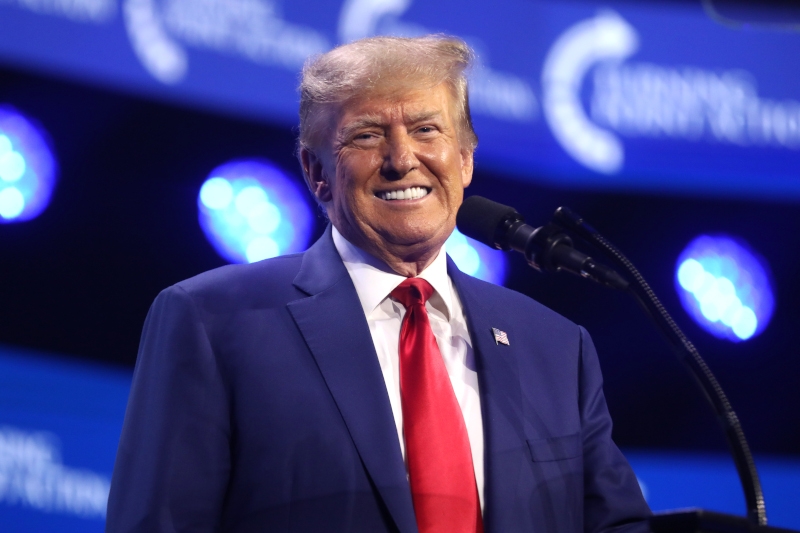
US President Donald Trump has indicated that a return to full-scale hostilities with Iran is “highly unlikely”, even as tensions remain unresolved and diplomatic efforts to secure a lasting peace face uncertainty.
Trump made the statement in a Sunday interview with CNN, ahead of a scheduled White House meeting with Qatar’s Prime Minister and Foreign Minister, Sheikh Mohammed bin Abdulrahman Al Thani, on Monday.
The comments represent a possible shift in tone after the US president repeatedly threatened to launch fresh military strikes against Iran in recent weeks.
Reports in US media had suggested that renewed hostilities could follow last Tuesday’s midterm elections.
However, Trump told CNN that another round of fighting was “highly unlikely”, while making clear that Washington’s position would depend on Tehran’s willingness to accept a strong agreement.
“I would if necessary, but we hit them really hard. I hit them so hard. You don’t know how hard I hit them,” he said.
The meeting with Qatar’s prime minister will be Trump’s first engagement with a foreign leader since his Republican Party suffered a major defeat in the midterm elections, losing control of Congress.
Qatar has been among the regional countries working to mediate between Washington and Tehran.
However, Iranian Foreign Minister Abbas Araghchi indicated on Sunday that diplomatic discussions had been put on hold as governments considered the implications of the US election outcome.
“For the past few days, there has been no more travel (by mediators), and the reason for this is the shock that the election results in the United States have caused to everyone,” Araghchi told state television.
“We now have to see how long it will take for them to digest these results, in order to determine how we are going to move forward,” he added.
Iran conflict weighs on Trump’s political fortunes
The conflict, which began with US-Israeli military strikes in late February, has become a significant political challenge for Trump.
The president has acknowledged that the unpopular war contributed, at least in part, to the Republicans’ poor performance in the midterm elections.
Araghchi also criticised the US administration’s relationship with Israel, arguing that growing public dissatisfaction with the conflict was becoming impossible for Washington to ignore.
In a post on X on Monday, the Iranian foreign minister said Trump “clearly recognizes that the vast majority of Americans are disgusted with Israel.”
“Americans are evidently sick and tired of Israel bamboozling US administrations into Forever Wars,” Araghchi wrote. “They had enough. So has our region.”
Trump, however, maintained that Iran’s worsening economic situation would eventually force its leadership to accept American demands.
“They’re a failing nation. It just came out, you saw this year, 301 percent inflation,” Trump claimed.
“They’re withering away financially. We’ve hit them militarily. We could finish them off.”
Iran’s official statistics, however, placed year-on-year inflation at nearly 90 per cent in September, significantly lower than the figure cited by Trump.
Fresh reports of explosions raise security concerns
Despite indications that renewed large-scale fighting is unlikely, security concerns remain.
Iranian state television reported that Qeshm Island, located in the strategically important Strait of Hormuz, was attacked overnight on Sunday.
The report came hours after Iran’s official IRNA news agency announced that two explosions had occurred on the island.
Regional diplomatic initiatives involving Qatar, Pakistan and other countries have continued for months, but efforts to secure a definitive end to the war have so far been unsuccessful.
While direct military confrontations have largely diminished, the dispute over control of the Strait of Hormuz remains unresolved.
Iran continues its efforts to blockade the waterway, which is vital to international energy shipments, while the US Navy maintains a counterblockade targeting Iranian ports.
The continuing standoff leaves the region facing uncertainty despite Trump’s latest suggestion that a return to war is unlikely.












You must be logged in to post a comment Login