
Forgotten Dairies
El Mencho Is Dead and The Cartel Economy Lives -By Fransiscus Nanga Roka
Both governments need to release a quarterly report on the number of civilians killed, money extorted from citizens, people who disappear from their homes, the outcome of criminal trials against gang members, and how gangs are disrupted financially. No matter what the “body count” or “seizure” headlines say, these reports cannot show us if our communities are once again free.

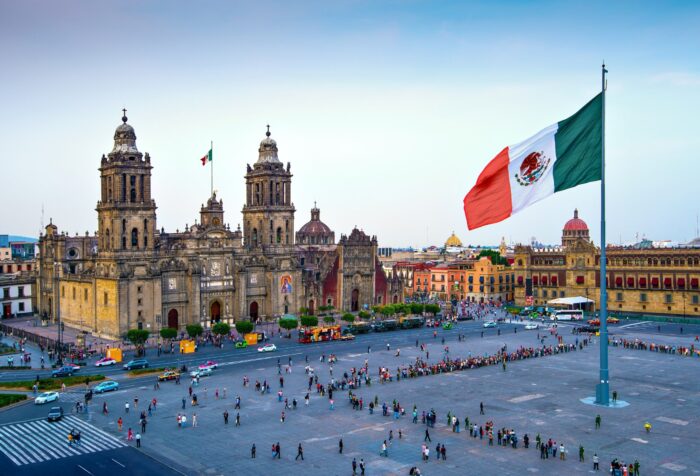
Mexico has killed a drug lord, but it will have to face down the system which created him and will create another one.
On February 22, 2026, the Mexican Army (supported by U.S. Intelligence) targeted Nemesio “El Mencho” Oseguera Cervantes in Tapalpa, Jalisco. During this operation, Oseguera Cervantes was injured and subsequently died from his injuries while being transported via helicopter. Authorities were able to locate Oseguera Cervantes by following his girlfriend to where he was hiding out. This was a significant intelligence coup against a top supplier of fentanyl to the United States.
Afterwards, there were burned cars, closed schools and delayed flights. According to Mexican officials, 25 National Guard members died due to the violent reactions from the gangs; about 30 alleged gang members also lost their lives as did one innocent bystander. In total, 70 individuals were apprehended by law enforcement in seven different Mexican states. This does not mean that 70 high ranking officers have been taken into custody.
The retaliation highlighted the main paradox of the operation; the government was able to access the cartel’s leader but at the same time, communities were still susceptible to the cartel’s decentralized coercive power.
The fact that a cartel can continue to inflict harm on civilians even after losing its top leader is evidence of more than just firepower. It demonstrates an organizational ability that exists beyond any single leader. To celebrate the demise of one of these organizations’ leaders while failing to assess their ability to maintain operations would be to create a false sense of victory out of what may have been a limited success.
Reporting that was done in July of 2018 with data from the U.S. Treasury’s sanctions on El Mencho identified Juan Carlos Valencia González (El Mencho’s stepson), as CJNG’s current head. He has support from some of the long-term members of CJNG’s previous leadership. Both Washington and Mexico have taken action against a total of 55 people and companies connected to the CJNG. This change in leadership demonstrated that taking out a leader of a large criminal organization may create a vacuum for other people to take control over the organization.
Therefore, President Claudia Sheinbaum needs to stay away from “trophy” politics. A dead kingpin can offer a great picture. On the other hand, a good judicial system provides long-term security, which is much more difficult to create.
In the first place, Mexico must incorporate civilian protection into each of its large scale operations. There must be established contingency planning, immediate warning systems and emergency services available for all hospitals, schools, transportation corridors and threatened businesses. Additionally, no resident should ever serve as the foreseeable collateral damage of a successful operation.
The second step is that bilateral cooperation must pursue the money trail beyond those who are shooting. Investigators need to give priority to identifying the beneficial owner of an organization, money laundering intermediaries, purchasing network participants and corrupt officials. After assets have been frozen, investigators should work towards prosecuting the owners based on evidence and recovering the frozen assets under judicial supervision.
Third, Washington must accept reciprocal responsibility. Washington must increase efforts to investigate firearm trafficking and illegal financing. At the same time, Washington must expand treatment programs for individuals suffering from substance abuse and provide more opportunities for overdose prevention. To demand that Mexico make sacrifices while the United States does nothing about its own problems is a politically advantageous but strategically empty strategy.
Fourth, arrests and transfers should lead to trial processes that have credibility. Forensic evidence needs to be preserved, witnesses protected and abuses investigated. Procedural shortcuts may damage the conviction of an individual as well as the public’s confidence in the justice system at a time when both are needed most.
Both governments need to release a quarterly report on the number of civilians killed, money extorted from citizens, people who disappear from their homes, the outcome of criminal trials against gang members, and how gangs are disrupted financially. No matter what the “body count” or “seizure” headlines say, these reports cannot show us if our communities are once again free.
The critical issue is whether Mexico will be able to disrupt the networks (money, guns, fear, corruption) which help the cartels to continue to regenerate their power.
The passing of El Mencho left a void in the leadership of CJNG. However, the rapidly developing situation with his replacement demonstrated just how short-lived a void can be.
Governments have written a very impressive epitaph for the business of crime, but as long as the cartel keeps money in its hands and communities keep fear in theirs, that business will be alive.
Fransiscus Nanga Roka
Faculty of Law University 17 August 1945 Surabaya and Managing Partner Law Firm Victorious Indonesia






















You must be logged in to post a comment Login