
Forgotten Dairies
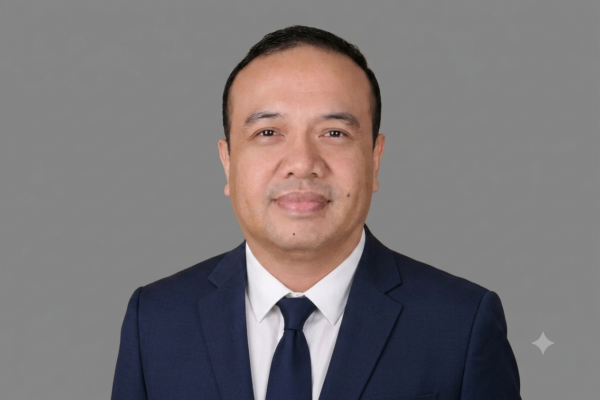
Devas: Sovereignty Cannot Become a Commercial Escape Hatch -By Fransiscus Nanga Roka
The international community gains credibility when it imposes restrictions on both dominant nation states and demanding creditors. Devas must serve as a model for legitimate investigation and accountability not a justification for either party to consider themselves exempt from the law.

A state cannot reasonably promote its ability to offer business certainty internationally when it uses its own judicial system to avoid meeting international commitments. Similarly, investors cannot reasonably request that foreign judges ignore findings of fraud just because they have been awarded a large sum of money through international arbitration. The Devas–Antrix dispute is a test case for how well international arbitration can prevent both types of exceptionalism.
In 2005, there was a satellite deal made between Devas Multimedia (a private telecommunications company based out of Bangalore) and Antrix (the state-owned commercial arm of the Indian Space Research Organisation). When India decided that the frequency bands involved in the agreement were needed for government use, Antrix unilaterally canceled the agreement in 2011. In 2015, an ICC arbitral panel ordered Antrix to pay Devas approximately $562.5 million plus interest. Devas has since filed several enforcement actions against Antrix in various jurisdictions around the world; one such action was filed in the U.S. District Court for the Western District of Washington, which has turned a local telecommunications dispute in India into a global confrontation over whether national courts can enforce foreign arbitral awards.
The issues at stake are bigger than whether a state can avoid paying an award. Is it possible for a state to defeat overseas enforcement of an award by seeking annulment of the award in the country where the arbitration was held? If so, can an enforcement court refuse to recognize that annulment without taking on the role of reviewing court for a foreign country’s judicial system? Both sovereignty and investor protection do not supply automatic answers.
On August 12th, 2026, the 9th circuit confirmed U.S. jurisdiction pursuant to the FSIA’s (Foreign Sovereign Immunities Act) “Arbitration Exception” and denied motions to dismiss based upon the doctrine of “Forum Non Conveniens.” The court stated that no foreign court can order attachment of property located within the U.S. However, the court did remand the issue of the effect of the Indian courts’ subsequent annulment to the district court for resolution. Therefore, the court left open an option for enforcement while not resolving the annulment issue.
This distinction destroys the simple victory story. Before this, the Supreme Court ruled that the FSIA has no other statutory “minimum contacts” requirements than what are already listed in the FSIA. The ruling was about access to U.S. courts, not about whether the allegations of fraud were without merit or if all Indian public assets could be seized.
The New York Convention addresses this conflict by permitting the refusal of recognition if the award has been set aside by a competent authority in the country where the award was made (Article V(1)(e)). Therefore, annulment is relevant. However, the language of the Convention does not mean that every annulment within a state will be considered an absolute order to every foreign court. Any deviation from deference must be based on a legitimate reason under the laws of the enforcing state, not on political distrust disguised as legal reasoning.
Fraud needs to be addressed using evidence. Courts need to look at what was proven, how it was proven, who it was proven against, and if there was a chance for them to challenge the proof. A court should not stop examining fraud based on either a government’s claim or an investor’s request for arbitral finality.
Three strategic reforms follow.
The first step is for the district court to explain exactly how the Indian annulment affects recognition, clearly distinguishing between treaty defenses, procedural fairness and the limitations on review. A clear, well-reasoned judgment will be more effective than statements regarding sovereign immunity or “judicial imperialism” in building international trust.
Second, governments should mandate independent integrity assessments prior to State-Owned Enterprise (SOE) signing off on strategic contracts, as well as clear cancellation clauses and compensation methods. Decisions related to national security warrant legitimate processes; when a decision regarding security is made after a contract has failed, it will lead to costly lack of trust.
Third, creditors will need to find the correct debtor and determine if they have the legal right to attach each of the debtor’s assets. State ownership of Antrix does not replace the need to show that another person or company’s assets are responsible for paying the debt owed to Antrix. The creditor must also ensure that the enforcement action remains proportionate to the amount of money owed, and that the legal basis for attaching each asset is clearly defined.
The risk is in two ways: automated submission can lead to harmful cancellation and automated compliance can lead to protecting deception.
The international community gains credibility when it imposes restrictions on both dominant nation states and demanding creditors. Devas must serve as a model for legitimate investigation and accountability not a justification for either party to consider themselves exempt from the law.
Fransiscus Nanga Roka
Faculty of Law Unviersity 17 August 1945 Surabaya and Managing Partner Law Firm Victorious Indonesia


























You must be logged in to post a comment Login