
Forgotten Dairies
Exxon’s Cuba Victory Tests America’s Sovereignty Double Standard, by Fransiscus Nanga Roka
The fourth point is that courts which are evaluating whether to recognize or collect on a foreign judgment should use caution in applying their own immunity, ownership and public policy laws. A foreign court’s decision will be reviewed by an American court to see if it meets American standards for the law, rather than being automatically endorsed or rejected based upon its political implications.

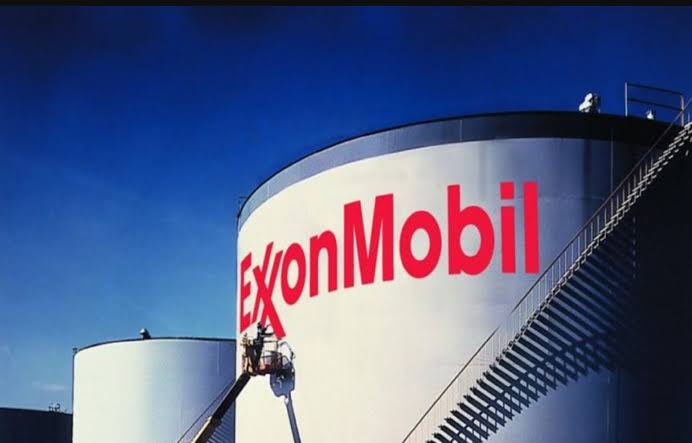
The authorization of confiscation through a revolution doesn’t make confiscation just; however, the enactment of legislation by Washington doesn’t create international law. Both of these points are now being put into direct conflict with each other by the Supreme Court in their ruling in Exxon Mobil v. Corporación CIMEX.
On June 23, 2026, the Court ruled 6-3 that the Helms-Burton Act independently removes the immunity of Cuban agencies and instrumentalities from suit under the Helms-Burton Act. As such, Exxon does not need to establish an independent Foreign Sovereign Immunities Act exception to pursue its claim. Justice Brett Kavanaugh authored the majority opinion for the court; Justice Elena Kagan dissented, joined by Justices Sonia Sotomayor and Ketanji Brown Jackson.
The lawsuit being heard in Washington, D.C., involves the seizure of property in Cuba in 1960. The property seized includes a refinery and service stations owned by Exxon’s previous company. Exxon is seeking over one billion dollars ($1,000,000,000) for interest, statutory treble damages, etc., from parties who used the property after the seizure. The Court allowed the litigation to proceed; however, the Court did not grant Exxon the amount they requested.
The majority was satisfied with how clearly Congress indicated its intent to allow those suits. The dissent questioned if the statute had replaced the immunity structure provided by the FSIA. The dispute centers on what the requirements are under law to judge a foreign entity – not whether the uncompensated seizure of property is morally right.
The most compelling argument in favor of Exxon is clear and simple: a state-owned company cannot use its status as a “state-owned company” to automatically avoid liability for commercially exploiting properties that have been unlawfully taken from others simply because it is owned by a government. If this were possible, then the organization of companies would become a way to keep the profits gained through the unlawful taking of land, and at the same time prevent people from being able to recover what was taken from them.
The American position however, presents a more difficult issue. How would Washington react if other countries passed laws allowing foreign lawsuits against U.S. government agencies for past wrongdoings, based on similar types of liability and enhanced damages? Reciprocity is a way to determine how consistent an organization is. If those who created a framework of accountability refused to use it on themselves, then that framework loses credibility.
There’s a risk of confusing access to court with access to wealth. This case doesn’t answer if a state can use its sovereign immunity to block execution. After winning in court, a successful plaintiff will need to deal with the laws surrounding collections.
Four strategic responses should follow.
First, the district court must require specific evidence showing that the defendants are statutorily liable, what actions taken by the defendants were directly related to the alleged violation, and how much money the plaintiff is entitled to recover from the defendants as a result of those violations. While the court may use historical injustice to inform its decision on whether to find liability or award damages, it cannot substitute for the essential components of a modern-day lawsuit.
Second, Congress should assess if the use of multiple damages promotes compensation, or rather, escalates diplomatic conflicts. The purpose of these remedies is to prevent wrongful exploitation, but the process of obtaining delayed restitution does not turn this into an infinite political weapon.
Thirdly, there needs to be a negotiated claim resolution mechanism between Washington and Havana that has independent valuations, clear criteria for eligibility and reasonable payment terms. Those who have filed claims need to know there is a viable way to get paid. While litigation may create large awards, it does not guarantee payment.
The fourth point is that courts which are evaluating whether to recognize or collect on a foreign judgment should use caution in applying their own immunity, ownership and public policy laws. A foreign court’s decision will be reviewed by an American court to see if it meets American standards for the law, rather than being automatically endorsed or rejected based upon its political implications.
A larger challenge will be to create a solution which protects the rights of property owners, while not viewing economic influence as a form of jurisdictional entitlement. State-owned entities should not serve as safe havens for unlawful business practices. American laws must not be confused with global agreement.
Exxon has received a major chance to go to trial over its actions. How well this opportunity leads to accountability based on principle depends upon what evidence is available, what remedies can be found, and whether Washington is willing to apply the same rules that it would allow to be applied against itself.
Fransiscus Nanga Roka
Faculty of Law Unviersity 17 August 1945 Surabaya and Managing Partner Law Firm Victorious Indonesia




















You must be logged in to post a comment Login