
Forgotten Dairies
Six Years After, What Lekki-Toll Gate Took, The Date Can Never Fade -By Ajiboye Amos Olakunle
The people who protested in 2020 were asking to live without fear of those entrusted with their protection. Six years later, that demand should not be controversial, and it should not still feel unfinished.

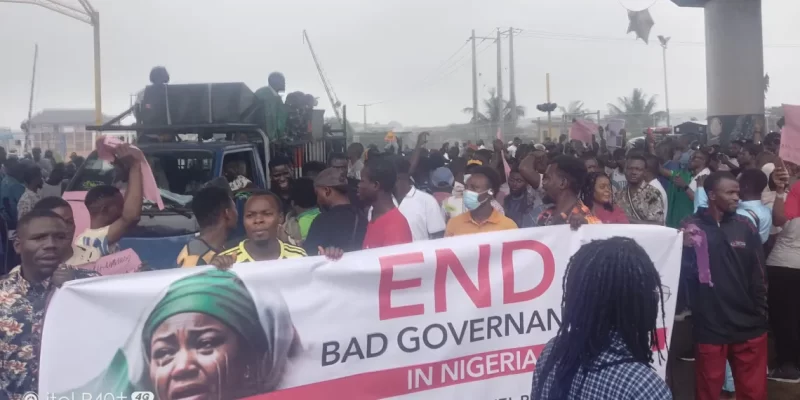
Some people will post pictures of the Lekki Toll Gate. Some will share videos from 2020. Others will write about the young Nigerians who went out to protest against police brutality and never imagined that their demand for a better country would become such a painful chapter in our history.
For a few hours, perhaps a few days, Nigeria will remember.
But after the hashtags disappear and the anniversary passes, what exactly will have changed?
That is the question I keep returning to as we mark six years since the shootings at the Lekki Toll Gate on 20 October 2020. I am less interested in another round of statements about how unfortunate the incident was than in whether the country has done enough to ensure that Nigerians are safer today than they were then.
Because, quite frankly, it is difficult to celebrate progress when the fear that brought people to the streets has not entirely disappeared from our national conversation.
The young people who participated in #EndSARS were not asking for anything extraordinary. They wanted to be able to move around without being harassed because of their appearance. They wanted an end to unlawful arrests, extortion, torture and the abuse of police powers. They wanted to stop living with the suspicion that an encounter with an officer could turn into a nightmare simply because they were young, dressed a certain way or unable to satisfy an unreasonable demand.
These were not unreasonable demands. They were the sort of things a responsible government should already have been working to guarantee.
Yet, in October 2020, Nigerians had to take to the streets to insist on them.
Six years later, we owe ourselves an honest answer to a simple question: did the country address the problem, or did we merely survive the moment?
We cannot pretend that Lekki was just another protest
The events of 20 October 2020 cannot be understood without remembering the days that came before them.
Across Nigeria, young people had gathered to demand an end to the Special Anti-Robbery Squad, a police unit that had become notorious for allegations of harassment, extortion, torture and unlawful killings. The protests were driven by years of frustration and by stories of people who believed they had been mistreated by the very institution meant to protect them.
The government announced the disbandment of SARS on 11 October 2020. But the announcement did not immediately settle the anger. For many protesters, the problem was bigger than the name of one police unit. They wanted assurances that the conduct associated with SARS would not simply continue under another arrangement.
That concern was not difficult to understand. If a house has a leaking roof, changing the name on the gate will not stop the rain from entering.
At the Lekki Toll Gate, protesters continued their demonstrations. Then came the night that would change the course of the movement.
Security personnel were deployed to the area, and gunfire was reported as protesters gathered at the toll gate. Videos, eyewitness accounts and subsequent investigations brought the incident to national and international attention. The precise circumstances, death toll and responsibility for individual deaths became subjects of intense dispute.
The Lagos State Judicial Panel of Inquiry later made grave findings about the incident, including findings that protesters had been shot and that deaths and injuries had occurred. The Lagos State Government subsequently rejected important aspects of the panel’s conclusions in its White Paper.
These disagreements matter, and they should be addressed through evidence, credible investigations and the proper legal processes. But disagreement over particular findings should never become an excuse to dismiss the suffering of victims or abandon the search for the truth.
There were injured people. There were grieving families. There were serious questions about the conduct of security personnel and the handling of evidence. There was a national loss of confidence that could not be repaired by simply asking everyone to move on.
What happened at Lekki became more than a confrontation between protesters and security forces. It became a test of whether the Nigerian state could confront an uncomfortable allegation about its own conduct and provide answers that citizens could trust.
That test is still relevant today.
Disbanding SARS was the beginning, not the achievement
There is a difference between announcing reform and making people experience it.
The disbandment of SARS was an important response to public pressure. But it was never enough, by itself, to guarantee that police brutality would end.
A police institution is made up of people, procedures, leadership structures, training systems and disciplinary mechanisms. If the underlying problems are not addressed, changing the structure or name of a unit may accomplish very little.
What happens when an officer unlawfully demands money from a motorist? What happens when someone is arrested without proper grounds? What happens when a detainee alleges that he has been beaten? What happens when a family reports that a relative has disappeared after being taken into custody?
These are the everyday situations in which reform either becomes real or remains a promise.
A government can issue new rules, establish committees and organise training programmes. Those measures may be useful, but citizens will judge reform by what happens when they encounter the police.
Can they report misconduct without fear? Will their complaints be investigated? Will evidence be preserved? Will officers found responsible face appropriate consequences? Will victims receive the remedies to which they are entitled?
If these questions cannot be answered convincingly, then the work of reform remains unfinished.
The problem is not that every police officer is abusive. That would be unfair to the many officers who perform difficult duties honestly and put themselves at risk to protect the public. The problem is that misconduct, wherever it occurs, must not be protected by silence, delay or the assumption that an officer’s word should automatically prevail over a citizen’s complaint.
An institution earns respect when it is prepared to hold its members accountable.
It loses that respect when citizens begin to believe that reporting an officer is pointless.
That is why the legacy of #EndSARS cannot be measured by whether SARS still exists under its former name. It must be measured by whether the practices that provoked the protests have been effectively prevented and whether people have confidence that the system will protect them when they seek justice.
The reports that make the anniversary uncomfortable
If we wanted to believe that police brutality had become a closed chapter, developments since 2020 would make that belief difficult to sustain.
In February 2026, Amnesty International published an investigation into the Anti-Kidnapping Unit known as Tiger Base in Owerri, Imo State. The organisation documented allegations and findings involving torture, extortion, prolonged arbitrary detention, enforced disappearances and degrading detention conditions.
These are serious findings concerning a specific police unit. They should not be used to condemn every officer in the Nigeria Police Force. They should, however, compel the authorities to address the allegations, investigate possible offences and explain what safeguards are in place to prevent such abuses.
The significance of this report goes beyond the conduct of one unit. It raises the question of whether the protections Nigerians expect when they enter police custody are working as they should.
An arrest must not become an opportunity for extortion. Interrogation must not become torture. Detention must not become a punishment imposed before trial. And the families of people in custody must not be left without reliable information about their whereabouts.
These are basic requirements of lawful policing.
The lesson of Lekki was that public confidence cannot be restored through promises alone. The same lesson applies whenever credible allegations of abuse emerge.
The appropriate response is not to assume that every allegation is true before an investigation is completed. Nor is it to dismiss allegations because they are inconvenient. The response should be to investigate impartially, establish the facts and take appropriate action.
That is how a serious country protects both the rights of citizens and the integrity of its police institution.
Pelumi Onifade and the pain of waiting for answers
For me, one of the most difficult stories connected to the #EndSARS period is that of Pelumi Onifade, the young journalist who disappeared while covering the unrest in Lagos in October 2020.
Pelumi was only 20.
He had gone out to do the work of documenting events, something journalists do so that the rest of society can understand what is happening around them. His disappearance and death left his family searching for answers that should never have been so difficult to obtain.
The case has continued through legal and investigative processes. In September 2026, The Guardian Nigeria reported that a postmortem examination had confirmed that Pelumi died from a gunshot injury. The report formed part of proceedings concerning the circumstances of his death. Establishing individual responsibility remains a matter for the appropriate investigative and legal processes.
Think about what that means for his family.
A young man leaves home to cover an event. He does not return. His family begins looking for him, asking questions and seeking help. What should be a straightforward duty to establish the circumstances of a person’s disappearance and death becomes a prolonged struggle.
No parent should have to endure that kind of uncertainty.
And no family should have to possess money, influence or access to powerful people before it can obtain meaningful answers from public institutions.
Pelumi’s story deserves to be remembered because he was a human being with a family, a future and people who loved him. It also deserves attention because journalists must be able to report events without becoming vulnerable to unlawful violence.
When a journalist dies in circumstances involving security personnel, a credible investigation is not a favour to the family. It is an obligation owed to the public.
The same principle applies to every Nigerian who dies in custody, is injured during an encounter with security personnel or disappears under circumstances that demand investigation.
We cannot restore Pelumi’s life. But we can insist that the circumstances of his death are properly established, that the legal process is allowed to proceed and that his family is treated with the dignity it deserves.
Six years is a long time for a family to live with unanswered questions.
His story reminds us that the consequences of 2020 did not end when the protesters left the streets.
Why are young Nigerians still afraid of the people meant to protect them?
This is the part of the discussion we sometimes avoid because it forces us to look beyond one incident and examine the relationship between citizens and the state.
A police officer has powers that an ordinary citizen does not have. An officer may arrest a suspect, investigate an offence and use force in circumstances permitted by law. Those powers exist because society needs protection against crime and disorder.
But those powers also carry serious responsibilities.
The police must not treat suspicion as proof of guilt. A person’s clothes, hairstyle, phone or social background do not establish that the person has committed a crime. An officer’s personal opinion about how a young Nigerian should look or behave cannot replace lawful grounds for an arrest.
A suspect is still entitled to dignity. A person accused of an offence is still entitled to due process. Even someone who has committed a crime must be treated according to the law.
This is not a defence of criminality. It is a defence of the principle that the law must govern everyone, including those empowered to enforce it.
When people fear the police, they may hesitate to report crimes, share information or seek help when they are in danger. That is bad for the public and bad for the police.
Effective policing depends on cooperation. Officers need information from communities. They need witnesses who are willing to come forward. They need citizens who believe that reporting a crime will lead to a professional response.
Trust makes that cooperation possible.
But trust cannot be demanded from people who have legitimate reasons to question how they will be treated. It must be earned through consistent conduct.
The officer who treats a suspect fairly, refuses an unlawful payment and follows proper procedures helps build that trust. So does the police command that investigates a complaint honestly and communicates the outcome.
On the other hand, when misconduct is ignored, the damage extends beyond the immediate victim. It affects how an entire community views law enforcement.
That is why police brutality should concern every Nigerian, regardless of age, income, political affiliation or social status. Nobody can be certain that they will never need police assistance. Everyone has an interest in ensuring that the institution responsible for public safety is professional, effective and accountable.
Accountability is not an attack on the police
One argument that often appears whenever allegations of police misconduct arise is that criticism of the police will discourage officers or make their work more difficult.
I do not believe that is a reason to avoid accountability.
Police work can be dangerous. Officers confront armed criminals, respond to emergencies and operate in difficult circumstances. They deserve adequate equipment, professional training, fair working conditions and the support of the public.
It is also important to recognise that false accusations can damage innocent officers. Every complaint should be assessed fairly, and no officer should be punished simply because an allegation has been made.
But the same fairness must apply to citizens.
If an officer is accused of misconduct, the answer should be a credible investigation. If the evidence clears the officer, that finding should be respected. If the evidence establishes wrongdoing, appropriate disciplinary or criminal proceedings should follow.
The public should not have to choose between supporting the police and defending human rights. Both are necessary.
A police service that respects the law is better placed to earn the cooperation it needs. A police service that disciplines misconduct protects the reputation of officers who do their jobs properly.
The real threat to public confidence is not accountability. It is the perception that accountability is selective.
No one should be above the law because of a uniform, a rank or an institutional connection. Equally, nobody should be condemned without evidence because of the uniform they wear.
The standard must be the same: facts, fair investigation and due process.
That is the standard Nigeria needs if it is serious about rebuilding trust.
What should have happened in six years?
By now, Nigerians should be able to assess the progress made since the protests with something more substantial than official assurances.
The Lagos State Judicial Panel of Inquiry made recommendations concerning the Lekki incident and wider allegations of police brutality. The authorities should provide a clear and accessible account of what has happened to those recommendations.
Which recommendations have been implemented? Which remain outstanding? Where further action is required from federal or state institutions, who is responsible? What obstacles have delayed implementation?
These are reasonable public questions.
The government should not expect citizens to measure reform by the number of announcements made. It should provide evidence of what has changed.
There are several things that deserve urgent attention.
First, credible allegations of torture, unlawful killings, extortion and arbitrary detention must be investigated promptly and impartially. Where the evidence supports prosecution, the appropriate legal processes should follow.
Second, police complaint mechanisms must be accessible and effective. People should know where to report misconduct, how their complaints will be handled and how they can obtain updates without being exposed to intimidation.
Third, arrests and detention must be properly documented. Reliable records help establish who was taken into custody, where that person was held, when they were released and what happened during detention.
Fourth, officers need sustained training in human rights, lawful arrest, interrogation, crowd management and the use of force. That training must be supported by supervision and consequences for violations.
Fifth, the public deserves transparent information about disciplinary processes and their outcomes, subject to the requirements of due process and legitimate privacy protections.
Sixth, victims and families should have access to appropriate remedies, including compensation where legally justified, and meaningful information about the progress of their cases.
Finally, the government must protect peaceful assembly. Maintaining public order is a legitimate responsibility, but it does not give security personnel unlimited authority to use force against citizens.
These measures are not unreasonable demands. They are the work required to build a professional institution.
And they cannot be implemented only when public anger reaches its peak. Reform must continue when the cameras are gone and the anniversary is over.
The responsibility of government goes beyond issuing statements
One of the greatest dangers after a national tragedy is that public attention eventually moves elsewhere.
New problems arise. New controversies dominate the news. People return to work, businesses reopen and families concentrate on the challenges of daily life.
That is understandable. A country cannot remain permanently suspended in one moment of grief.
But the passage of time should not relieve public institutions of their responsibilities.
The people who were injured at Lekki did not stop mattering when the headlines changed. The families who lost loved ones did not stop deserving answers. The concerns about police powers did not become irrelevant because Nigerians had other problems to confront.
The government has a responsibility to show that the incident led to meaningful institutional learning.
This requires more than statements about peace and unity. It requires evidence that recommendations have been considered, that shortcomings have been addressed and that the systems governing security operations are better equipped to protect life.
It also requires honesty about what remains unresolved.
No government should be expected to solve every institutional problem overnight. Police reform is complicated, and some changes require resources, training, legislation and coordination between different levels of government.
But complexity should lead to a clear plan, not indefinite delay.
Citizens deserve to know what is being done, who is responsible and how progress will be measured.
The best way to restore confidence is to make the process visible enough for the public to judge it fairly.
We must also be careful about what we remember
The history of Lekki has become the subject of intense argument. Different accounts have been offered about the events of that night, the number of people killed and the responsibility of security personnel.
These disagreements should not be ignored, but neither should they become an excuse to abandon the search for truth.
The responsible approach is to examine the evidence, respect the findings of credible investigations while recognising relevant disputes, and allow the appropriate legal processes to establish individual responsibility.
It is possible to insist on accountability without exaggerating what has been established. It is possible to recognise the suffering of victims without claiming that every disputed question has already been resolved.
In fact, accuracy makes the demand for accountability stronger.
When an argument is grounded in evidence, it is harder to dismiss as mere anger or political sentiment. When claims are overstated, attention can shift away from the genuine failures that deserve investigation.
The people who suffered deserve better than to have their experiences reduced to arguments over slogans.
They deserve a serious national conversation about the conduct of security personnel, the responsibilities of government and the remedies available to victims.
Remembering Lekki honestly means being willing to confront both the established facts and the questions that still require answers.
Tomorrow should be more than a day of hashtags
There is nothing wrong with commemorating the victims of Lekki. There is nothing wrong with sharing their stories, expressing grief or reminding the country of what happened.
But we should ask ourselves what follows the remembrance.
If we post about police brutality tomorrow and ignore credible allegations of abuse the next day, what have we achieved?
If we condemn the conduct of security personnel in 2020 but refuse to demand proper investigations when similar allegations emerge, have we learnt anything?
If we remember the young people who protested but do not care whether their demands produced lasting change, are we honouring their concerns or merely repeating their history?
These questions are not directed at social media users alone. They are directed at government officials, security agencies, lawmakers, civil society organisations, journalists and every institution with a responsibility to help make public life safer.
The anniversary should be an opportunity to examine the progress made since 2020, identify what remains unresolved and insist on practical steps towards reform.
It should also be an opportunity to recognise the officers who perform their duties honourably and to support a police service that can protect citizens without violating their rights.
The objective is not to keep the country angry forever. It is to make the causes of that anger less likely to recur.
That is the difference between remembrance and progress.
Six years later, the question remains
On 20 October 2020, Nigerians watched events unfold at the Lekki Toll Gate and asked questions about the use of force against citizens who had gathered to demand police reform.
Six years later, we are still discussing police brutality, accountability and the need to rebuild public trust.
That should concern us.
Not because nothing at all may have changed, but because the country still needs to demonstrate, through evidence and experience, that the rights of citizens are better protected and that allegations of abuse receive the serious attention they deserve.
Nigeria has the opportunity to make this anniversary a turning point in how it approaches police accountability. It can publish meaningful updates on the implementation of the Lekki panel’s recommendations. It can strengthen independent oversight. It can ensure that serious allegations are investigated fairly. It can improve police training and welfare while enforcing professional standards. It can make the justice process more accessible to victims and their families.
These are practical steps. They do not require Nigerians to agree on every detail of the past before work can begin.
They require a shared recognition that public safety and human rights must reinforce each other.
I think about the young Nigerians who joined #EndSARS because they wanted to live in a country where an encounter with the police did not have to become a source of fear. Many of them have continued with their lives. They have pursued careers, started businesses, raised families and tried to make the best of the opportunities available to them.
But the question they raised in 2020 remains important: what does it mean to be a citizen if the institutions meant to protect you cannot always be trusted to do so?
The answer should not depend on how much money a person has, who they know or whether their suffering attracts national attention.
Every Nigerian deserves lawful treatment. Every allegation of serious misconduct deserves proper consideration. Every family seeking answers deserves to be treated with dignity.
And every public institution must understand that its authority comes with obligations.
We cannot change what happened at Lekki. We cannot bring back those who lost their lives, and we cannot give families back the years they have spent seeking answers.
But we can decide whether the lessons of that tragedy will influence how Nigeria is governed.
We can choose to investigate instead of conceal, to reform instead of merely rename, and to hold people accountable through evidence and due process rather than protect institutions at the expense of the truth.
Tomorrow, Nigeria will remember Lekki. The more important task begins when tomorrow is over.
Six years is enough time to ask what has changed. It is certainly enough time to demand a clearer account of what remains undone.
The people who protested in 2020 were asking to live without fear of those entrusted with their protection. Six years later, that demand should not be controversial, and it should not still feel unfinished.
That is the measure by which Nigeria should judge its progress.
Not by the number of anniversary messages we publish, but by whether an ordinary Nigerian can encounter a police officer and feel that the law is there to protect them both.
Ajiboye Amos Olakunle is a Nigerian writer and public affairs commentator.





















You must be logged in to post a comment Login