
National Issues
The Tenancy of Power -By Tony Agbonasevbaefe
Accountability and responsibility must be the watchwords for prosperity for all and not just a select few. The leadership fulcrum must be tightened in the direction of resource management for the good of all. Politics and governance must be built around systems and not strong individuals. The former ensures a seamless flow of development in autopilot mode.

Growing up in Benin City, my father’s house was a melting pot of sorts. You really couldn’t tell who was who, as extended family members enjoyed the same privileges my siblings and I had in the house. As far as my dad was concerned once you are under his roof, everyone was at par. As a child, some of us had a nudge about that. As if that wasn’t enough, we had tenants in the house too, and some had children. They also enjoyed a lot of goodies from my dad and mum in those days.
I remember being reprimanded for a misdemeanour by a tenant then. Imagine the son of the ‘Landlord’ going through that. Life was communal then. I also recall with nostalgia how my siblings and I cried when one of our ‘loving’ tenants moved to another house. His kids were our age mates, and we often played together – Ludo, Ikoto, Siway, Whot, and for my sisters, `One-one`, a game where they sang folklores, clap, and swing their legs/feet in all directions in a highly competitive ‘World Cup final’ mode. In that era, we grew up – the late 1970s and early 80s life was sumptuously communal.
As kids, we really didn’t understand why the tenant and his family would move away from our house. It took my mum several minutes to explain to us that the Iyobosa’s (not real name) were ‘tenants’. They had been tenants in our house before we were born. She told us they paid ‘rent ’- a monthly fee to my dad for the 2-rooms they occupied in our property. My mum explained that as the family increased, they needed bigger accommodation, hence the move.
You may be wondering why I have taken you down memory lane. Time indeed is the only constant. At Grammar School, in our science class, the formula for calculating Time is t = d/v, where d is distance and v is speed. The contextual block of this piece is the evolution of time. Time ticks away, and so does every other thing around it.
In the Benin Kingdom, where I proudly come from, we always had a historical measurement of the endless passage of time. In our dialect, it is customary to ask others, ‘unu Oba ere weh ere ga’, translated as, ‘ How many Kings (the Oba) have you served? In his lifetime, my grandfather lived long enough to serve 5 Obas of Benin. Oba Adolo, Oba Ovonramwen N`Ogbaisi, Oba Eweka II, Oba Akenzua II, and Oba Erediauwa. I have served Oba Akenzua II, Oba Erediauwa, and am serving Oba Ewuare II. These spatial timelines are significant. Time and seasons do come and go.
It is no longer news that Nigeria, Africa’s most populous nation, is preparing for another round of General elections – the 8th consecutive (1999, 2003, 2007, 2011, 2015, 2019, 2023, and 2027) in the current democratic dispensation. There are serious lessons to learn as we approach another Presidential, Governorship, and National/State legislative polls.
First, power is transient. Our political elites must let this sink in. No mortal stays in power forever. Power indeed is a tenancy. You will eventually vacate the ‘rented property’ for its owner -the Landlord. The landlord in this context is the good people of Nigeria. The country belongs to the people, not a select few or political parties. An understanding of this basic principle will help shape the cognitive disposition of some political leaders in our polity. No matter the position you hold today, someone was there before. Just as they left the ‘seat’, you too will exit someday.
Second, what is the purpose of political power? It is for the good of the people, the generality of the people. Not many will argue against that. The building of a just and egalitarian society is a collaboration between the ‘leaders’ and the ‘led’. However, research shows the ‘angle of elevation’ of this ‘collabo’ is tilted heavily toward the leaders. At all levels (national, state, local government) of the Nigerian federation, the leaders must be above board.
Accountability and responsibility must be the watchwords for prosperity for all and not just a select few. The leadership fulcrum must be tightened in the direction of resource management for the good of all. Politics and governance must be built around systems and not strong individuals. The former ensures a seamless flow of development in autopilot mode.
Third is the role of the people (you and I) in nation building. This is not to hold brief for the leaders. We the people hold the ace as well in this ‘game’. In my article, Moral Barometer and Reset some ‘ayon’ ago, a cursory analysis of the three types of people found in every nation was highlighted. It is premised on the fact that unless members of a society understand their role(s), they can never make any meaningful contribution to the advancement of their domain. According to the Greeks, there are three types of people on earth: the idiots, the tribesmen, and the citizens. Studies show that only 10% are citizens in many countries. The remaining 90% are either tribesmen or idiots. This categorisation by the Greeks centuries ago is very relevant in the Nigerian context today.
The aggregate volume of each of these people-types, according to the Greeks, determines what a nation will look like. The terms idiots, tribesmen, and citizens are not in the literary sense, but an empirical evaluation of variation in mindset, character, attitudes, and behaviour prevalent within a national ecosystem. Have a high number of idiots and tribesmen in a country, then you find a disorganised, lawless society. According to the Greeks, some societies have more idiots than tribesmen and citizens. However, some countries have more citizens than tribesmen and idiots. A tribesman can become a citizen through orientation. An idiot can also become a citizen by training and constant enforcement of the law. Tell me of a country with a higher percentage of citizens, and I will show you a decent, well-behaved, organised system and a law-abiding society.
As Nigeria goes to the polls in January 2027, those aspiring to lead at all levels must do so with a sense of responsibility. Political campaigns should go beyond dancing to Afrobeats music and name-calling of opponents. Politicians should let the people know what exactly they want to do if elected. Those already in power seeking re-election should tell the people what it is they have done and why they think they deserve a renewal of their mandate.
As for the people, it is not just enough to tag along. You must interrogate leadership at all levels – the president, governors, legislators, council chairmen/women. In the grand scheme of things, let it be known that, like the tenant in my father’s house, power is transient. Political power is a tenancy. It is renewable and comes to an end at some point. What truly counts is what political leaders do with power from inauguration day to handover day. The clock will always tick and is no respecter of anyone. May Nigeria Succeed!
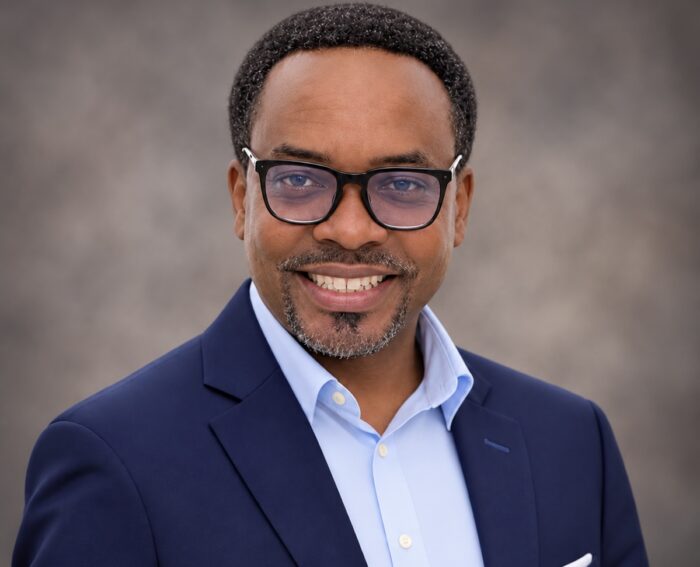
Tony Agbons, an Associate Professor is Lead, Institute of Leadership and Good Governance @www.twin2.org

















You must be logged in to post a comment Login