
Forgotten Dairies
Peter Obi, the Flamingos Incident and the Troubling State of Nigeria’s Democracy -By Jeff Okoroafor
This is why the next election is not just a choice between policies; it is a referendum on the character of our nation. It is a choice between the continued reign of fear, pettiness, and exclusion, and the promise of a new Nigeria where unity and mutual respect take precedence over political differences.

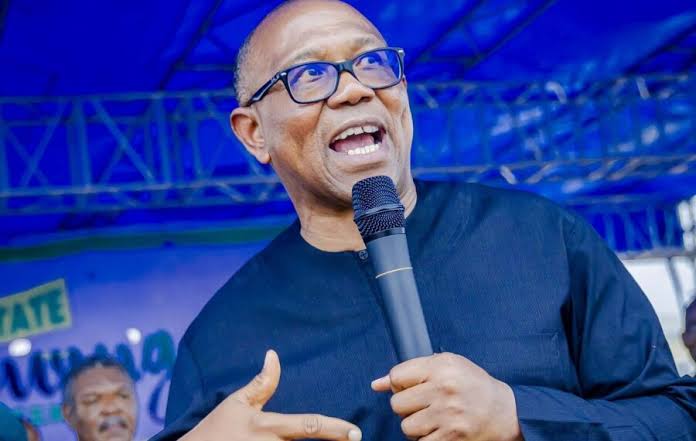
In a democracy, the measure of a government is not found in the grandeur of its ceremonies, but in the small, decent gestures it permits. It is found in whether a nation can collectively rejoice in the triumph of its daughters without a political gatekeeper calculating the cost of a simple hello. By that measure, the government of President Bola Ahmed Tinubu and the All Progressives Congress (APC) has failed a basic test of humanity, revealing a regime so insecure that it would rather insult national heroines than risk a rival sharing their glory.
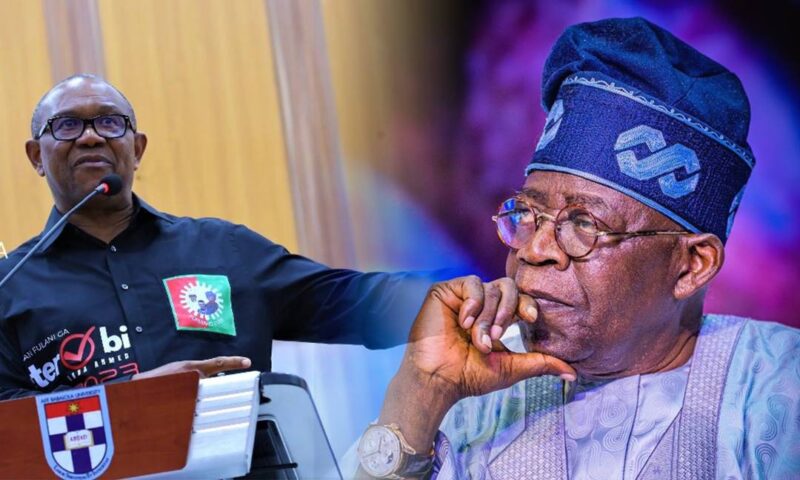
The revelation by Peter Obi, the presidential candidate of the Nigeria Democratic Congress (NDC), that officials of the Nigeria Football Federation (NFF) physically blocked him from greeting the victorious Flamingos at Abuja airport is not merely a petty slight. It is a damning indictment of a political culture that has become utterly toxic, a culture where the fear of a political opponent’s popularity has poisoned the simplest expression of national pride.
The facts are as enraging as they are absurd. The Flamingos had just achieved what no African team had ever done: winning the FIFA U-17 Women’s World Cup, defeating Japan 2-1 in a historic final. They returned home as champions, carrying the hopes and joys of a nation desperate for good news. When Peter Obi, a former governor and a national leader, arrived at the airport at 7 a.m. and saw the team, his instinct was not political; it was human. He asked his protocol officer to see if he could simply congratulate them.
The response from NFF officials, according to Peter Obi, was a threat: if he approached the team, “they would all lose their jobs”. This is the language of a mafia, not a sports federation. It is the logic of a system where every action is filtered through the paranoid lens of political survival. These officials were not protecting the players; they were protecting themselves from the imagined wrath of a ruling party that views any interaction between a rival and a national hero as an act of disloyalty.
This was not an isolated incident. Obi recalled a similar experience on March 25, 2025, in Uyo, during a World Cup qualifier. The state governor welcomed him at the VIP stand, but after the match, while other government officials were allowed to greet the players, Obi was again prevented, with officials citing the same fear of losing their jobs. This is a pattern, a deliberate strategy of political exclusion designed to create a one-party state in spirit, if not yet in law.
The Tinubu administration and its acolytes will undoubtedly trot out their familiar defence: that Peter Obi is “politicising” the Flamingos’ victory. But this is a grotesque inversion of the truth. It is the APC that has politicised a national triumph by turning a simple greeting into a partisan battleground. It is the APC that has so thoroughly infected the civil service and public institutions with its culture of fear that an NFF official believes his job hinges on preventing a citizen from applauding young women who have done their country proud.
What is the government so afraid of? Are the Flamingos’ achievements so fragile that a handshake from Peter Obi would diminish them? Or is the real fear that Peter Obi, a man who has consistently resonated with the youth and the masses, might be seen sharing in the nation’s joy, thereby reminding Nigerians of a leadership that connects rather than commands? The fear is not that Peter Obi will do something wrong; the fear is that he will do something right, and in doing so, expose the cold, transactional emptiness of the APC’s own relationship with the people.
This is the toxic politics that Obi rightly condemned: a politics where hostility, intimidation, and discrimination based on political affiliation have become the default setting of governance. It is a politics that sees citizens not as citizens, but as subjects to be managed, and opponents not as rivals to be debated, but as enemies to be isolated.
This singular act of petty tyranny should be a wake-up call for every Nigerian. It is a window into the soul of a government that has lost the plot. It is a government that has weaponised state institutions against the opposition, a government that has overseen a steady deterioration in the political environment since 2025.
The Flamingos won their World Cup through teamwork, resilience, and an indomitable spirit. They are the embodiment of a new Nigeria that is possible: one that is youthful, talented, and capable of conquering the world. But that new Nigeria cannot be built under a leadership that is frightened of a greeting.
This is why the next election is not just a choice between policies; it is a referendum on the character of our nation. It is a choice between the continued reign of fear, pettiness, and exclusion, and the promise of a new Nigeria where unity and mutual respect take precedence over political differences.
Peter Obi represents that promise. He is the only candidate who has consistently spoken to the better angels of our nature, who has insisted that a different kind of politics is possible. He has the right—indeed, the duty—to salute our heroines, just as every Nigerian does. The fact that he was stopped is a stain on this administration.
It is time for Nigerians to massively back Peter Obi in the next election. Not just to reward the Flamingos, but to reclaim the soul of the country. A vote for Peter Obi is a vote against the toxic politics of the APC. It is a vote for a Nigeria where a man can congratulate a young woman on her World Cup victory without a bureaucrat fearing for his job. It is a vote for a Nigeria that is confident enough to celebrate its heroes without looking over its shoulder. The Flamingos have shown us what greatness looks like. Now, it is time for Nigerians to show that they are ready for a leadership that is not afraid of it.

Jeff Okoroafor is a social accountability advocate and a political commentator focused on governance, accountability, and social justice in West Africa.











You must be logged in to post a comment Login