
Forgotten Dairies
Environmental Crime: The World’s Profitable War Against Nature, by Fransiscus Nanga Roka
Profits generated by environmental crime can travel freely while its victims have great difficulty in obtaining justice. Governments that maintain that imbalance are bringing destruction into the realm of commercial rationality.


Finally, criminal supply chains feeding off trafficked animal, stolen forest and poisoned community can operate off the same financial architecture of complicit intermediaries providing funding in exchange for a share in future profits sleightofhanded as legitimate commerce. When these ecological harms become the repeat business of organized crime networks, environmental destruction results.
Governments will meet in Vienna for the thirteenth Conference of the Parties to the United Nations Convention against Transnational Organized Crime (UNTOC) from 19–23 October 2026. Whether they make it harder to run that business should dictate their credibility not how much of a flourish they use in condemning it.
The money explains the persistence. According to FATF, in 2021 there were estimates of between $110 billion and $281 billion of proceeds annually from environmental crime. These estimates are historical, not a certified balance sheet for the class of 2026. Even more alarming, it found that shell companies, trade-based fraud and the commingling of licit and illicit goods obscure revenues from logging, mining and waste trafficking.
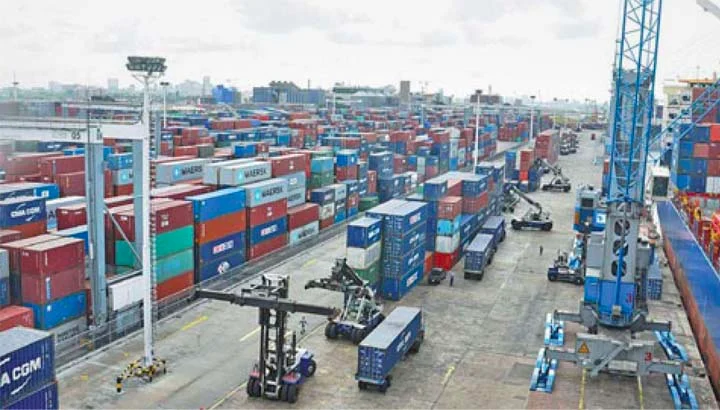
That laundering is what makes supply chains camouflage. In that context, illegal timber can feed legal supply chains. This makes criminal waste shipments look like normal commerce. When payment gets to a halfway decent account, the violence at the source likely is several transactions in the past.
Targeting controls with those carrying the cargo risks leaving those funding and controlling the operation untouched. A disposable courier is sent to jail; the company keeps its capital, its customers and its corrupt security. All governments should therefore measure success by the number of networks dismantled and profits returned, as well as a successful ecological restoration process.
But Vienna has to also rise to a legal limit, often misquoted. UNTOC Article 2(b) defines “serious crime” as any offence punishable by a prison term of at least four years or by a more severe penalty. It does not require a mandatory minimum sentence of four years. That classification can trigger the Convention’s cooperation framework for qualifying transnational organized offences.
So, states should examine whether large-scale environmental offences fall within that threshold, accompanied by penalties in proportion to the significance of the damaged areas and precise definitions. Existing legislation should be sufficiently robust to recognise the difference between legitimate customary livelihoods and organised commercial exploitation. Criminalizing Indigenous communities, while expanding enforcement powers would make this injustice worse.
We should seriously consider an additional protocol to his environmental-crime. IUCN is pushing parties towards binding action, starting with the consideration of such a protocol. That is still an advocacy position, not a treaty one.
What a protocol which has credibility, not just on paper but in practices should address are defined offences, corporate liability provisions, and cross-border evidence sharing between nations as well as remedies for impacted local communities. Use of existing laws should be applied immediately accompanied with negotiations. A new diplomatic process must not become a pretext for another ten years of impunity.
Environmental investigations should be initiated in tandem with financial investigations. Establish legal mechanisms to identify beneficial owners, then investigate suspicious trade payments for each of the goods involved in transnational organized crime involvement and use judicial freezing and confiscation procedures wherever possible. Impose vicarious liabilities on banks and commercial intermediaries where facilitation can be known or per se demonstrable compliance failures.
Importing countries must scrutinize provenance. Exporting states are facing corrupt licensing and inspection. When responsibility is determined, lawful return and remediation need to be funded by waste exporters. Assets that are recovered must be used to support restoration, and community remedies should transparently made through independently audited arrangements.
Indonesia should connect environmental enforcement, customs and financial intelligence around joint investigations while shielding whistleblowers and land defenders.
Vienna must leave delegates with measurable commitments : prosecutions into, not just around, key organisers; proven supply-chain controls and assets recovered, as well as ecosystems restored.
Profits generated by environmental crime can travel freely while its victims have great difficulty in obtaining justice. Governments that maintain that imbalance are bringing destruction into the realm of commercial rationality.
Fransiscus Nanga Roka
Faculty of Law University 17 August 1945 Surabaya and managing Partner Law Firm Victorious Indonesia






















You must be logged in to post a comment Login