
Forgotten Dairies
Samarco: Safety Cannot Follow the Bulldozers, by Fransiscus Nanga Roka
As courts and regulators can say “stop” where evidence is not complete, the decisive test. The latter is precaution made as a promise to the living and justified only after the fact to the dead.

The harsh question Brazil is grappling with is: do communities have to suffer through yet another mining disaster before precaution can be mandated?
In Minas Gerais, Instituto Cordilheira is contesting an appellate provisional ruling on Samarco Long Term Plan. Community advocates, bolstered by ELAW’s technical expertise and partner organizations, are pressing for more rigorous environmental and human rights protections before a proposed expansion to allow the extraction of iron ore and new tailings storage facilities. (Reporting by Clara Ferreira Marques; Editing by Louise Heavens and David Clarke) (The author is a Reuters Breakingviews columnist. The opinions expressed are his own.) Vale and BHP each own half of Samarco.
The historical warning is devastating. The Fundão dam at the Germano Complex operated by Samarco collapsed, in Mariana, killing 19 people on November 5th, 2015. And that history does not dictate that all future endeavors must fall short. This does render scrupulous examination essential.
ELAW reports that on April 24, 2026, an injunction issued in December halted installation work pending further climate studies. The court recognized shortcomings in the environmental assessment and required predictive hydrological and geotechnical modeling, emissions assessment as well as adaptation measures over the entire period of operation and post-closure. But the climate-study requirement was kept in an appellate ruling, so work didn’t go ahead and the appeal came.
And that procedural compromise should be looked at very harshly. Why allow construction to move forward, before the studies can help characterize material risks?
And it is a danger that is as much institutional as engineering. As capital is locked in, structures climb up, contracts cascade and pressure mounts on authorities to open the floodgates for what has already risen. The sunk cost shadow can turn environmental review into a form of ceremony.
A post-hoc study could document risk without actually averting it when consequential construction decisions are made.
More than just some comforting words did so as the planet demands resilience against climate change. Plausible future extremes, compounded hazards and long-term maintenance failures must all be compared to tailings infrastructure. Tomorrow’s question of safety cannot be answered by historical rainfall records alone. Equally, a tech label should not be a replacement for what has been tested to really work.
Five Strategic Safeguards Brazil Needs to Adopt.
Disruption risk assessment should begin by abrogating works that may will undermine the quality of meaningful evaluations during this interim period, until the absent studies can be subjected to impartial scrutiny. Restrictions should be commensurate with the risks, and the reversibility of specific activities, together with transparent test conditions required to restart.
Second, regulators would encourage disclosure of modeling assumptions, ranges of uncertainty and background data and plausible (not just extreme) failure scenarios. Communities require funded access to independent experts and a meaningful chance to interrogate the evidence.
Third, licensing should assess other technically feasible alternatives such as reduced expansion and no expansion. A process that asks only how to build has already given up the question of whether to build.
Fourth, enforceable financial guarantees for emergency response, environmental restoration and closure and post-closure monitoring should be provided by Samarco and its shareholders. Such proposed guarantees should be robust enough to survive corporate insolvency and restructuring. Any obligation in future safety must be kept separate from compensation for past harm.
Fifth, people who are impacted should co-design monitoring and emergency plans. Thresholds for public performance, warning systems accessible to the whole community and suspension triggers prior to professional events would make participation active protection.
The lesson for Vale, BHP and international investors extends beyond Brazil: they need to prove their environmental credibility before creating extra exposure.
Communities should not have to shoulder the burden of rebutting corporate assurances, while construction constrains their options.
As courts and regulators can say “stop” where evidence is not complete, the decisive test. The latter is precaution made as a promise to the living and justified only after the fact to the dead.
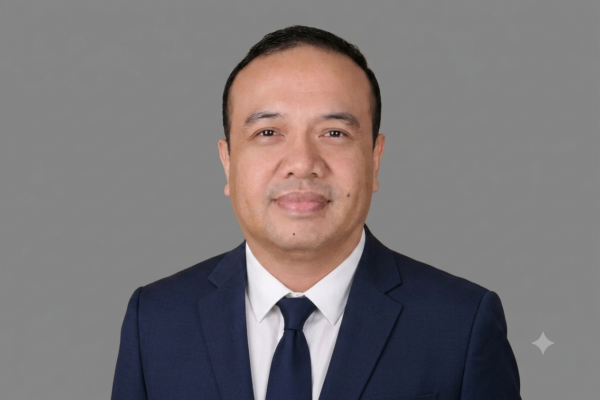
Fransiscus Nanga Roka
Faculty of Law University 17 August 1945 Surabaya and Managing Partner Law Firm Victorious Indonesia






















You must be logged in to post a comment Login