
Forgotten Dairies
Panama Must Not Mine Its Way Around Democracy, by Fransiscus Nanga Roka
The closure without a deal could cost Panama’s own ministry $2.6 billion–$3.4 billion. A government estimate and demand for independent scrutiny. It cannot be idealism succumbing to fluctuations in copper pricing, but an enforceable financial deal that is “no cost to the state”.

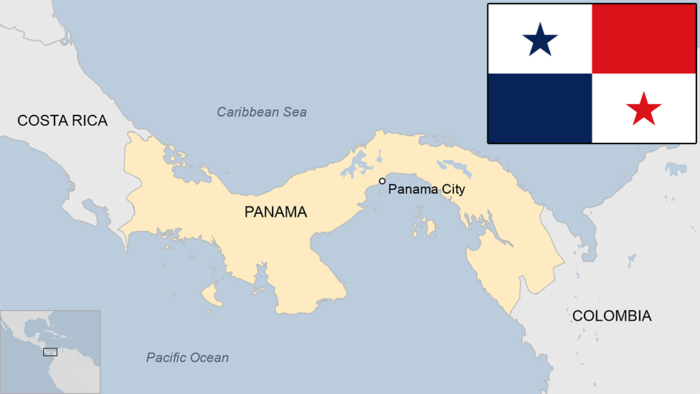
The temptation of promises is strong: “Reopen the mine to close it” It might help pay for ecological restoration or become the language in which short-term extraction wins lasting political immunity. Panama need only require proof on orders before it accepts this paradox.
One of them is related to an interministerial commission that issued 17 recommendations on Cobre Panamá, Canada’s First Quantum Minerals (TSE:FQM) extraction in Donoso. The commission presented its finding on September 30, 2026. It proposed talks about operational activities that would fund an eventual shutdown and settle outstanding arbitrations. However, this was a suggestion and NOT an approval to resume mining. The government of Panama also stated explicitly that there was no new extraction in progress.
The argument started after a huge protest in 2023 spurred another concession. Environmental, Indigenous and civic opposition challenged a model for development that focused economic benefits among relatively few sectors while placing front-line communities at greater risk of ecological disruption. On November 28th, the Supreme Court declared the concession unconstitutional, and led to its closure.
Now the central question is brutally simple: Can Panama negotiate a legal exit without silently reconstituting the alliance its constitutional institutions spurned?
Economic pain is real. This is a mine that once made up 5% of GDP after all, it cannot disappear without blowing back. However reliance on a single industrial activity equally exposes the weakness of economic diversification. Lost revenue can be serious analysis; it cannot bestow constitutional legitimacy.
Environmental criticism should not forsake scientific rigor either. Claims of cyanide poisoning or harm to the water supply for the Panama Canal cannot be made without measured chemical inventories, sampling and hydrological evidence. Suspicion is not proof. Or, one could say that assurances from companies do not take the place of monitoring water quality, stability of tailings and risks due to long-term contamination being assessed in an independent manner.
The tale of arbitration also has to be rewritten. Announced by First Quantum in March 2025, the settlement was related to an agreement made between the parties at that time to halt its ICC proceedings and suspend its Canada-Panama free-trade-agreement arbitration. This creates a misleading negotiating landscape by portraying both as ongoing. An unresolved suspensory claim is not an adjudicated debt, but an asserted damages figure.
The closure without a deal could cost Panama’s own ministry $2.6 billion–$3.4 billion. A government estimate and demand for independent scrutiny. It cannot be idealism succumbing to fluctuations in copper pricing, but an enforceable financial deal that is “no cost to the state”.
Any negotiations should be governed by five safeguards.
Prior to signing, make sure that constitutional and statutory authority for each proposed activity still exists. An unlawful concession cannot be made legal merely by means of a state partnership.
Second, prescribe binding limits on extraction volumes, operating duration and extensions. Separate the processing of currently-owned reserve ore from excavated ore requiring heaps after extraction; Closure milestones must outlive a government смены.
Third, fund a rehabilitation trust administered by an independent third-party before any distributions to shareholders. Must demonstrate financial assurance for closure, water treatment and post closure monitoring under low-price and insolvency scenarios.
Third, fund an independently administered rehabilitation trust first to disbursements to shareholders. Having a financial assurance amount that would be adequate for decommissioning, water treatment and post-closure monitoring, or low-price and insolvency tests.
Fourth, one is to publish environmental data, contractual terms and settlement obligations. Ensure meaningful participation of affected communities, independent technical assistance and effective remedies. Decision-making should be informed by public consultation, not ornamented by it.
Fifth, list each claimant (including spouses and children) and obtain fully enforceable releases that cover any claims likely to be the subject of any settlement. Combine this with worker retraining and regional investment to ensure that another shutdown does not again hold the economy hostage.
First Quantum is seeking a transparent framework consistent with Panama’s Constitution, it said. The test is whether it agrees to enforceable limits when transparency becomes a commercial inconvenience.
Panama requires a properly financed, verified relocation and not an endless mine in name only on closure. You cant buy constitutional obedience with copper revenue.
Fransiscus Nanga Roka
Faculty of Law University 17 August 1945 Surabaya and Managing Partner Law Firm Victorious Indonesia






















You must be logged in to post a comment Login