
Education
Teachers – Why Do We Need Them?, by Daniel IGHAKPE
The teaching profession, it has to be admitted though, is a demanding one which presents many challenges. Being a teacher is not at all easy. It demands a great deal of self-sacrifice. Also, with the declining economy, life has not been easy for many teachers. And poor remuneration has always discouraged people from moving into the teaching profession. Nevertheless, despite the difficulties and drawbacks, many teachers still persevere in their chosen profession.


“Better than a thousand days of diligent study is one day with a great teacher.” -Japanese proverb.
A good education is very important! In the Holy Scriptures, we are strongly encouraged to acquire wisdom. For example, at Proverbs chapter 3, verse 21 [b], we read: “Safeguard practical wisdom and thinking ability.” Also, Proverbs 4:7 says: “Wisdom is the most important thing, so acquire wisdom, and with all you acquire, acquire understanding.” Wisdom implies a breadth of knowledge and a depth of understanding. Education is closely related to wisdom and understanding in the sense that education involves the gradual process of acquiring knowledge and understanding. The Biblical sense of wisdom lays emphasis on sound judgement, based on knowledge and understanding; the ability to use knowledge and understanding successfully to solve problems, avoid or avert dangers, attain certain goals, or counsel others in doing so.
Teachers play a central role in education. They provide education for people of all ages – children to adults, and in a diverse field of studies. Teachers work hard to inspire, guide, educate and mentor us every day. In fact, a very valuable healthcare handbook titled ‘Where There Is No Doctor,’ authored by David Werner has this to say about teaching: “The art of teaching is the most important skill a person can learn. To teach is to help others grow, and to grow with them. A good teacher is not someone who puts ideas into other people’s heads; he or she is someone who helps others build on their own ideas, to make new discoveries for themselves.” The book goes on to say: “People do not learn much from what they are told. They learn from what they think, feel, discuss, see, and do together. So the good teacher does not sit behind a desk and talk at people. He talks and works with them. He helps his people to think clearly about their needs and to find suitable ways to meet them. He looks for every opportunity to share ideas in an open and friendly way.”
What more can be said about good teachers? Good teachers instill confidence in those they teach, and they make learning a fascinating challenge. A good teacher recognizes each student’s potential and knows how to make it blossom and flourish. To get the best out of each child, the teacher must discover what interests or motivates him or her and what makes the child tick, and a dedicated teacher must love children. William Ayers, a teacher, said: “Good teaching requires most of all, a thoughtful, caring teacher committed to the lives of students. Good teaching is not a matter of specific techniques or styles, plans or actions. . . .Teaching is primarily a matter of love.”
The teaching profession, it has to be admitted though, is a demanding one which presents many challenges. Being a teacher is not at all easy. It demands a great deal of self-sacrifice. Also, with the declining economy, life has not been easy for many teachers. And poor remuneration has always discouraged people from moving into the teaching profession. Nevertheless, despite the difficulties and drawbacks, many teachers still persevere in their chosen profession.
With regard to new developments as it concerns teachers in Nigeria, one new and very welcome development currently making the rounds is the newly introduced ‘Accelerated Teacher Professionalisation Pathway’ (ATPP) by the Federal Ministry of Education, Nigeria; the Teachers Registration Council of Nigeria (TRCN); and the National Teachers’ Institute (NTI). This new ATPP initiative, which began in September 2026, provides a structured pathway for people who are currently working as teachers in Nigerian schools, but do not have education-related qualifications (such as the National Certificate in Education (NCE), Bachelor of Education (B.Ed.), Post-Graduate Diploma in Education (PGDE) qualifications, etc.), to earn a Post-Graduate Diploma in Education (PGDE) qualification or a Professional Diploma in Education (PDE) qualification within a 6-month period through the ATPP programme, go ahead to qualify for the TRCN examination, get certified by TRCN, and then obtain their professional teaching license, while continuing to serve their schools and communities.
This is a very timely and considerate initiative indeed! It will also help in reducing the high rate of unemployment and poverty in the country. And, it certainly comes as a huge relief to, and a favorable answer to the prayers of many teachers who do not have education-related qualifications, but nevertheless have a passion for the teaching profession and desire to continue in that line of work. A VERY BIG ‘THANK-YOU!’ to the Federal Ministry of Education, Nigeria, the Teachers Registration Council of Nigeria (TRCN), the National Teachers’ Institute (NTI), and all other contributors, for this very considerate, timely and wonderful initiative! May God richly bless and reward all who have contributed to making this wonderful initiative possible!
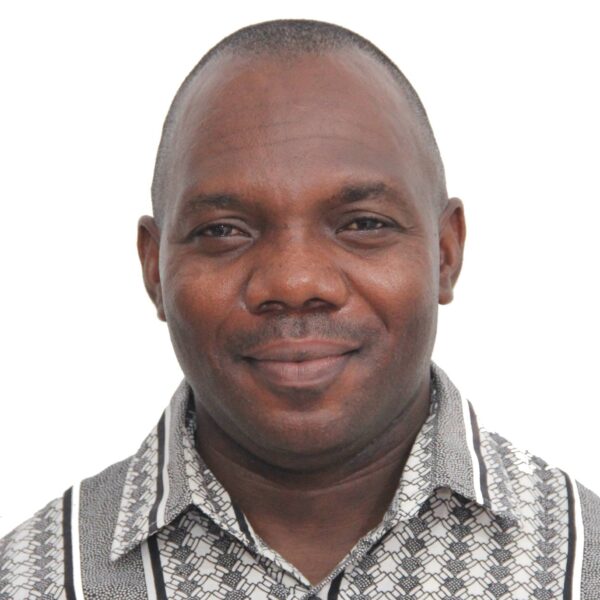
Mr. Daniel IGHAKPE.
0913-739-3829.
(A Schoolteacher at St. Jude’s Private Schools, FESTAC Town, Lagos – https://www.sjps.sch.ng).
















You must be logged in to post a comment Login