
Forgotten Dairies
Bosnia’s Forests Are Not a Constitutional Bargaining Chip, by Fransiscus Nanga Roka
Jobs cannot turn into bargaining chips against the law for the government. DPM states that Vareš has more than 600 employees from Bosnia and Herzegovina We need a credible plan to guard against that risk, not dependence on a litigation foundation that remains unclear.

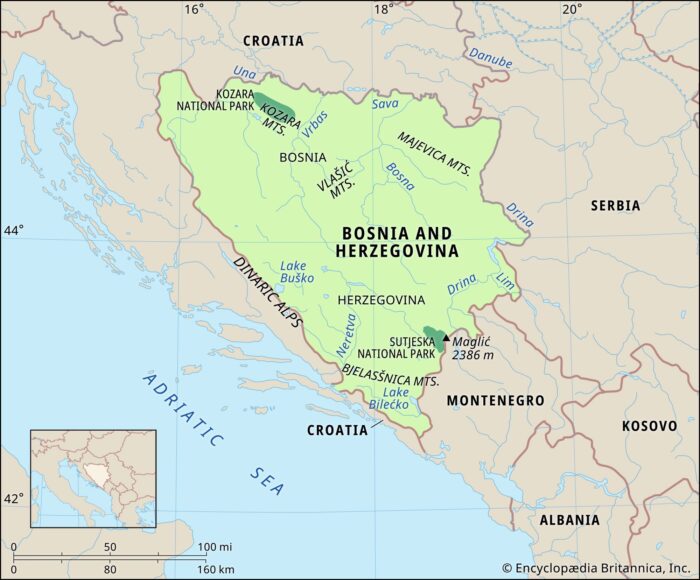
Mine Permits cannot create constitutional power. A Dangerous Model of Development: Bosnia and Herzegovina’s Vareš dispute suggests that approval of investment through fractured institutions, the growth of commercial dependence, and ultimately a challenge over the legality of the land beneath it is a development model.
In U-2/26, initiated by 27 parliamentarians of the Federation from the serb majority area, the Constitutional Court decided that those concession, forest-conversion and easement instruments violate Articles I(2) and III(3)(b) of the Constitution. Okay wrongdoings: Federation, cantonal and municipal authorities disposed anti-state property without jurisdiction and without enforcing the constructor as a legal representative of the owner before a state Prosecutor’s Office; The case was heard during the September 24–25 plenary session of court.
Canadian operator DPM Metals reports that the full decision was released on September 30. In a statement on October 1, the company said that “the ruling does not lead to termination or suspension of the concession and Vareš operates as normal”. The statement also said there is a six month review deadline for involved authorities and Attorney General’s Office.
That distinction matters. The year October 2023 is a point in time, you are not using anything beyond that. Production does not undo the unconstitutional finding. However, the review does not provide for eventual approval: the court has specifically ordered authorities to take measures off-setting acts found non-conforming with the prohibition on disposal state-property.
The deeper scandal is institutional. How is it that governments invite big investments yet cannot agree on who can legally authorize the use of public land? Every stakeholders ability to solve a competence dispute becomes a liability passed from one group of officials to the next, investors and workers and citizens.
Administrative signatures should raise red flags for investors, especially where ownership and jurisdiction are still in dispute. It did not establish corporate criminality or intentional wrongdoing. But it does illustrate why due diligence needs to look not just at operating permits but also constitutional authority.
Jobs cannot turn into bargaining chips against the law for the government. DPM states that Vareš has more than 600 employees from Bosnia and Herzegovina We need a credible plan to guard against that risk, not dependence on a litigation foundation that remains unclear.
And so the six-month review will need to be a way of holding its public accountability.
One, the authorities must publish instruments challenged are land maps, ownership records and a compliance timetable. Each decision to hold, replace or discard an instrument should justify its legal basis.
Second, there must be a substantive role for the Attorney General. Judicial review ought to test both the legality of property use and authority. If controversy remains, independent judicial scrutiny is available. But a constitutional defect is not remediable by merely gathering another signature.
Third, regulators should contract out for impartial environmental evaluations and assess for water, woodland as well as restoration. Mere compliance with the constitution cannot assure environmental safety. Residents should be actively engaged and complaint mechanisms must remain accessible.
Fourth, DPM shall disclose material risks associated with concessions and compliance milestones; and bank adequate funds to rehabilitate projects. Investors require honest uncertainty; communities need binding promises.
Fifth, Bosnia needs to clarify rules regarding state property and concession approval procedures, so that prospective investors do not give rise to pressures for retrospective legalization of their investment activity. Capital spending amplifies the consequences of competence disputes, so these issues should be resolved.
Vareš presents a defining choice. Bosnia can apply its Constitution openly, within lawful review or it can educate prospective investors that an adequate amount of sunk capital makes constitutional limits negotiable.
Forests are public assets. Never allow a concession to become an authorization to undermine the rule of law.
Fransiscus Nanga Roka
Faculty of Law University 17 August 1945 Surabaya and Managing Partner Law Firm Victorious Indonesia























You must be logged in to post a comment Login