
National Issues
Madonna University Nursing Students: Can a Viral Video Cost You Your Degree?, by Oluwaleye Adedoyin Grace
The Nursing and Midwifery (Registration, etc.) Act (Cap N88, LFN 2004) establishes the Nursing and Midwifery Council of Nigeria (NMCN) as the regulatory body for nursing education and practice. The Council prescribes standards of conduct, patient dignity, confidentiality and professional responsibility, which are intended to guide students in approved training programmes, especially during clinical placements.

INTRODUCTION
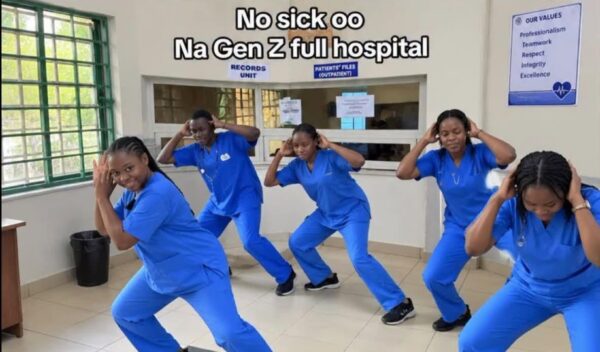
A viral video involving nursing students of Madonna University, Elele, has sparked controversy after the students were seen recording a social-media video within a hospital environment. The video, which included the statement “No sick oo, na Gen Z full hospital,” attracted criticism over its perceived incompatibility with the conduct expected of students undergoing clinical training.
Following the incident, Madonna University took disciplinary action against the students. Reports initially suggested that all the affected students had been expelled. However, the National Association of Nigerian Students (NANS) later clarified that 14 students were suspended, while one student was expelled, reportedly being the student who made the viral post.
The incident raises an important legal question: to what extent can a university discipline a student for conduct displayed on social media, particularly where the conduct occurs within a clinical environment?
- CAN A UNIVERSITY DISCIPLINE A STUDENT FOR SOCIAL MEDIA CONDUCT?
Yes. A university may discipline a student where the conduct amounts to a breach of its applicable rules or regulations. The fact that the misconduct is expressed through social media does not, by itself, place the student beyond the university’s disciplinary jurisdiction.
In Esiaga v University of Calabar (2004), the Supreme Court recognized the authority of a university to discipline an erring student, while emphasizing that fair hearing must guide the imposition of disciplinary sanctions.
Similarly, in University of Ilorin v Oluwadare (2006), the Supreme Court affirmed the role of a university’s internal disciplinary machinery in dealing with student misconduct and held that a student should ordinarily pursue the prescribed internal remedies before approaching the court.
This principle is particularly relevant to the Madonna University incident. The university’s Nursing Department states that its programme is integrated with the Madonna University Teaching Hospital and emphasizes clinical discipline and moral integrity.
Therefore, the central legal question is not simply whether the students had a right to post on social media. It is whether the particular conduct breached an applicable university rule and whether the university exercised its disciplinary power in accordance with the prescribed procedure.
- WERE THE STUDENTS ENTITLED TO FAIR HEARING?
The university’s power to discipline a student is not absolute. Where disciplinary proceedings may result in serious consequences such as suspension or expulsion, the requirement of fair hearing becomes particularly important.
Section 36(1) of the Constitution of the Federal Republic of Nigeria 1999 guarantees every person a fair hearing in the determination of his or her civil rights and obligations.
The Supreme Court has applied this principle to university disciplinary proceedings. In FUT Minna v Olutayo (2017), the Court held that a student facing disciplinary action must be given an opportunity to know the allegation against her, be heard on the allegation and properly defend herself. The Court consequently affirmed the setting aside of the student’s suspension and expulsion where fair hearing had been violated.
Similarly, Esiaga v University of Calabar (2004) remains an important authority on disciplinary proceedings involving university students.
Therefore, in the Madonna University case, the critical question is not merely whether the students’ conduct justified disciplinary action. It is also whether the students were informed of the allegations against them, given an opportunity to respond, and disciplined in accordance with the university’s prescribed procedure.
- DOES NURSING PROFESSIONAL ETHICS CHANGE THE POSITION?
Yes, but only to a limited extent. Nursing students are bound not only by university rules but also by the ethical standards of a regulated profession.
The Nursing and Midwifery (Registration, etc.) Act (Cap N88, LFN 2004) establishes the Nursing and Midwifery Council of Nigeria (NMCN) as the regulatory body for nursing education and practice. The Council prescribes standards of conduct, patient dignity, confidentiality and professional responsibility, which are intended to guide students in approved training programmes, especially during clinical placements.
However, the NMCN’s disciplinary powers must not be confused with a university’s internal disciplinary authority. A university may sanction its students for breach of its own rules, while professional disciplinary proceedings apply within the NMCN’s statutory framework over registered practitioners and approved institutions. The fact that the students were training as nurses does not, by itself, give the NMCN power to expel them from Madonna University; expulsion remains an internal sanction that must derive from the university’s own regulations.
In this case, the alleged recording of the video within the teaching hospital during clinical training is legally significant. Students on clinical placement are expected to observe both university rules and the professional and ethical standards applicable to the healthcare environment.
Nevertheless, professional ethics cannot replace due process. Any sanction imposed by the university must be grounded in clear, pre‑existing rules, imposed through the prescribed procedure (including fair hearing), and proportionate to the misconduct. Accordingly, the propriety of the expulsion and suspensions depends primarily on whether Madonna University acted within its own regulatory framework and complied with due process, rather than on nursing ethics alone.
- WHAT RULE DID THE STUDENTS ACTUALLY BREACH?
The available reports describe the students’ conduct as inappropriate and contrary to the standards expected of nursing students. However, no specific provision of Madonna University’s Student Handbook has been publicly identified in the reports as the particular rule breached by the students. NANS similarly described the conduct as a violation of professional ethics without identifying a specific university regulation.
This distinction matters. Making a video or posting on social media is not, by itself, a criminal offence. The issue is whether the conduct amounted to misconduct under the university’s applicable rules or breached a professional or clinical requirement governing the students.
Madonna University’s own Nursing Department states that its programme is integrated with its teaching hospital and is designed to develop students with clinical discipline and moral integrity. This provides a professional context for the university’s concern about conduct within a hospital environment, but it does not, by itself, establish that the students committed a particular disciplinary offence.
Accordingly, before an expulsion or suspension can properly be assessed, the university’s specific disciplinary rule, the alleged breach and the sanction prescribed for that breach must be identified.
The legal question is therefore not simply, “Was the video offensive?” It is: “What rule did the students breach, and did that rule authorize the punishment imposed?”
- WHAT LEGAL REMEDY DOES THE STUDENT HAVE?
Where a student believes that a disciplinary decision was reached in breach of the university’s regulations or the right to fair hearing, the student may challenge the decision through the appropriate legal process.
The first step will ordinarily be to exhaust any internal appeal or review mechanism provided by the university’s regulations. This is particularly important where the university provides a specific procedure for challenging disciplinary decisions.
If the internal process does not resolve the matter, the affected student may approach the appropriate court seeking relief against the disciplinary decision, particularly where there is an allegation that the university acted outside its powers or violated the student’s right to fair hearing under section 36(1) of the 1999 Constitution.
Depending on the circumstances, the court may examine whether the university acted within the authority conferred by its regulations, whether the prescribed procedure was followed and whether the student was given a fair opportunity to defend the allegation.
However, the court does not ordinarily substitute its own decision for that of the university merely because it might have imposed a different punishment. The focus is principally on whether the disciplinary process and decision were lawful, procedurally fair and within the university’s powers.
Thus, if the expelled student wishes to challenge the decision, the crucial evidence would include the university’s applicable regulations, the disciplinary notice, the student’s response, the proceedings or decision of the disciplinary body, and any available appeal decision.
- CONCLUSION
The Madonna University incident raises a legal issue that goes beyond the content of a viral video. A university has the authority to discipline students for misconduct, particularly where the conduct occurs within a clinical environment and conflicts with applicable institutional or professional standards.
However, disciplinary power is not unlimited. The legality of the expulsion depends on whether the conduct breached the university’s applicable regulations, whether the sanction imposed was authorized, and whether the affected student was given a fair opportunity to defend the allegation.
Ultimately, the question is not simply whether the students’ conduct was inappropriate. The more important legal question is whether Madonna University followed the law and its own rules in responding to that conduct.
References
- Constitution of the Federal Republic of Nigeria 1999, s 36(1).
- Nursing and Midwifery Act 2004.
- Esiaga v University of Calabar (2004) 21 NSCQR 1; [2004] NGSC 18.
- University of Ilorin v Oluwadare (2006) SC 165/2003; [2006] NGSC 167.
- Federal University of Technology, Minna v Olutayo (2017) 12 NWLR (Pt 1580) 1.
- Madonna University, ‘Department of Nursing’ (Madonna University) “https://www.madonnauniversity.edu.ng/department-of-nursing/” (https://www.madonnauniversity.edu.ng/department-of-nursing/).
- TVC News, ‘NANS Clarifies Disciplinary Action Against Madonna University Nursing Students’ (2026) “https://www.tvcnews.tv/nans-clarifies-disciplinary-action-against-madonna-university-nursing-students/” (https://www.tvcnews.tv/nans-clarifies-disciplinary-action-against-madonna-university-nursing-students/).
- BarristerNG, ‘Madonna University Expels Nursing Students Over Viral Offensive Hospital Video’ (2026) “https://barristerng.com/madonna-university-expels-nursing-students-over-viral-offensive-hospital-video/” (https://barristerng.com/madonna-university-expels-nursing-students-over-viral-offensive-hospital-video/).
Oluwaleye Adedoyin Grace, LLB. (Hons.)
Oluwaleyeadedoyingrace2001@gmail.com or 08106289069




























You must be logged in to post a comment Login