
Forgotten Dairies
Indonesia’s Constitutional Court Must Answer for Its Ambiguity, by Fransiscus Nanga Roka
And also four questions had to be distinguish by the Court — whether there is a qualification existed or not, if its recognition has an equivalency valid or not, along with completed documentation of his/her candidacy and that all information being verified properly by the election commission.

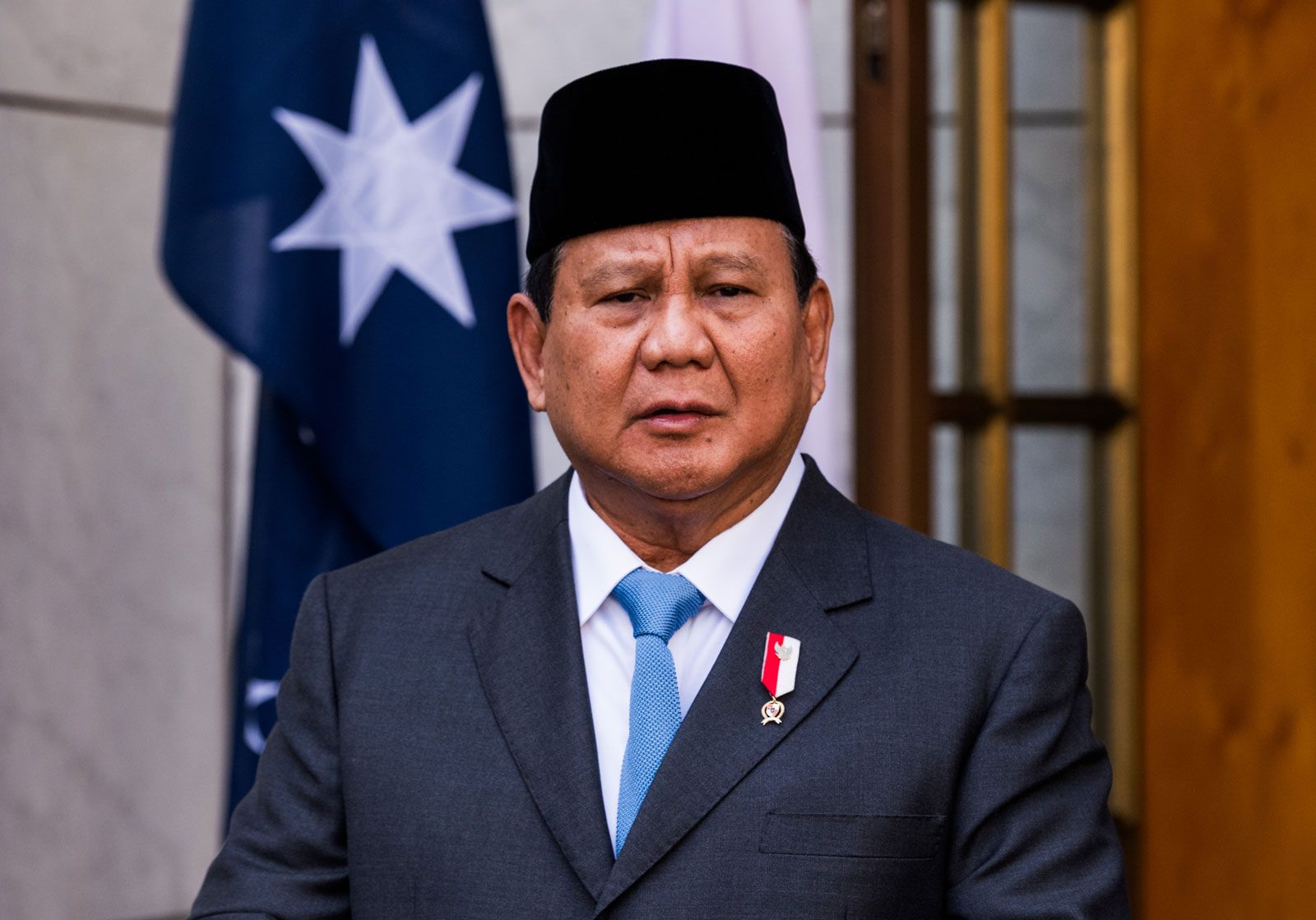
Anything from a constitutional court can shut the door of a case but leave the country gaping inside it. This is the threat revealed by this month’s Indonesia Constitutional Court ruling regarding Vice President Gibran Rakabuming Raka and his educational credentials: substantive findings with significant political ramifications, linked to an inadmissible petition.
Order No. 01/PHPU dated Oct. In the case of PRES-XXIV/2026, the Court looked at evidence presented in an educational session before ruling that the petitioners did not have standing because they were neither presidential nor vice-presidential candidates. The contention is over who is eligible to hold office in election 2024. But its reach is still further: judicial predictability, electoral integrity and public faith in constitutional governance.
This is most devastatingly simple. This kind of analysis is utterly unnecessary, though; If the petitioners were not entitled to bring this case at all, why did first the Court engage in such an extensive exploration of its merits?
If procedural and substantive questions are reordered, the defect is not inherent. Yet one needn’t bother tracing Gibran’s scholastic record at all to learn who these petitioners were. The Court was required to clarify the purpose of that investigation, whether its findings were definitive, observational or had relevance for another constitutional process.
Instead, the link between examination, inadmissibility and legal consequence remains under-clarified.
Exacerbating this problem is the procedural exception. It exceeds the objection to the filing deadline by invoking unusual circumstances, all while keeping standing intact. These conditions have different roles; a principled explanation for why they would be treated differently.
What makes circumstances exceptional? What limits the exception? Must petitioners prove when they could have discovered the new evidence?
It is one thing to be flexible, but if there are no objective boundaries there is little difference between an exercise of flexibility and a discretion exercised arbitrarily. Ius curia novit—the court knows the law—is not, by itself, a constitutional rationale for ignoring an express deadline.
But the evidentiary ones are just as urgent.
In lieu of imposing momentous conclusions on p 373, the Court should have sought direct institutional veracity from MDIS (Singapore), University of Bradford and UTS Insearch or its successor. You are familiar with how each institution contains parts of the academic record: the program that has been completed, the qualification awarded, then admission route and what exactly does a certificate of attendance tell you?
A university degree does not mean equivalence to Indonesian high-school. Similarly, weaknesses in a single document do not prove the absence of all relevant qualifications. Missing embassy records cannot replace verification with the institution that granted the credential.
In the judgement, evidence from education expert Ina Liem is used. The criticism was that, given an MDIS advanced diploma as a piece of knowledge and one needed to defend its relevant status, she should have answered the question in specific terms. Was an individual graduation document released? Was it authenticated? Could it prove that you were eligible at the time? Was it an equivalency that had to be determined separately?
Testimony is one thing and resolving it quite another.
And also four questions had to be distinguish by the Court — whether there is a qualification existed or not, if its recognition has an equivalency valid or not, along with completed documentation of his/her candidacy and that all information being verified properly by the election commission.
Just because you could not establish a fact in court does NOT meant that fact never happened. Inadmissibility does not imply forgery or the obligation to remove vice president.
The stakes for Indonesia are real: written rules governing procedural exceptions; direct verification of foreign qualifications; documentary access with teeth for election monitors; and clear guidance on the statutory consequences of substantive determinations in inadmissible matters. After the Monday night constitutional trial, all subsequent such proceedings shall be “due courses which must be tested independently by evidence and allow an opportunity for a response.
Upon insinuation and vagueness of process, public trust cannot survive for long. Indonesia deserves a verdict that draws the line at where the evidential record stops and judicial power begins and goes next.
Constitutional stability, less is not a verdict that should ever be left as the most powerful of any ruling.
Fransiscus Nanga Roka
Faculty of Law University 17 August 1945 Surabaya and Managing Partner Law Firm Victorious Indonesia
























You must be logged in to post a comment Login