
Forgotten Dairies
A Dancing Governor, Overjoyous Politicians Waiting to Be Elected, and Poverty-Burdened Citizens: The Cost of Governance in a Poor Nation -By Daniel Nduka Okonkwo
The same standard should apply to every public officeholder, regardless of party affiliation, political popularity, or proximity to power. Election campaigns, political rallies, endorsements, and public celebrations are legitimate features of democratic competition. They are not, however, substitutes for governance. Citizens deserve leaders who can explain their policies, account for public resources, respond to legitimate criticism, and demonstrate measurable results.

Political celebrations may last for a day, but the consequences of public decisions can shape lives for years. Leaders should therefore be judged not by political spectacle, campaign fanfare, or displays of enthusiasm, but by the quality of their decisions, the integrity of their administration, the responsible use of public resources, and the improvements citizens can see and verify. In a country where millions struggle to afford food, healthcare, education, and basic transportation, celebrating political alliances while citizens endure severe economic hardship risks losing sight of the true purpose of governance. When a litre of petrol costs about ₦1,450 and an average worker may spend more than ₦70,000 a month on transportation, what exactly is there to celebrate if the incomes of ordinary Nigerians cannot keep pace with the cost of survival? For citizens earning the national minimum wage, such expenses can consume a substantial portion of monthly earnings before food, rent, electricity, school fees, and medical bills are considered. While some Nigerians wake up each morning wondering where their next meal will come from, reports of wealthy families acquiring luxury cars worth hundreds of millions of naira raise uncomfortable questions about inequality, privilege, and the priorities of those entrusted with public resources. Imagine what the cost of a single luxury vehicle could contribute towards equipping a hospital, constructing classrooms, providing essential medical supplies, or developing infrastructure that would improve thousands of lives. The issue is not that every wealthy person has acquired wealth unlawfully, nor that every political celebration is inherently wrong. The issue is whether public officeholders have fulfilled their responsibilities to the people who elected them and whether public resources have been managed transparently and honestly. Where credible evidence establishes that public money has been stolen or misappropriated, those responsible must be held accountable under the law. Nigeria cannot continue to normalise a situation in which political success is celebrated while citizens struggle to afford the necessities of life. The measure of leadership must be the welfare of the people, not the privileges enjoyed by those in power.
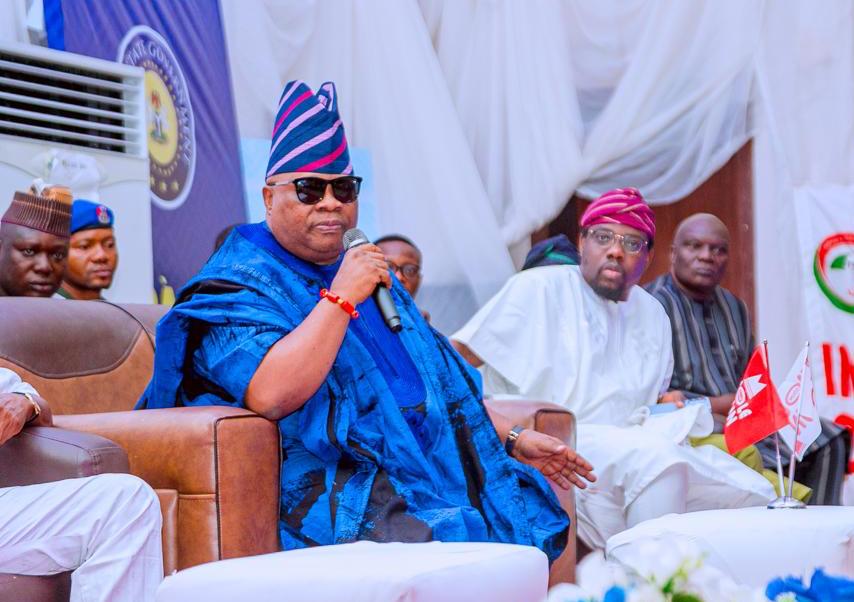
Nigeria’s governance crisis raises fundamental questions about political leadership, public spending, and the welfare of ordinary citizens. On 14 October 2026, Osun State Governor Ademola Adeleke drew public attention after dancing at the inauguration of the Bola Ahmed Tinubu/All Progressives Congress (APC) Presidential Campaign Council in Abuja, where he declared support for President Bola Tinubu’s re-election bid in 2027.
There is nothing inherently wrong with a governor dancing or celebrating political alliances. Democratic politics includes campaigns, endorsements, and public displays of enthusiasm. The more important question is whether political excitement is matched by measurable improvements in the lives of citizens. In a country where millions struggle with poverty, unemployment, rising living costs, and inadequate public services, attention must extend beyond political spectacle to the performance of those entrusted with public office.
The concern extends beyond one governor or one political gathering. Across Nigeria, politicians celebrate alliances, announce ambitions, mobilise supporters, and position themselves for future elections. Meanwhile, millions of citizens remain preoccupied with more immediate concerns: feeding their families, paying school fees, accessing healthcare, securing employment, and keeping small businesses alive. Political ambition is a legitimate part of democratic life, but it should be accompanied by a demonstrable commitment to public service. Leadership is not merely the pursuit of power; it is the responsibility to improve lives.
A national budget should reflect that responsibility. BudgIT’s analysis of the 2026 federal budget placed projected expenditure at approximately ₦68.32 trillion, revenue at about ₦36.87 trillion, and debt-service provisions at approximately ₦15.81 trillion. These figures underscore the importance of prudent financial management, realistic revenue projections, transparent expenditure controls, and effective oversight.
A large budget, however, is not evidence of national progress. What matters is whether approved spending translates into functioning roads, quality education, accessible healthcare, improved security, employment opportunities, and better living conditions. Citizens should be able to determine how much was budgeted, how much was released, what was spent, and what results were achieved. Public expenditure should be judged by outcomes, not announcements.
Recent questions surrounding the purported Presidential Foreign Intervention Promotion Council (PFIPC) illustrate why scrutiny of the budget process is essential. Reports indicated that approximately ₦1.3 billion was allocated to the entity in the 2026 budget, raising concerns about its legal status and the documentation supporting its establishment. The Budget Office of the Federation subsequently stated that the appropriation did not translate into actual expenditure because the required legal and administrative conditions had not been fulfilled. This distinction is crucial: a budgetary allocation does not, by itself, establish that public funds were disbursed or misappropriated. Nevertheless, the controversy raises legitimate questions about the verification procedures applied before entities and their proposed expenditures enter the national budget.
Accountability in such situations requires transparency and a credible investigation. Citizens deserve to know how proposals enter the budget, which institutions verify them, what documentation is required, and what safeguards exist to prevent errors or abuse. Allegations should never be treated as proof of wrongdoing, but concerns about public administration should not be dismissed without proper examination. Where weaknesses are identified, the authorities should explain what happened and what corrective measures will be taken. Public confidence depends on openness, effective oversight, and the willingness to address institutional failures.
These questions become even more significant when considered alongside concerns about the resources available to institutions responsible for combating corruption. Such institutions need adequate funding, operational independence, and effective oversight to discharge their mandates. However, funding levels alone do not determine institutional effectiveness. Citizens also need to know whether appropriated funds were released, how they were spent, what investigations or programmes they supported, and what results followed. Accountability requires a clear distinction between budgetary provisions, actual disbursements, and verifiable outcomes.
Nigeria’s wider fiscal position presents additional challenges. The government must finance security, education, healthcare, infrastructure, social programmes, and debt obligations while responding to competing public demands. Where expenditure significantly exceeds projected revenue, citizens deserve clear explanations of how the deficit will be financed, what borrowing will cost, and how debt obligations may affect future generations. Fiscal responsibility is not simply about raising revenue or approving expenditure; it is about making sound choices, managing public resources prudently, and demonstrating that spending produces meaningful benefits.
Governance is about people. The National Bureau of Statistics’ 2022 National Multidimensional Poverty Index estimated that approximately 133 million Nigerians were multidimensionally poor at the time of the assessment. More recent assessments have continued to highlight the scale of Nigeria’s socioeconomic challenges, although figures from different studies and years should not be treated as directly interchangeable. Behind these statistics are real lives: parents struggling to pay school fees, patients postponing treatment, graduates unable to secure employment, and business owners battling rising operating costs.
The contrast between political celebration and economic hardship must nevertheless be approached fairly. Governor Adeleke’s dancing does not prove poor governance, just as a politician’s serious appearance does not establish competence. Neither enthusiasm at a political gathering nor solemn speeches at official functions should substitute for evidence. The proper measure of leadership is performance. What has been achieved in education, healthcare, infrastructure, employment, security, and economic opportunity? How effectively have public resources been managed? Are government policies producing measurable improvements in the lives of citizens?
The same standard should apply to every public officeholder, regardless of party affiliation, political popularity, or proximity to power. Election campaigns, political rallies, endorsements, and public celebrations are legitimate features of democratic competition. They are not, however, substitutes for governance. Citizens deserve leaders who can explain their policies, account for public resources, respond to legitimate criticism, and demonstrate measurable results.
Nigeria’s institutions must therefore strengthen financial transparency, oversight, and accountability. Citizens should be able to follow public money from appropriation through release and expenditure to project completion and service delivery. Government agencies should publish accessible performance reports, procurement records, audit findings, and project updates. Legislative oversight bodies should scrutinise expenditure, while relevant investigative authorities should examine credible allegations impartially and in accordance with the law. The objective is not merely to spend public funds but to ensure that expenditure serves its intended purpose and produces tangible benefits for the people.
The central question is not whether a governor dances, politicians celebrate, or candidates eagerly anticipate elections. It is whether those who seek and exercise power understand that public office is a trust held on behalf of the people. Political ambition becomes meaningful only when it is accompanied by a commitment to public welfare, responsible administration, and measurable progress.
The ultimate measure of governance is not the celebration of power but the difference that power makes in the lives of the people.
Daniel Nduka Okonkwo is an investigative journalist, human rights advocate, and policy analyst based in Nigeria. He is the founder and publisher of Profiles International Human Rights Advocate (PIHRA), a platform documenting the courage of human rights defenders and examining issues of governance, accountability, security, and fundamental rights.
His reporting on Nigerian governance, security-sector accountability, public finance, and human rights has appeared in Sahara Reporters, Vanguard, Daily Trust, African Defence Forum, Opinion Nigeria, and Daily Intel.
Read more of his work on the PIHRA website:
https://www.profilesinternationalhumanrightsadvocate.com.ng/
For tips, feedback, or collaboration, contact him at dan.okonkwo.73@gmail.com.














You must be logged in to post a comment Login