
Politics
Reviewing Olusegun Obasanjo’s My Watch 1 -By Zayd Ibn Isah
To follow Baba from the market day of his birth to the cell in Yola and the seat of power in Abuja is to understand that Nigeria’s story can hardly be told without him, and that the story is richer, and more honest about our contradictions, because he took the trouble to tell it. Beyond its pages, its greatest gift is an invitation to every Nigerian reader, whatever their tribe or faith, to see themselves in one shared national story.

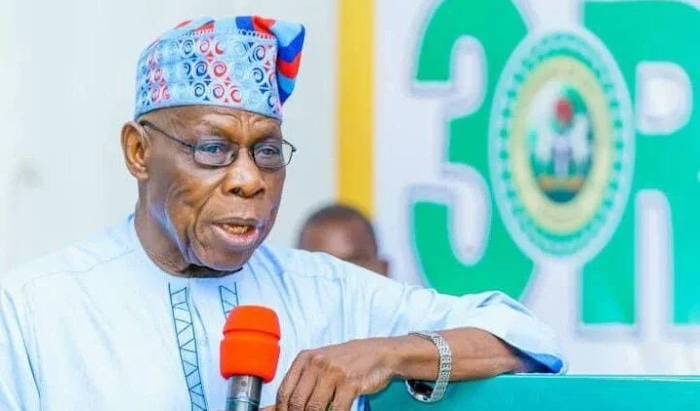
“During his watch, a watchman has no sleep and no respite.” — Dr Olusegun Obasanjo, GCFR, My Watch
There is a famous line in Chinua Achebe’s classic, Things Fall Apart: “Looking at the king’s mouth, one would think he never sucked at his mother’s breast.” It came to mind as I read Baba Obasanjo’s account of his early life, because few memoirs by men of such stature begin so humbly.
The book opens with his birth, as his mother narrated it to him: “You were born on Ifo Market day. I had put my wares together for the market when I suddenly went into labour. It meant that I could not go to the market that day. But before those who went to the market returned to the village, you were already born.”
With no birth certificates in those days, an event had to stand in for a date, and it was left to Baba to work out which Ifo Market day his mother meant. He settled on 5 March 1937. What could have been a dry footnote becomes, in his hands, a window into a world that measured time by markets rather than calendars.
His brief account of the Owu lineage works the same way: it gives just enough history to explain the audacity for which he is known, and never so much that it delays the story. This is among the book’s real strengths. Baba writes as a historian, digging as deeply into the wars of Ogun State and the founding of Kaduna as into his own memories, and the personal vantage point restores what school textbooks flatten. There are stories behind the stories, and it takes someone who has studied and documented them to show their depth. His account also reveals how connected Nigerians are: beneath our different tribes and tongues lie striking similarities in language, culture and tradition.
Just as impressive is the voice. Obasanjo writes plainly, without ornament, and the plainness is a form of authority: he narrates a long life in the idiom of a man speaking to a younger relative, mixing humour, history and blunt self-assessment. The structure serves him too. Chapters move from private memory to public history and back, so that national events are always anchored in a human being, and the reader sees the soldier, the farmer, the prisoner and the statesman as one continuous person rather than four public masks.
The epigraph frames the whole book. A watchman has no sleep and no respite, and the memoir reads as the testimony of a man who has kept watch through coups, a civil war, prison and the presidency. The image is apt: it casts Obasanjo not as a spectator of Nigeria’s history but as a sentry in it, answerable for what he saw and did.
His upbringing is rendered with warmth and restraint. One of only two surviving children out of his mother’s nine and his father’s twelve, he was a boy and still was not pampered; his parents were disciplinarians. Yet his mother, firm as she was, would beg him to eat whenever he went on hunger strike over what he saw as unfair treatment. It is a small detail, but it shows the quality that makes the memoir work: Baba’s gratitude to his parents never hardens into sentimentality, because he is willing to be seen as a stubborn child. The same ease marks his portrait of his father’s liberal attitude to religion, which let him attend Islamic school until the flogging drove him away, and which reflects the Yoruba habit of letting Christians and Muslims live peacefully under one roof.
Olusegun Obasanjo’s My Watch is a story of grass to grace. He was not born with a silver spoon; his father was a farmer, and when his father’s fortunes declined he took menial jobs while his mother took centre stage in his education. The finest chapters here are those at the crossroads in Ibadan, where an entrance examination to the University of Ibadan, a United Nations scholarship to study in the United States and a cadetship examination into the Nigerian Army all lay before him.
“The lure of the adventure of the military was strong,” he writes, and he chose the barracks. Obasanjo is most persuasive in these pages because he presents the choice not as destiny but as a decision made under constraint, by a young man who refused to let other people’s opinions decide for him.
His early army years carry a quiet nostalgia that gives the book moral weight. Having excelled in the rigorous training in Ghana and been sent to the United Kingdom, he began his career in Kaduna, where he met officers who would later rewrite Nigerian history. He mourns the Kaduna that lost its lustre to ethno-religious conflict, and he praises the cooperation, discipline and dedication of Nigerian troops in the Congo, wishing that politicisation had not destroyed those qualities. The elegy is more than regret; it is an argument about what institutions lose when they are bent to politics.
Baba also has a gift for the telling anecdote. While on a survey course in Newbury, he invited his girlfriend, Oluremi Akinlawon, to join him in the UK, but only after her dowry was paid and the rites performed. At their simple registry wedding in London, her brother, who was to be her witness, was nowhere to be found. Baba excused himself, went out onto the street, and invited a West Indian stranger passing by to stand in. I laughed my heart out. The scene captures a free soul who improvises, and it shows a rare willingness in an autobiographer to let the reader laugh with him.
On the coups, he writes with notable restraint. A close friend of Chukwuma Kaduna Nzeogwu, he was out of the country during the first coup, yet was investigated, and he credits the objectivity of the panel that later exonerated him. In the retaliatory coup, his Squadron Sergeant Major knocked on his door at night asking permission to kill Igbo officers in the unit; Baba refused. His reflection on the episode is the book’s moral centre: “We all have different identities, but I use the identity of tribe or language only when it is absolutely necessary. The commonest and most important identity for me is Nigerian.”
It is the sort of passage that justifies reading an autobiography at all: we watch a principle tested at midnight, at his door, with lives hanging on the answer.
His treatment of the Civil War, in which he commanded troops, is equally instructive. The war is a conflict any true lover of this country would wish had never happened, and the country has yet to fully heal from it; Obasanjo treats it accordingly, offering not trophies but twelve lessons, with peace, security and stability first among them. Because he has already captured the war’s graphic horrors in My Command, he wisely does not repeat himself, and the restraint keeps this memoir focused on its own task.
His satirical eye is sharpest in his time as Commissioner for Works. When he told the Permanent Secretary he had no need of a tea girl, he was asked to put it in writing, and a committee was formed. Its report recommended keeping the post because, even if Baba did not need a tea girl, his successor might. No treatise on bureaucratic waste says it better, and the anecdote shows our problems did not begin today.
After his stint as military Head of State, he retired to farming, and Ota Farm became an operational base. There he founded the African Leadership Forum to connect serving African leaders with the next generation. His appointment to the Commonwealth Eminent Persons Group on South Africa cemented his Pan-Africanist credentials, and the memoir lets us see conviction turned into gesture: using a whites-only toilet and walking a whites-only beach to send a message, and writing to Margaret Thatcher to urge sanctions. Even his failed bid to become UN Secretary-General is told with candour. The continent could not agree on a consensus candidate, and the lesson he draws, that Africa can achieve whatever it wants only if it is united in its goals and processes, lingers longer than the defeat. These episodes show a pattern the book documents consistently: Obasanjo’s politics are most convincing when they take the form of personal risk rather than public speech.
The most gripping chapters concern the Abacha years. After elder statesmen came to his farm in 1994, the formation of the National Unity Organization of Nigeria began his troubles, and his lecture at Arewa House in Kaduna was the last straw. What astonished me was his defiance. Warned in Copenhagen that Abacha had decided to arrest him, and offered political asylum by the American ambassador, Walter Carrington, he returned home, reasoning that he had committed no offence and need not become a fugitive.
He wrote:
“Death comes by only once. At some point in life, decisions have to be taken that, if they turn out right, may prove heroic and if they turn out wrong may be regarded as foolish and foolhardy. Whichever way it would turn out, I took the decision to return home” (p. 416).
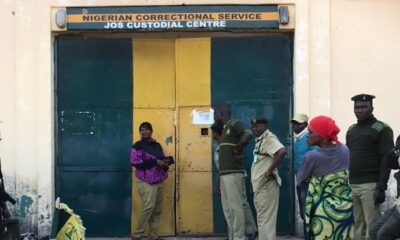
It turned out well for him, though not for his friend Shehu Yar’Adua, who did not live to tell the story. The prison chapters are sobering, yet they reveal his humanity: at Jos he asked to be shown the facility and stopped to speak with condemned prisoners. Most remarkable are the condolence letters he wrote to Abacha when his son died, and to Abacha’s family when the general himself died. When I asked him why, he gave me four lessons for life, three of which I remember: forgiveness, gratitude and relationships. The memoir earns its authority in moments like these, because they cost its author the comfortable role of victim.
Yet for all its candour and charm, My Watch is not without faults: at 1,572 pages across three volumes it demands a stamina few readers can spare and might have gained from firmer editorial pruning.
Still, whatever its faults, My Watch remains an indispensable work: a rare and generous act of witness by a man who has stood at nearly every crossroads of modern Nigerian history, who writes with humour where he could have written with bitterness, who treats forgiveness as a discipline rather than a weakness, and who offers the nation twelve hard lessons from its worst war and a lifetime of evidence that patriotism is a daily practice and not a slogan.
This book is at once a soldier’s testimony, a statesman’s ledger, a farmer’s reflection and a father’s inheritance to a country he refused to abandon even when asylum was offered, and it will be read, argued over and learned from long after the quarrels it provoked have faded.
To follow Baba from the market day of his birth to the cell in Yola and the seat of power in Abuja is to understand that Nigeria’s story can hardly be told without him, and that the story is richer, and more honest about our contradictions, because he took the trouble to tell it. Beyond its pages, its greatest gift is an invitation to every Nigerian reader, whatever their tribe or faith, to see themselves in one shared national story.
I am grateful for the sleepless watchman’s account, and eager to continue with Not My Will. To understand the living legend and national icon that is Dr Olusegun Obasanjo, one must first read and appreciate his unforgettable autobiography.
Zayd Ibn Isah
lawcadet1@gmail.com

















You must be logged in to post a comment Login