
Forgotten Dairies
EndSARS: The Art of Invisible Justice -By Adebayo Afolabi
The art of invisible justice is complete when a state can investigate the killing of its young citizens, produce detailed reports, issue official replies and pay compensation while leaving the question of who fired the live rounds unresolved. Nigeria has documented much of what happened at Lekki. It must still demonstrate that those who wield state power are also subject to the law.


Six years after soldiers opened fire at the Lekki Toll Gate, no soldier or police officer has been publicly shown to have been criminally convicted for the killings of protesters there. The Lagos State Judicial Panel of Inquiry spent months examining the incident, heard testimony from survivors and security officials, reviewed evidence, and published findings serious enough to warrant further legal action. The government responded with a White Paper, accepted some recommendations, rejected others, and authorised compensation. Official statements were issued. The central question remains unanswered: who bears criminal responsibility for what happened that night?
The EndSARS movement grew out of years of documented complaints about police brutality, particularly the conduct of the Special Anti-Robbery Squad. Young Nigerians had long reported profiling, extortion, unlawful detention and violence. By October 2020 the demand had become larger than the abolition of one unit. Protesters wanted proof that officers who abused state power could be held accountable under the same law applied to everyone else.
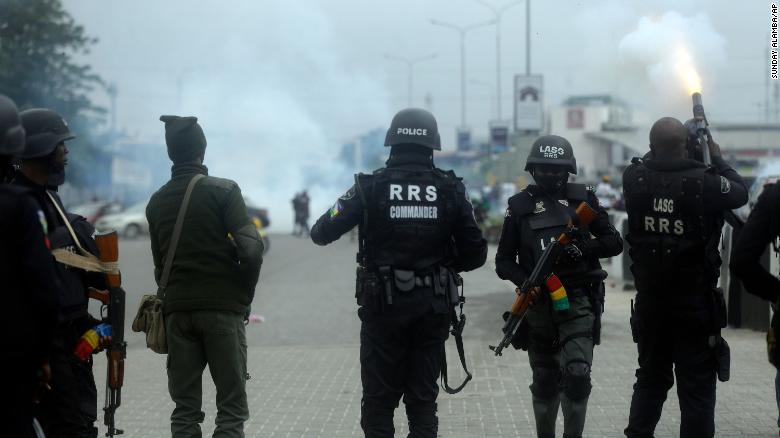
On the night of 20 October 2020, that question was tested in public. Amnesty International reported that soldiers opened fire on protesters at the toll gate. The Nigerian Army later confirmed that troops deployed to the scene carried both live and blank ammunition. Brigadier General Ahmed Taiwo, testifying before the Lagos panel, maintained that only blank rounds were fired. The distinction became central to the dispute over what occurred.
The Lagos panel’s final report, submitted in November 2021, described the incident as a “massacre in context.” It identified nine deaths at Lekki with a reasonable degree of certainty and recommended prosecution of identified security personnel along with disciplinary action. These were consequential findings based on months of formal hearings.
The Lagos State Government’s White Paper rejected the panel’s characterisation of the incident as a massacre and disputed aspects of its findings on deaths. The federal government also challenged the massacre description. Compensation of approximately ₦410 million was approved across petitions considered by the panel. The money provided necessary support for medical costs, lost income and other consequences of injury or loss. It did not, however, establish individual criminal responsibility or answer the questions raised by the panel’s findings.
The same pattern appeared across the country. Judicial panels in 29 states and the Federal Capital Territory received thousands of petitions. Some recommended prosecutions and disciplinary measures. Some victims received payments. The public record offers little clear evidence of how many officers implicated in serious abuses were charged, tried, or convicted.
In July 2024 the ECOWAS Court of Justice added another layer of obligation. In a case brought by Obianuju Catherine Udeh (DJ Switch) and two other applicants, the court found Nigeria responsible for human-rights violations connected to the Lekki events. It ordered compensation of ₦2 million for each applicant and required a new investigation, prosecution of those responsible, and a report on implementation. Publicly available information has not established that the prosecution requirements have been fully met.
The cumulative effect of this gap between investigation and consequence is measurable. Afrobarometer research published in 2026 found that only 28 per cent of surveyed Nigerians expressed confidence that ordinary citizens who had been wronged could obtain justice through the courts. When official inquiries produce serious findings but leave criminal responsibility unresolved, public trust erodes further. The same concern resurfaced after the #EndBadGovernance protests in August 2024. Amnesty International reported that at least 24 people were killed and later stated that no security personnel had been prosecuted for those deaths as of August 2025.
There is a difference between investigating an incident and delivering criminal accountability. An inquiry can establish facts and recommend action. A white paper can state the government’s position. Compensation can recognise harm. None of these, on its own, places an individual before a court to answer for the use of lethal force against unarmed protesters.
The young people who gathered at Lekki in 2020 were demanding a country where those entrusted with power could be held accountable for how they used it. Six years later, Nigeria has reports, testimonies, court findings and official responses. What remains missing is a convincing public record of criminal responsibility.
The art of invisible justice is complete when a state can investigate the killing of its young citizens, produce detailed reports, issue official replies and pay compensation while leaving the question of who fired the live rounds unresolved. Nigeria has documented much of what happened at Lekki. It must still demonstrate that those who wield state power are also subject to the law.
Adebayo Afolabi is a Nigerian writer interested in democracy, governance, and public policy in Africa. His work examines political accountability, democratic institutions, and the ways public policy shapes everyday life.









You must be logged in to post a comment Login