
Forgotten Dairies
#Endsars: The Tragedy Nigeria Has Failed To Learn From -By Isaac Asabor
The nation must move past the superficial query of whether SARS was disbanded and confront the deeper question: “Has Nigeria dismantled the institutional culture of impunity that made #EndSARS inevitable?” Until that question can be answered with clear, verifiable evidence, Nigeria cannot claim to have learned from its tragedy. A nation that honors its dead while leaving the systemic abuses of the living unchecked has learned nothing from its history.

The greatest tragedy of Nigeria’s #EndSARS movement was not merely the bloodshed, destruction, and profound national anguish that characterized October 2020. Rather, the true tragedy lies in the nation’s systemic failure to transform that watershed moment into an enduring culture of accountability, institutional transparency, and respectful policing.
Confronted with an unmistakable warning about the mortal dangers of unbridled state power, the Nigerian government has had years to reflect, reform, and rebuild damaged public trust. Yet, the fundamental grievances that drove thousands of young Nigerians into the streets remain disturbingly unresolved as the answers to the following questions have remained elusive: “Who holds state security agencies accountable when the very custodians of public safety become accused of brutalizing citizens?” “Who answers for the unlawful, disproportionate deployment of force against non-violent assemblies?” and “What credible assurances do citizens possess that future calls for reform will not be met with state-sanctioned intimidation, digital suppression, or violence?”
The foregoing queries touch the core of Nigeria’s democratic credibility. A state cannot credibly claim to have learned from #EndSARS simply because the Special Anti-Robbery Squad (SARS) was officially disbanded. Disbandment was merely an administrative decree; genuine institutional transformation requires rigorous consequences, legal accountability, and undeniable evidence that oppressive conduct will not be tolerated under a different unit’s name. The story of #EndSARS is not merely a retrospective on October 2020, it is an ongoing critique of Nigeria’s past neglect, current inertia, and future obligations to ensure that citizen suffering was not in vain.
The #EndSARS protests did not erupt in a vacuum. For decades, Nigerian citizens, particularly youth, endured systemic harassment, arbitrary detention, extortion, and extrajudicial violence at the hands of law enforcement. Young professionals, tech workers, and students were routinely targeted based on superficial markers: dreadlocks, choice of clothing, smartphones, laptops, or modern vehicles. For millions, encounters with the police were not sources of security, but encounters of acute terror and financial extortion.
So, when mass protests erupted in October 2020, they provided a unified platform for years of buried trauma and public frustration over police brutality. Demonstrators presented a clear and constructive agenda, demanding the immediate release of all arrested protesters, justice and financial compensation for victims of police brutality, independent investigations into allegations of misconduct and the prosecution of erring officers. They also called for the psychological evaluation and retraining of police personnel, alongside adequate remuneration and improved welfare for officers, recognizing that meaningful police reform required not only accountability for abuses but also better working conditions and institutional changes to prevent future violations.
These demands were not an attempt to dismantle the state; they were an explicit call for the Nigerian government to uphold its constitutional obligation to safeguard life, liberty, and human dignity.
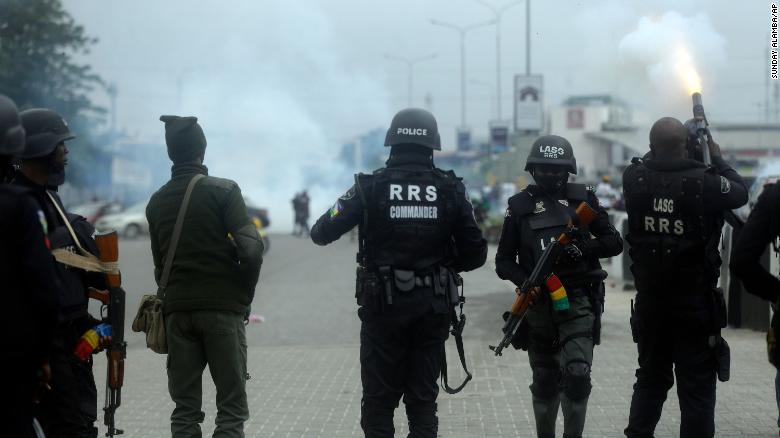
Instead of recognizing these peaceful demands as an opportunity for structural renewal, the state reacted with hostility, often blurring the line between peaceful dissent and criminal subversion. In a constitutional democracy, criticism of state institutions is a protected right, not an act of treason. While criminal acts, arson, and opportunism did occur on the margins of the broader unrest, the unlawful actions of a few cannot retroactively justify the indiscriminate use of force against peaceful citizens exercising their constitutional rights.
The events of October 20, 2020, at the Lekki Tollgate in Lagos remain the emotional epicenter of the #EndSARS narrative. The deployment of armed military personnel to a peaceful protest site, followed by reports of live ammunition, casualties, and severe injuries, provoked international outrage and severely compromised the government’s democratic standing.
The Lagos State Judicial Panel of Inquiry subsequently characterized the event as a tragic misuse of state power in its findings. However, federal authorities disputed crucial aspects of the report, leaving the issue locked in a battle of conflicting official narratives.
A democracy cannot heal when significant national events are reduced to public relations disputes. Reconciliation requires a transparent, binding judicial process capable of establishing facts, enforcing accountability, and offering restorative justice to victims and their families. The absence of closure surrounding Lekki leaves it not only as a painful memory, but as a stark symbol of unanswered state power.
Disbanding a compromised police unit is an administrative step, not a comprehensive solution. An organizational structure can be formally dissolved while its underlying culture, operational habits, and impunity survive intact under new designations. Rebranding a security unit does not inherently reform the behavior of its personnel, nor does it guarantee safety for ordinary citizens navigating daily checkpoints.
The true test of reform lies in the daily interactions between law enforcement officers and the public. This is particularly evident on Nigerian highways, where several critical questions demand answers: “Can an ordinary citizen travel freely or report a crime without fear of extortion, intimidation or violence?” “Is there an accessible and independent body to investigate allegations of police misconduct without fear of retaliation?” “Are officers who violate human rights held accountable under the same laws applied to civilian offenders?”
In fact, impunity not only harms individual victims but also erodes public trust in law enforcement. Public security and police accountability are not mutually exclusive; they are complementary pillars of a just, credible and effective policing system.
For police reform to be meaningful, it must include rigorous internal discipline, independent external oversight, competitive salaries, modern training modules in human rights, and transparent legal proceedings against offending officers. Ensuring officers operate within the law does not weaken state security, it strengthens state authority by restoring public trust.
In fact, the failure to learn from #EndSARS highlights a chronic defect in Nigeria’s political leadership: the tendency to prioritize power preservation over addressing legitimate public grievances. Political leaders must refrain from dismissing public dissatisfaction as foreign conspiracy, partisan sabotage, or youthful rebellion. A government demonstrates strength, not weakness, when it listens, accepts constructive criticism, and corrects systemic failures.
Furthermore, political rhetoric celebrating young Nigerians as the “leaders of tomorrow” rings hollow when those same citizens are silenced when demanding basic constitutional rights. Elected representatives, legislative oversight committees, and judicial institutions must actively enforce oversight rather than reacting only when public frustration boils over into the streets.
At the same time, citizenship carries equal responsibilities. The destruction of public infrastructure, looting of private businesses, and violence against innocent citizens during the broader unrest undermined the noble objectives of the #EndSARS movement. Anger, no matter how justified, does not validate criminal opportunism.
For civilians, movements must maintain strict non-violent discipline, reject destructive opportunism, and articulate clear legal objectives. For security forces, the exercise of authority demands legal restraint, proportional use of force, and strict adherence to constitutional provisions and democratic norms. Political leaders, on their part, must recognize that ignoring the underlying grievances of the people is a dangerous strategy that can deepen public discontent and sow the seeds of future instability.
Not only that, every anniversary of #EndSARS offers a moment for national reflection, but solemn remembrances alone do not constitute progress. Commemorative speeches, press releases, and symbolic gestures are meaningless if the structural conditions that sparked the protests remain unchanged. In fact, to move from symbolic remembrance to tangible reform, the Nigerian government and civil society must prioritize key operational steps.
As a preemptive measure, the government must publish and implement all recommendations made by judicial panels across the states, including the full payment of compensation awarded to victims. It must also establish fully independent and adequately empowered civilian oversight bodies with the statutory authority to investigate and prosecute cases of police misconduct without undue interference. Equally important is the need to safeguard citizens’ constitutional rights to peaceful assembly, freedom of speech and digital organization, ensuring that these liberties are exercised without fear of financial restrictions, state surveillance or arbitrary arrest.
The ultimate tragedy of #EndSARS would be to allow the memory of October 2020 to fade into bureaucratic indifference while the conditions that caused it persist. The victims of police brutality, their families, and the young citizens who marched peacefully for a better nation deserve more than sympathy, they deserve verifiable reform and lasting justice.
Nigeria cannot prevent future civil unrest simply by increasing security measures or suppressing public gatherings. Sustainable peace requires robust institutions, leaders responsive to citizen grievances, and a legal system that holds all individuals accountable regardless of status or uniform.
The nation must move past the superficial query of whether SARS was disbanded and confront the deeper question: “Has Nigeria dismantled the institutional culture of impunity that made #EndSARS inevitable?” Until that question can be answered with clear, verifiable evidence, Nigeria cannot claim to have learned from its tragedy. A nation that honors its dead while leaving the systemic abuses of the living unchecked has learned nothing from its history.




















You must be logged in to post a comment Login