
National Issues
Ebola And Nigeria’s Recurring Outbreaks: The Neglected Role Of The Right Public Health Workforce -By Arise Victor Oluwaseyifunmi
Nigeria’s response to infectious diseases must extend beyond containing individual cases. The country needs preventive services that are properly staffed, professionally coordinated, and adequately resourced. Public health professionals must not merely participate in outbreak response; their expertise must meaningfully shape how prevention is planned, implemented, and evaluated.


Nigeria cannot strengthen disease prevention without putting the right public health professionals where their expertise is needed most!
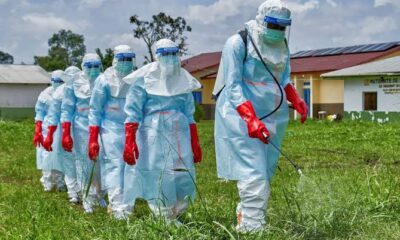
Nigeria’s reported Ebola case in Abuja on 20 October 2026 reinforces the need to strengthen the country’s capacity to prevent and contain infectious disease outbreaks. While rapid diagnosis, isolation, and contact tracing are essential, effective outbreak control begins with early detection, community surveillance, risk communication, and preventive interventions. Nigeria has trained public health professionals, but their expertise must be fully integrated into the planning, leadership, and delivery of preventive health services.
The concern is not simply a shortage of healthcare workers or the absence of public health structures. It is whether the right professionals are leading and coordinating the functions for which they are specifically trained. Public health graduates possess expertise in epidemiology, disease surveillance, health promotion, and population-level prevention. Yet preventive services remain clinically dominated, limiting the contribution of professionals whose primary training focuses on preventing disease The issue is not the absence of public health professionals, but the need to recognize, deploy, and empower them appropriately.
Clinicians are indispensable to diagnosing and treating patients, but outbreak prevention requires complementary expertise. Public health professionals should play leading roles in surveillance, epidemiological investigation, community engagement, risk assessment, and preventive programme coordination. This is not a contest between professions; it is a question of ensuring that responsibilities align with training and competence. A health system that depends heavily on clinical leadership across preventive functions risks underutilizing the very expertise needed to reduce disease transmission before patients require hospital care.
The Federal Government, state governments, and local government authorities must prioritize three actions: First, review workforce deployment and ensure bonafide graduates of public health occupy appropriate positions within disease surveillance units, public health departments, primary healthcare systems, and emergency preparedness structures. Second, establish clear professional responsibilities that enable public health experts to lead preventive interventions while clinicians concentrate on clinical management. Third, institutionalize inter-professional collaboration based on competence, mutual respect, and shared accountability for health outcomes.
Nigeria’s response to infectious diseases must extend beyond containing individual cases. The country needs preventive services that are properly staffed, professionally coordinated, and adequately resourced. Public health professionals must not merely participate in outbreak response; their expertise must meaningfully shape how prevention is planned, implemented, and evaluated.
Prevention works best when the right professionals are trusted to lead the work they are trained to do.
THE COST OF INACTION IS TOO HIGH!
Arise Victor Oluwaseyifunmi
Writer & Author | Young Academic
Public Health Researcher
Health Systems Reform Advocate | Pan-Africanist





















You must be logged in to post a comment Login