
Politics
The Obedient Question: Can Nigerians Choose Peter Obi as Their Next President? The Political Prodigal Son’s Bid for Power -By Daniel Nduka Okonkwo
Whether Obi ultimately emerges as Nigeria’s next president remains uncertain. Electoral success will depend not only on popular enthusiasm but also on coalition building, organizational strength, and the ability to unite diverse regional interests under a coherent national vision.

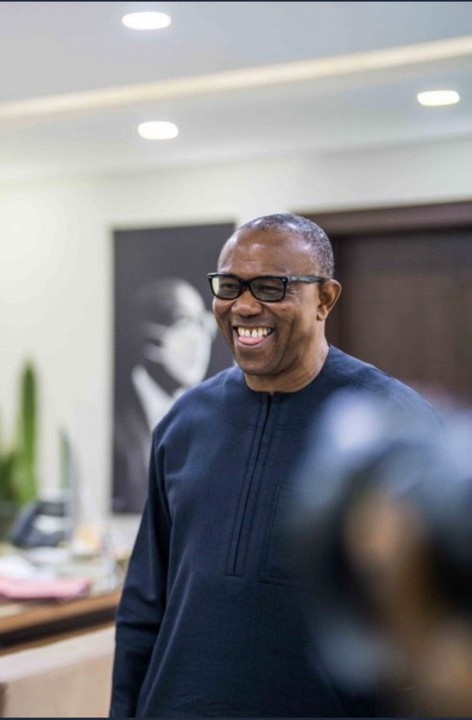
In a nation blessed with immense potential yet shackled by deliberate neglect, the question arises: can one man, Peter Obi, truly make a difference? Nigeria’s political landscape has long been dominated by empty promises, where hunger is wielded not merely as a consequence of food scarcity but as a calculated instrument of control. Politicians exploit economic hardship in ways that entrench poverty and deprivation, leaving citizens focused on survival rather than governance.
By withholding basic development such as water infrastructure, job creation, and sustainable livelihoods, political leaders reinforce a culture of dependency. Food items and small cash handouts frequently replace meaningful policies, transforming elections into transactions rather than genuine democratic choices. This systemic deprivation erodes dignity, leaving the populace vulnerable to exploitation and less likely to demand accountability from those in power. In this context, hunger becomes more than a social challenge. It becomes a political strategy that keeps citizens preoccupied with survival and perpetuates a cycle of poverty that undermines the nation’s path to progress.
Nigeria’s political environment has therefore become one where grand promises rarely translate into meaningful change. Across many communities, hunger reflects deeper structural failures within governance. Economic hardship has gradually become intertwined with political power, reinforcing patterns of underdevelopment that limit citizens’ ability to challenge authority.
Across the country, the absence of basic infrastructure such as reliable electricity, clean water systems, quality healthcare, job opportunities, and sustainable livelihoods continues to undermine national development. In such conditions, political patronage thrives. Food items, small cash handouts, and temporary relief measures often replace long-term policy solutions, turning elections into transactions rather than expressions of democratic choice.
These cycles of deprivation have weakened civic engagement. When citizens are forced to focus on daily survival, the space for political awareness and public accountability narrows, allowing the existing system of patronage to persist.
Against this scenery, the rise of Peter Obi has sparked both hope and controversy. The former governor of Anambra State and presidential candidate in the 2023 Nigerian presidential election energized a generation of young voters seeking an alternative to Nigeria’s traditional political establishment. His campaign galvanized the widely known Obidient movement, particularly among young people eager for a departure from conventional politics.
However, the official results of the 2023 election placed Obi third, behind Bola Ahmed Tinubu, who won the presidency with 36.61 percent of the vote, and Atiku Abubakar, who secured 29.07 percent. Obi received 25.4 percent of the vote, though many Nigerians disputed aspects of the election outcome.
As Nigeria approaches the 2027 presidential election, the debate about Obi’s political future has intensified. Supporters believe he represents a credible alternative capable of challenging the dominance of the two major political parties, while critics question whether his movement can translate popular enthusiasm into electoral victory.
One of the central challenges facing Obi in 2023 was the absence of a strong nationwide party structure comparable to those of the ruling All Progressives Congress and the opposition People’s Democratic Party. Without such organizational depth across Nigeria’s diverse regions, sustaining political momentum proved difficult.
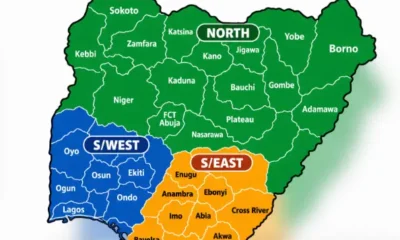
If Obi hopes to succeed in 2027, he must significantly expand his political reach, particularly in the northern and southwestern regions where his support base was comparatively weaker during the last election cycle.
Recent political developments have further intensified the debate. In March 2026, Obi formally left the Labour Party and joined the African Democratic Congress, registering as a member in his hometown of Agulu in Anambra State. The move followed months of speculation and internal disputes within the Labour Party’s leadership.
According to Obi, unresolved leadership crises within the party and concerns about recognition by the Independent National Electoral Commission contributed to his decision to seek a new political platform. His entry into the African Democratic Congress is also part of a broader opposition effort to form a coalition capable of challenging the ruling party in 2027.
Yet the move has not been without criticism. Some detractors describe Obi as a political prodigal son, pointing to his movement across several parties over the years, including the All Progressives Grand Alliance, the People’s Democratic Party, the Labour Party, and now the African Democratic Congress. To them, such transitions suggest inconsistency and weak party loyalty.
Supporters interpret the matter differently. They argue that Obi’s political journey reflects a pragmatic search for a viable platform capable of advancing national reform. In their view, the pursuit of effective governance should outweigh rigid party loyalty within a fluid political environment.
Beyond the debate over party affiliation lies a deeper question: Does Obi possess the leadership capacity to govern Africa’s most populous nation? Advocates frequently cite his record as governor of Anambra State, emphasizing fiscal discipline, investment in education, and a governance style centered on prudence and accountability. Critics counter that managing a state is fundamentally different from leading a complex federal republic with vast economic, security, and political challenges.
Ethnic and regional dynamics also remain part of the discussion. Some observers question whether Nigeria is ready for a president from the Igbo ethnic group, given historical tensions and entrenched political alliances. Others dismiss such concerns, insisting that competence and vision should outweigh ethnic considerations in a modern democracy.
At the same time, Nigeria’s economic realities are shaping public sentiment. Rising inflation, soaring fuel prices, and deepening poverty continue to strain the daily lives of ordinary citizens. These conditions may significantly influence voter behavior as the next election approaches.
For many Nigerians, the search for leadership capable of reversing the nation’s decline has become urgent. The past administration promised change but, in the eyes of critics, delivered hardship. The current administration faces mounting public frustration as economic pressures intensify.
Within this context, the question surrounding Peter Obi remains both political and symbolic. To some, he represents a break from the entrenched culture of political godfatherism and elite dominance. To others, he is simply another participant navigating Nigeria’s complex political marketplace.
Whether Obi ultimately emerges as Nigeria’s next president remains uncertain. Electoral success will depend not only on popular enthusiasm but also on coalition building, organizational strength, and the ability to unite diverse regional interests under a coherent national vision.
Yet one fact remains undeniable. Nigeria stands at a critical cloverleaf. The country yearns for leadership capable of transforming its enormous potential into tangible progress.
The question now confronting the nation is simple but profound: can the political prodigal son truly become president, or will Nigeria’s entrenched political order once again prove too formidable to overcome?
Daniel Nduka Okonkwo is a Nigerian investigative journalist, publisher of Profiles International Human Rights Advocate, and policy analyst whose work focuses on governance, institutional accountability, and political power. He is also a human rights activist, human rights advocate, and human rights journalist. His reporting and analysis have appeared in Sahara Reporters, African Defence Forum, Daily Intel Newspapers, Opinion Nigeria, African Angle, and other international media platforms. He writes from Nigeria and can be reached at dan.okonkwo.73@gmail.com.



















You must be logged in to post a comment Login