
Forgotten Dairies
Women on the Ballot, But Where Is the Balance? What INEC’s 2027 State Assembly Candidate List Reveals, by Seun Elere
As Nigeria approaches the 2027 elections, the question is no longer simply whether women are participating in politics. It is whether the political system is creating enough room for them to participate meaningfully.

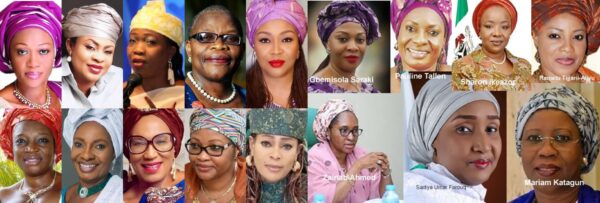
Nigeria’s political landscape is preparing for another electoral contest, and the list of candidates for the 2027 State House of Assembly elections offers an important opportunity to examine one persistent question in our democracy: where do women stand in the struggle for political representation?
The answer, from the candidate list, is concerning.
An analysis of the 2027 State House of Assembly General Election list of candidates, shows that out of approximately 9,710 candidate entries, only 995 are women. This represents just about 10.2% of the candidates, compared with approximately 89.8 per cent who are men.
Put differently, women account for roughly one in every ten candidates listed for the State Houses of Assembly across the country. The figures suggest that, despite years of advocacy for gender equality and inclusive governance, women remain significantly underrepresented at this critical level of political competition.
The chances of any of these 995 female candidates getting are even far slimmer considering the fact that they were mostly from parties with less political reach, funding and networks.
This is not merely a question of numbers. It is a question of whose voices are heard, whose priorities shape public policy, and who gets the opportunity to participate directly in decisions affecting millions of Nigerians.
The paradox of women’s participation
Women constitute a substantial part of Nigeria’s population and contribute significantly to the economy, education, agriculture, healthcare, entrepreneurship and community development. Across the country, women lead businesses, manage households, mobilise communities, support political campaigns and participate in civic activities.
Yet, when the contest moves from participation in public life to securing a place on the ballot, the numbers tell a different story.
The candidate list suggests a considerable gap between women’s contributions to society and their representation among those seeking legislative office.
The problem cannot simply be attributed to a lack of capable women. Women possess the experience, qualifications, leadership skills and community knowledge required to serve in public office. The more important question is whether the political environment gives them a fair opportunity to translate these attributes into electoral success.
Beyond the right to contest
Nigeria’s constitutional framework provides for political participation without discrimination on the basis of sex. However, the practical ability to contest elections is influenced by factors that extend beyond the formal right to participate.
Political party structures, the cost of nomination forms and campaigns, access to political networks, fundraising opportunities, family responsibilities, social expectations and concerns about political violence can all influence women’s participation.
These factors do not affect every woman in the same way, and their relative importance varies across communities and political parties. Nevertheless, they deserve serious attention when examining why women remain a small proportion of candidates.
For many aspiring female politicians, securing a party ticket may be as challenging as campaigning for votes. Where access to party leadership, campaign financing and political networks is uneven, the playing field may be formally open but practically difficult to navigate.
Consequently, encouraging women to participate without addressing the barriers they face risks placing the burden of political inclusion entirely on women themselves.
Why women’s representation matters
The case for greater women’s participation is not that women all think alike or will necessarily advance identical policies. Women are not a politically uniform group. They differ in ideology, class, religion, ethnicity, education and party affiliation.
Rather, representative democracy is strengthened when different segments of society have meaningful opportunities to participate in decision-making.
State Houses of Assembly make decisions on matters that directly affect citizens, including education, healthcare, local development, public expenditure, social protection and the oversight of state institutions. Ensuring that women have a fair opportunity to compete for legislative seats can broaden the experiences and perspectives represented in these debates.
Women legislators should not be expected to speak only on issues traditionally associated with women. They have a stake in every area of public policy, from economic development and infrastructure to security, taxation and institutional accountability.
The objective should therefore be meaningful representation, not the confinement of female politicians to a narrow set of policy concerns.
Political parties must take responsibility
Political parties are central to determining who gets onto the ballot. Their decisions about nominations, internal competition, campaign support and leadership opportunities can either widen or restrict the space available to women.
If parties are serious about inclusive governance, they should examine their internal processes and identify practical ways to improve women’s access to elective positions.
These measures could include transparent nomination procedures, stronger support for female aspirants, leadership and campaign-management training, improved access to fundraising networks, and deliberate efforts to prevent intimidation and discrimination during party primaries.
Parties could also consider voluntary targets for women’s nominations and publish information on how they are progressing towards those targets.
Such measures should be designed to promote fair competition and expand opportunities, while respecting applicable electoral laws and party rules.
What about the voters?
While political parties have a significant responsibility, the electorate also has a role to play.
Women candidates should be assessed on their competence, integrity, ideas, records and proposed programmes, just as their male counterparts should be. Voters should resist stereotypes that assume political leadership is naturally a male preserve or that women are less capable of handling public responsibilities.
At the same time, female candidates should not be treated as automatically more qualified simply because they are women. The objective is equality of opportunity and fair assessment, not the replacement of one form of bias with another.
Civil society organisations, professional associations, the media and community leaders can also help by promoting issue-based campaigns, challenging discriminatory attitudes and creating platforms where women aspirants can engage directly with voters.
A challenge for INEC and democratic stakeholders
The candidate list provides an opportunity for the Independent National Electoral Commission (INEC), political parties, civil society and researchers to examine gender representation more systematically.
INEC can support public understanding by publishing accessible, sex-disaggregated data on candidates and elected representatives. Such information would make it easier to track progress across states, constituencies and election cycles.
Political parties should also be encouraged to disclose the number of women who purchase nomination forms, participate in primaries, secure nominations and ultimately win elections. These stages matter because the final candidate list alone cannot explain where women are being excluded or why.
A clearer picture of the process would help stakeholders design interventions based on evidence rather than assumptions.
The question Nigeria must confront
The approximately 10.2 per cent share of women on the INEC list for the 2027 election is a reminder that the existence of a legal right to contest elections does not, by itself, guarantee balanced political participation.
The figures do not tell the whole story. They do not establish why individual women chose to contest or withdraw, nor do they reveal how many will eventually win. But they provide a strong reason to question whether the political system is doing enough to enable women to compete on fair terms.
Nigeria cannot build a more inclusive democracy by treating women’s political participation as an occasional campaign slogan. It requires deliberate action by political parties, electoral institutions, civil society, voters and women themselves.
The objective should not be to place women on the ballot merely to improve statistics. It should be to ensure that capable women have a fair opportunity to contest, campaign, win and contribute to governance.
A democracy is not measured only by how many people are allowed to vote, but also by how fairly its citizens can compete for the opportunity to represent them.
As Nigeria approaches the 2027 elections, the question is no longer simply whether women are participating in politics. It is whether the political system is creating enough room for them to participate meaningfully.
The ballot should be intentionally open to every qualified citizen. The challenge is to ensure that, in practice, women have a fair chance to get there.
Seun Elere






















You must be logged in to post a comment Login