
Forgotten Dairies
Nigeria’s Roads: Time For Maintenance, Not Another Round Of Construction Of New Roads, by Isaac Asabor
Nigeria’s roads need more than fresh asphalt and new project announcements. They need sustained attention, proper drainage, sound engineering and a maintenance culture that values public infrastructure as an investment to be protected, not an asset to be remembered only when it fails.

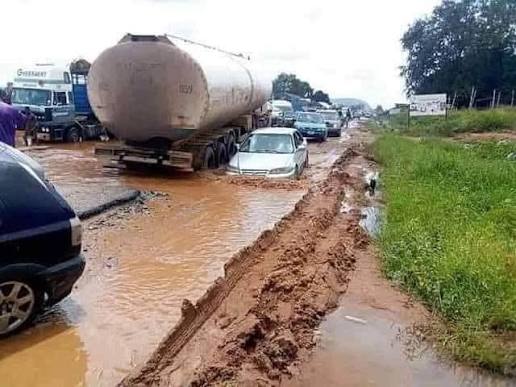
There is something fundamentally wrong with a country that continues to announce the construction of new roads while existing ones deteriorate into death traps, especially whenever heavy rainfall and flooding occur. In Nigeria, where road transportation remains the backbone of domestic commerce, the movement of people and the distribution of goods, the condition of the road network has become a source of concern that deserves urgent and sustained government attention.
The unprecedented floods experienced across different parts of the country have further exposed the vulnerability of Nigeria’s road infrastructure. Roads that should facilitate movement have become muddy stretches, waterlogged corridors, eroded surfaces and pothole-ridden routes. In some communities, floods have washed away sections of roads, damaged bridges, weakened road shoulders and disrupted access to markets, schools, hospitals and workplaces.
The situation raises an important question: must the country continue to prioritize the construction of new roads while many existing ones are crying out for urgent maintenance?
This is not an argument against the construction of new roads. Nigeria is a vast country with expanding cities, growing populations and communities that require better connectivity. New roads are necessary to open up rural areas, improve access to economic opportunities and reduce pressure on existing transport corridors. However, road construction without a corresponding commitment to maintenance is an expensive exercise in diminishing returns.
A road is not a permanent structure that can be built and abandoned to the mercy of weather, traffic and time. Like every other public infrastructure, it requires regular inspection, drainage clearance, resurfacing, pothole repairs and other preventive interventions to remain safe and functional. When these responsibilities are neglected, minor defects gradually develop into major structural failures that require far more money to correct.
Unfortunately, the condition of many Nigerian roads suggests that maintenance is often treated as an afterthought rather than an essential component of infrastructure management. Government attention frequently becomes more visible when a road has deteriorated beyond a point at which motorists can reasonably tolerate it. By then, the cost of rehabilitation may have increased substantially, and the damage to businesses, vehicles and human lives may already have occurred.
The floods have made this problem more difficult to ignore. Although flooding is a natural phenomenon that cannot always be prevented, the extent to which it damages roads depends partly on the quality of road design, the effectiveness of drainage systems, the stability of embankments and the speed with which authorities respond to early signs of deterioration.
A road built without adequate drainage is vulnerable to water accumulation. When water remains on the surface or penetrates the underlying layers, it can weaken the pavement and accelerate its deterioration, particularly under the pressure of heavy vehicles. Once the surface begins to fail, potholes emerge, cracks widen and sections of the road may eventually collapse.
This explains why some roads become nearly impassable after a few episodes of heavy rainfall. The problem is not necessarily that rain has suddenly become an enemy of infrastructure. Rather, it may indicate that the road was poorly designed, inadequately constructed, insufficiently maintained or exposed to drainage problems that were left unresolved.
In some locations, blocked drains, indiscriminate waste disposal and construction activities that obstruct natural waterways compound the situation. Water that should flow away from the road is trapped around it, gradually undermining the pavement and adjoining structures. Where culverts are inadequate or drainage channels have been encroached upon, even a relatively short period of intense rainfall can cause serious damage.
This is why road maintenance must go beyond filling potholes with asphalt whenever public complaints become too loud to ignore. Pothole patching may provide temporary relief, but it cannot resolve the underlying problem where the real cause is failed drainage, unstable soil, inadequate road foundations or repeated flooding.
Government agencies responsible for highways must therefore adopt a more systematic approach to road preservation. Regular inspections should identify cracks, blocked drains, damaged culverts and weakened road shoulders before they develop into expensive emergencies. Roads that have suffered extensive flood damage should undergo proper engineering assessments to determine whether they require resurfacing, structural rehabilitation or complete reconstruction.
The distinction matters because simply covering damaged surfaces without addressing the underlying causes amounts to treating symptoms while leaving the disease untouched.
Beyond the engineering concerns, the consequences of bad roads are economic and deeply personal. Nigeria depends heavily on road transportation to move agricultural produce from farms to markets, deliver manufactured goods to distributors and connect businesses with their customers. When roads become impassable, the cost of transportation rises, delivery schedules are disrupted and traders are forced to spend more to move goods.
Farmers whose produce cannot reach urban markets promptly may suffer losses from spoilage. Small businesses that depend on regular deliveries may experience declining sales, while transport operators face higher vehicle maintenance costs and reduced daily earnings. These additional expenses eventually find their way into the prices paid by consumers, many of whom are already struggling with the high cost of living.
The consequences are equally serious for commuters. Motorists who navigate potholes daily risk damaged tyres, broken suspension systems and other mechanical problems. Commercial drivers may have to reduce the number of trips they make, while passengers spend longer hours on journeys that should ordinarily take much less time.
More troubling is the danger to human life. Potholes, flooded road surfaces, collapsed shoulders and washed-out sections can force drivers into sudden manoeuvres that result in collisions. Floodwaters may also conceal deep potholes, open drains and damaged sections of roads, making it difficult for motorists to assess the risks ahead. Where roads are completely cut off, emergency services may struggle to reach people who need urgent assistance.
These realities should make road maintenance a public safety priority rather than a routine administrative responsibility.
There is also a need to reconsider how road projects are prioritized and evaluated. The number of kilometers of new roads constructed should not be the only measure of a government’s infrastructure performance. The condition of existing roads, the durability of completed projects, the frequency of repairs and the effectiveness of drainage systems are equally important indicators.
A government that constructs a new highway but allows an important connecting road to deteriorate may have improved one part of the transport network while leaving businesses and communities to contend with another obstacle. Similarly, a newly completed road that develops serious defects shortly after construction raises legitimate questions about construction standards, supervision, materials and the quality of maintenance arrangements.
Public procurement and contract supervision must therefore receive closer scrutiny. Road contracts should clearly specify drainage requirements, material standards, quality-control procedures and maintenance responsibilities. Independent engineering assessments should verify that contractors have met the required specifications before projects are accepted and payments are completed.
Where contractors are contractually responsible for defects arising within specified periods, government agencies must enforce those obligations rather than automatically commit additional public funds to repairs. At the same time, contractors should not be blamed for every instance of flood damage without technical evidence establishing the cause. Accountability must be based on verifiable assessments, not assumptions.
Nigeria must also embrace preventive maintenance as a deliberate budgetary policy. Federal, state and local governments should maintain updated inventories of roads under their respective jurisdictions, identify those most vulnerable to flooding and allocate funds for routine inspections and timely repairs. Such inventories should include information on drainage conditions, traffic volumes, recurring flood points and the history of repairs.
This information would help authorities direct scarce resources to roads where preventive intervention could avert greater damage. It would also make it easier to monitor expenditure and determine whether maintenance contracts are delivering value for money.
Furthermore, road maintenance cannot be separated from broader flood-management measures. Drainage channels must be cleared regularly; waterways protected from obstruction and waste disposal properly managed. Urban planning authorities must enforce development regulations that prevent buildings and other structures from blocking natural drainage routes. In flood-prone areas, road designs should reflect local rainfall patterns, soil conditions and the likely volume of water that drainage infrastructure must accommodate.
Climate-related risks make these measures even more urgent. Where rainfall patterns are changing or extreme weather events are becoming more disruptive, infrastructure planning must account for the possibility that roads designed around outdated assumptions may no longer withstand prevailing conditions. Building resilience into road infrastructure from the outset is more sensible than repeatedly rebuilding damaged sections after every major flood.
Citizens also have a role to play. Indiscriminate dumping of refuse into drainage channels, illegal construction on waterways and the deliberate obstruction of culverts can worsen flooding and damage public infrastructure. Governments must provide effective waste-management services and enforce relevant laws, while communities should recognize that protecting drainage systems is part of protecting their own roads and neighbourhoods.
Nevertheless, the primary responsibility for planning, financing, constructing and maintaining public roads rests with the appropriate authorities. Citizens cannot reasonably be expected to compensate for years of institutional neglect through voluntary efforts alone.
The prevailing flood situation should therefore serve as a wake-up call for a change in infrastructure priorities. Rather than measuring progress mainly through the announcement of new road projects, government at all levels should demonstrate an equal commitment to preserving the roads already in existence.
There is little economic wisdom in repeatedly spending public money to rebuild infrastructure that could have remained serviceable for longer through timely intervention. Every road that is allowed to deteriorate unnecessarily represents a loss of public investment, an additional burden on motorists and businesses, and a potential threat to human safety.
Nigeria does not necessarily need to abandon new road construction. What it needs is a better balance between expansion and preservation, with maintenance recognized as a core responsibility rather than a secondary consideration.
The floods have exposed the weaknesses of roads across the country, but the response should not be limited to emergency repairs and fresh construction announcements. It should involve a comprehensive programme of inspection, drainage improvement, rehabilitation and preventive maintenance backed by transparent budgeting and effective supervision.
Ultimately, the test of good road infrastructure is not how impressive it looks on the day it is commissioned, but how safely and reliably it serves the public years after the ribbon-cutting ceremony.
For Nigeria, the time has come to move beyond the politics of commissioning new roads and embrace the less glamorous but economically wiser business of maintaining existing ones. Until this shift occurs, the country risks remaining trapped in a costly cycle: constructing roads, neglecting them, watching floods expose their weaknesses and spending public money to rebuild what could have been preserved.
Nigeria’s roads need more than fresh asphalt and new project announcements. They need sustained attention, proper drainage, sound engineering and a maintenance culture that values public infrastructure as an investment to be protected, not an asset to be remembered only when it fails.




















You must be logged in to post a comment Login