
Forgotten Dairies
Buhari, Tinubu and Nigeria’s Debt Surge: What the Numbers Really Reveal -By Abba Dukawa
The available figures show that Nigeria’s public debt increased substantially under both Buhari and Tinubu. However, determining which administration undertook more fresh borrowing requires a consistent comparison that accounts for inherited liabilities, securitisation, repayments and exchange-rate effects.

The question is no longer whether governments should borrow, but how much they borrow, what the money is used for, and whether the resulting investments generate sufficient economic growth and government revenue to service the debt.As Nigeria approaches another election cycle, insecurity, rising living costs, economic hardship and fuel prices will dominate public debate. Yet another issue deserves equal attention: the country’s growing debt burden.
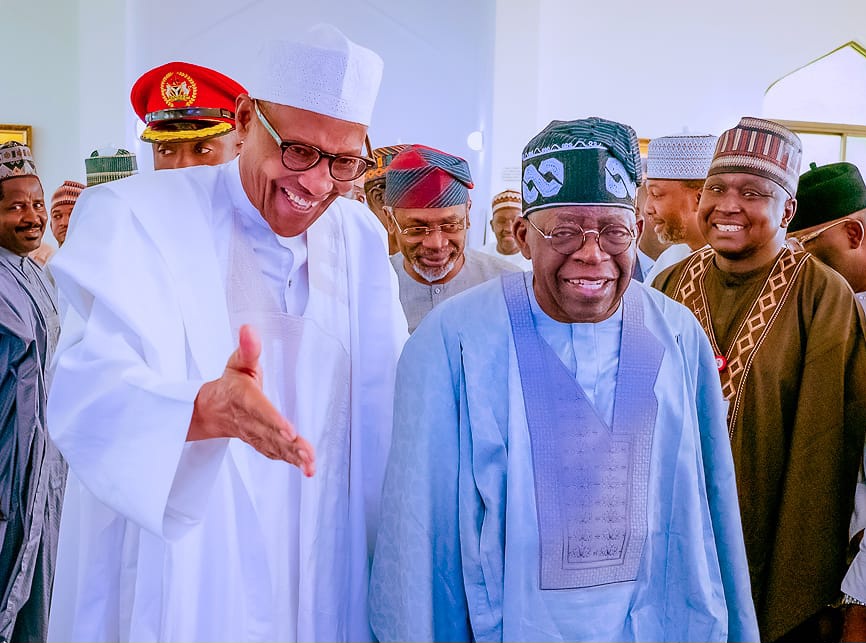
These questions are particularly relevant when comparing the administrations of former President Muhammadu Buhari and President Bola Ahmed Tinubu. Buhari substantially increased Nigeria’s debt during his eight years in office, while Tinubu inherited that burden and has overseen a further rise in the recorded debt stock. However, understanding their respective borrowing records requires more than comparing headline figures.
When Buhari assumed office in 2015, Nigeria’s public debt was considerably lower than it is today. By December 2022, it had reached approximately ₦46.25 trillion, according to the Debt Management Office (DMO). The increase occurred amid significant economic challenges, including falling oil prices, recession and the COVID-19 pandemic. These shocks weakened government revenue and intensified pressure on public spending, making borrowing an important source of financing.
These circumstances provide context for Buhari’s borrowing record, but they do not remove the need for accountability. Despite the economic challenges, questions remain about whether borrowed funds were invested efficiently in infrastructure, productive capacity and other projects capable of generating lasting economic benefits. The central issue is not simply whether borrowing was justified, but whether it delivered sufficient value for money.
The ₦22.7 Trillion Ways and Means Question
A fair comparison between Buhari and Tinubu must account for the ₦22.7 trillion in Ways and Means advances from the Central Bank of Nigeria (CBN).
The DMO reported Nigeria’s total public debt at ₦87.38 trillion as of June 2023, shortly after Tinubu assumed office. This figure included ₦22.712 trillion in securitised Ways and Means advances, which were formally incorporated into the public debt stock.
This distinction is crucial. The increase from ₦46.25 trillion in December 2022 to ₦87.38 trillion in June 2023 cannot reasonably be treated entirely as fresh borrowing by Tinubu. A substantial portion represented an existing obligation accumulated before his administration and subsequently recognised in the official debt figures.
However, the fact that the liability was securitised under Tinubu does not erase its origins from Buhari’s fiscal record. A fair assessment must distinguish between the administration that accumulated an obligation and the administration under which it was formally incorporated into the reported debt stock. Inherited liabilities should neither be misattributed nor ignored.
Tinubu: Reforms Amid Rising Debt
Tinubu inherited an economy grappling with many of the structural weaknesses that confronted Buhari, including low government revenue, fiscal deficits, rising debt-service obligations and distortions in the fuel and foreign-exchange markets.
His administration introduced major reforms, particularly the removal of the petrol subsidy and changes to foreign-exchange policy. These measures were intended to reduce fiscal distortions, improve resource allocation and strengthen public finances.
However, the reforms have not eliminated the government’s reliance on borrowing. According to the data released by the Debt Management Office (DMO) for the second quarter of 2026, Nigeria’s total public debt stood at ₦166.79 trillion ($120.93 billion) as of June 30, 2026. This represents a 4.67% increase from the ₦159.35 trillion recorded at the end of March 2026. As the DMO has yet to formally publish the official public debt figures for the third quarter of 2026, which ended on September 30, the Q2 figures remain the latest available official data. Nigeria’s total public debt increased by ₦79.41 trillion, representing a nominal increase of approximately 90.9% between June 2023 and June 30, 2026.
One thing that amused people , Tinubu administration generated a combined ₦157.786 trillion in oil and non-oil revenue from 2023 to 2026 (up to the latest available reporting period in 2026). This comprises ₦52.956 trillion in oil revenue and ₦104.83 trillion in non-oil revenue, covering the three full years from 2023 to 2025 and part of 2026. The key questions are straightforward: How much additional debt has the administration contracted? What has the money financed? How much has been repaid? And what economic benefits have resulted?
Who Has Borrowed More?
The answer depends on what is being measured. On the basis of the cited figures, Nigeria’s recorded public debt increased by approximately ₦65.02 trillion between June 2023 and June 2025 under Tinubu. Buhari, meanwhile, presided over a substantial expansion of public debt during his eight years in office.
However, comparing the two administrations solely by the nominal increase in debt can be misleading. Their periods in office differed in duration, economic conditions and exchange-rate circumstances. Changes in the treatment of existing liabilities also complicate the comparison.
A definitive assessment would require consistent data covering net new borrowing, repayments, inherited obligations, debt restructuring and exchange-rate effects across comparable periods.
The available figures establish that Nigeria’s recorded debt burden rose substantially under both administrations. They do not, by themselves, establish which president contracted more fresh debt or which administration made more effective use of borrowed funds.
That distinction matters because borrowing is not inherently harmful. Governments can use debt to finance infrastructure, electricity, transport, education, healthcare and industrial development. When properly managed, these investments can improve productivity, stimulate economic activity and expand future government revenue.
The danger arises when borrowing repeatedly finances deficits without creating sufficient productive capacity to support repayment. Nigerians should therefore look beyond political arguments over who borrowed more and ask a more fundamental question: What did the country get in return?
Tinubu’s Real Test Is Revenue
The sustainability of Nigeria’s debt depends not only on how much the government owes, but also on how much revenue it generates and how much of that revenue is consumed by debt servicing.
A country with a strong and growing revenue base can sustain a larger debt burden than one with weak revenue and limited capacity to meet its obligations. Nigeria’s historically low public revenue makes this challenge particularly serious.
Tinubu’s revenue reforms must therefore be assessed against measurable results. Higher revenue can reduce the need for borrowing and improve the government’s capacity to service existing obligations. However, increased revenue alone does not guarantee fiscal sustainability if expenditure and debt continue to grow faster.
Claims about the administration’s oil and non-oil revenue performance should also be supported by clearly identified official records. Reliable comparisons require consistent reporting periods and a clear distinction between gross collections, net government receipts and revenue attributable to particular reforms.
Ultimately, the objective should be to establish whether revenue is growing sustainably, whether public expenditure is becoming more efficient and whether the government is reducing its dependence on borrowing.
Revenue reforms cannot become a justification for unlimited debt accumulation. Nigerians deserve evidence that additional borrowing is creating productive assets and that government income is growing sufficiently to meet future obligations.
The same standard must apply to both administrations.
The Real Test for Both Administrations
Buhari governed through major economic shocks and responded to weak revenue with extensive borrowing. Tinubu inherited the resulting fiscal challenges and introduced reforms intended to address some of their underlying causes, while continuing to rely on borrowing.
Their circumstances differed, but the fundamental test remains the same: Were borrowed funds properly accounted for and invested productively? Did they improve infrastructure, expand economic opportunities and strengthen government revenue? Were the resulting benefits sufficient to justify the financial obligations incurred?
Nigeria cannot borrow its way out of a revenue problem indefinitely.
A meaningful assessment of the country’s fiscal position must go beyond political slogans such as “Buhari borrowed more” or “Tinubu borrowed more”. It must examine net new borrowing, debt-service costs, debt-to-revenue and debt-to-GDP ratios, capital expenditure and the economic returns generated by publicly funded projects.
It must also establish whether completed projects are delivering their intended benefits and whether government revenue is growing fast enough to support the country’s debt obligations.
The available figures show that Nigeria’s public debt increased substantially under both Buhari and Tinubu. However, determining which administration undertook more fresh borrowing requires a consistent comparison that accounts for inherited liabilities, securitisation, repayments and exchange-rate effects.
Ultimately, Nigeria’s creditors will focus on the country’s ability to repay, not the political party responsible for accumulating the debt. Nigerians should be equally concerned about whether public borrowing is improving their lives and strengthening the economy.
The issue is not merely how much Nigeria owes, but whether the country can convert borrowed money into productive growth, stronger public revenue and a sustainable future.
The central takeaway is clear: Nigeria’s debt debate should move beyond partisan claims and headline figures. Both administrations must be judged by the quality of their borrowing, the transparency of their spending, the revenue generated and the tangible benefits delivered to citizens
Dukawa writes from Abuja and can be reached at abbahydukawa@gmail.com



















You must be logged in to post a comment Login