
Breaking News
Atiku’s Aide Questions Reach of Tinubu’s 30-Day Petrol Discount Scheme
Atiku’s aide Paul Ibe questions Tinubu’s 30-day petrol discount, warning that Nigerians without NNPC stations may miss out on cheaper fuel.

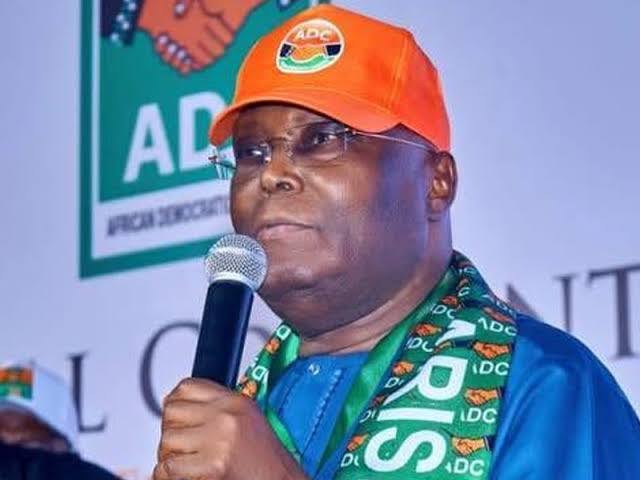
Paul Ibe, media adviser to former Vice-President Atiku Abubakar, has faulted the Federal Government’s 30-day petrol discount initiative, arguing that its limited reach could leave many Nigerians without access to cheaper fuel.
Ibe raised concerns in a post on his X handle on Friday, asking how the government intended to benefit residents of communities without Nigerian National Petroleum Company Limited (NNPC) filling stations.
He called on the administration of President Bola Tinubu to prioritise affordable petrol nationwide instead of engaging in debates over whether the price reduction constituted a subsidy or a discount.
“Nigerians need relief, not semantics,” Ibe said.
He maintained that although a reduction in petrol prices was a welcome development, the initiative would only be meaningful if it was accessible to Nigerians across different locations and could be sustained beyond the 30-day period.
The former vice-president’s aide argued that NNPC’s limited retail presence could undermine the government’s plan to provide widespread relief.
He cited approximately 22,681 filling stations across Nigeria, noting that NNPC operates more than 900 outlets, representing about four per cent of the country’s total retail network.
Ibe also stated that NNPC’s estimated share of the retail market was 17 per cent in 2024, while its July 2026 report put petrol availability across its retail network at 52 per cent.
He questioned whether a network with such limited geographical coverage and reported supply constraints could deliver the kind of relief needed by Nigerians nationwide.
“How does the government propose to provide meaningful nationwide relief through a network with such limited geographical coverage and documented supply challenges?” he asked.
Ibe warned that people living far from NNPC stations might have to travel long distances and incur additional transportation expenses before accessing the discounted petrol.
He said such an arrangement risked creating unequal access to affordable fuel, drawing parallels with the electricity Band A, B and C classification system, which subjects consumers to different service conditions depending on their locations and tariff categories.
“Petrol affordability must not become another postcode lottery,” he said.
According to Ibe, the initiative also highlights the limitations of relying entirely on market forces to determine petrol prices, arguing that the government’s intervention suggests that additional measures are needed to protect consumers from high fuel costs.
He said the government was seeking to address a nationwide affordability problem through a retail network covering only a small proportion of the country’s filling stations.
“Nigerians deserve more than a 30-day experiment,” he added.
Ibe proposed Atiku’s production-based subsidy model as an alternative, arguing that reducing costs at the point of production would allow cheaper petrol to reach consumers through the wider distribution network.
He described the proposal as a more sustainable way to improve petrol affordability across the country.
“You cannot solve a nationwide affordability crisis with a narrowly targeted discount. Nigerians need cheaper petrol everywhere, not cheaper petrol somewhere, and certainly not for just 30 days,” he said.
Ibe also accused the Tinubu administration of moving towards what he characterised as an opaque subsidy system, despite previously declaring that the petrol subsidy had been removed.
Africans Angle News


























You must be logged in to post a comment Login