
Breaking News
FRSC Warns Motorists Against Social Media Distractions, Cites Crash Risks
FRSC boss Shehu Mohammed warns that social media distractions, emotional distress and fatigue can increase road crash risks, urging motorists to prioritise road safety.

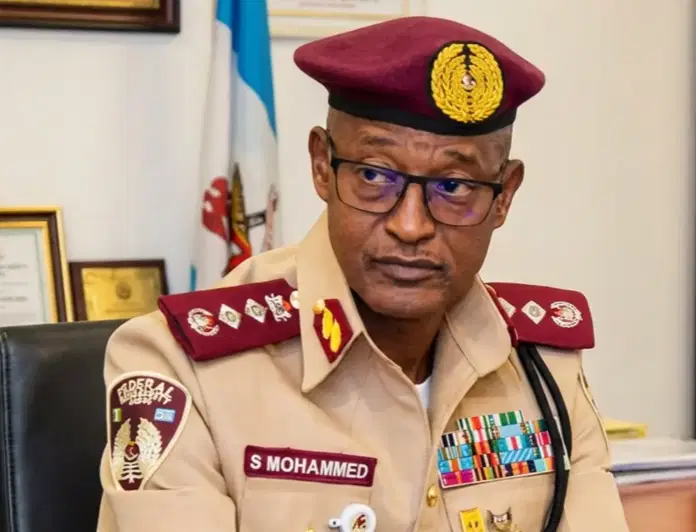
The Federal Road Safety Corps (FRSC) has cautioned motorists against distractions caused by social media, emotional distress and fatigue, warning that such factors could increase the risk of road crashes.
The Corps Marshal, Shehu Mohammed, said mental wellbeing was an important component of road safety and called for greater efforts to educate road users about the dangers of driving while mentally distracted.
He made the remarks on Friday at the 4th Vanguard Mental Health Summit in Lagos, where he served as chairman.
The summit examined ways to advance youth mental health in Nigeria, with discussions centred on social media, technology and their effects on wellbeing.
Mohammed said motorists needed to remain focused, exercise sound judgment, maintain emotional stability and make responsible decisions while driving.
He explained that stress, anger and tiredness could compromise these abilities, potentially leading to unsafe decisions on the road.
According to him, engaging with social media notifications, participating in online arguments or dealing with emotional distress while driving could endanger both the driver and other road users.
“A driver who is mentally distracted by a social-media notification, an online argument or emotional distress may become a danger not only to himself or herself, but also to other road users,” he said.
The FRSC chief stressed that road safety advocacy must go beyond conventional traffic rules to include mental health awareness, responsible technology use and safe conduct among motorists.
“Our message is simple: A healthy mind contributes to a safer road. A distracted mind can contribute to a road crash,” he stated.
While acknowledging the benefits of digital technology, Mohammed said social media had enabled young people to access educational materials, mental health information, peer support and professional networks.
He, however, warned that excessive use of screens, cyberbullying, online harassment, unhealthy social comparisons, misinformation, harmful online content and pressure to maintain a perfect digital image could undermine emotional wellbeing.
He maintained that technology should not be portrayed as inherently harmful, advocating instead for a balanced and responsible approach to using digital platforms.
Mohammed also called for improved access to affordable and confidential mental health services tailored to young people, including counselling and psychosocial assistance.
He urged government institutions, schools, parents, media organisations, religious groups and civil society organisations to work together to reduce stigma and strengthen public understanding of mental health issues.
Commending Vanguard for organising the annual summit, the Corps Marshal said the media had a significant responsibility to influence public attitudes, share reliable information, amplify the experiences of young people and ensure institutions remained accountable for their mental health commitments.
He further urged stakeholders to implement practical measures following the summit’s discussions.
He said parents should pay closer attention to young people’s concerns, schools should expand psychosocial support, employers should encourage healthier working environments, and technology companies should do more to tackle harmful content and online abuse.
Mohammed added that the FRSC would sustain and strengthen public awareness campaigns on responsible road use, preventing distractions, managing fatigue and maintaining emotional control while driving.
Africans Angle News

























You must be logged in to post a comment Login