
Politics
Bwala, No, Tinubu Cannot Govern From Anywhere!, by Isaac Asabor
Instead of Nigerians arguing over whether a President can govern from Paris, the government should tell Nigerians precisely what constitutional procedure has been followed. Because the Presidency is not a WhatsApp group. It is a constitutional office.

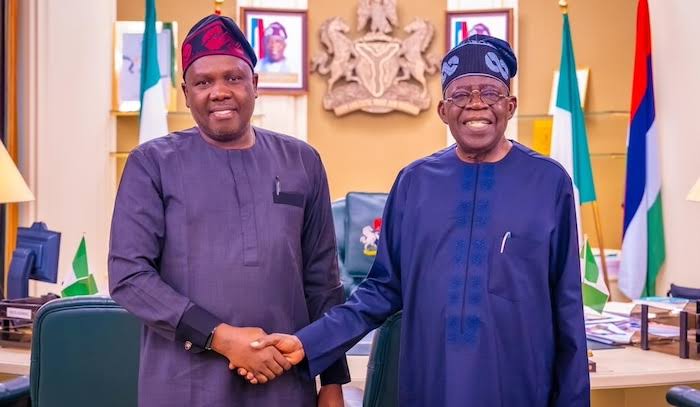
There is a difference between being able to communicate from anywhere in the world and being constitutionally authorized to govern Nigeria from anywhere in the world. That distinction appears to have been lost in the latest argument over President Bola Tinubu’s extended stay in Europe.
According to the Presidency, the fact that President Tinubu is outside Nigeria does not mean that the business of government has been abandoned. Special Adviser on Policy Communication Daniel Bwala has gone further, arguing that the President can exercise his constitutional powers from anywhere in the world.
On the surface, that sounds like a perfectly reasonable argument in the age of technology. After all, a president does not have to sit physically in his office before he can receive reports, approve documents, summon officials, issue directives or hold virtual meetings.
Indeed, the Presidency says Tinubu has remained in touch with Abuja and has continued to direct the affairs of government during his European working vacation. It has cited, among other things, his directive for an independent panel to investigate the death of 37 illegal miners in Minna.
But governance is not merely about the ability to send instructions from a hotel room in Paris. It is also about constitutional procedure. And that is where Bwala’s argument deserves closer scrutiny.
Section 145(1) of the 1999 Constitution provides a specific procedure for a President proceeding on vacation. It states that whenever the President is proceeding on vacation or is otherwise unable to discharge the functions of his office, he shall transmit a written declaration to the President of the Senate and the Speaker of the House of Representatives. Until he transmits a contrary declaration, the Vice President performs the functions of the President as Acting President.
That provision cannot simply be wished away because the President has access to a telephone, laptop, aircraft or secure communications system. The question Nigerians should therefore be asking is not whether Tinubu can make a telephone call from Paris. Of course he can.
The question is whether the Constitution permits the President to treat a vacation as though it were not a vacation simply because he remains digitally connected to Abuja. This is not an academic question.
When Tinubu left Nigeria on August 30 for what the Presidency described as a working vacation, questions were immediately raised about whether the Section 145 declaration had been transmitted to the National Assembly. Premium Times reported that several officials contacted could not confirm that such a declaration had been transmitted. The presidential spokesperson, Bayo Onanuga, confirmed the President was on a working vacation but did not disclose whether the required written declaration had been sent. That uncertainty is precisely what should concern a constitutional democracy.
If the letter was transmitted, let Nigerians know. If it was not transmitted, Nigerians deserve an explanation of the constitutional basis upon which the President is continuing to exercise his functions while on vacation. There should be no mystery about something as fundamental as who is constitutionally exercising presidential powers.
The argument that “the President can govern from anywhere” may make practical sense in the technological age. But the Constitution is not merely a manual for telecommunications. It establishes offices, powers, procedures and safeguards. Otherwise, what becomes of Section 145?
Was it inserted into the Constitution merely for an era when presidents travelled by ship and could not be reached by telephone? Clearly not.
The provision exists to establish a transparent constitutional arrangement whenever the President proceeds on vacation or is otherwise unable to discharge the functions of his office.
This is why the present situation should not be reduced to a political quarrel between Tinubu’s supporters and opponents.
Former Vice President Atiku Abubakar has questioned whether the required declaration was transmitted. The Presidency has defended Tinubu’s continued exercise of authority from abroad. Those are competing political positions, but beneath them lies a straightforward constitutional question that should be capable of being answered with a document rather than political rhetoric.
Where is the declaration? That is the question. There is another important distinction. The Constitution does not necessarily say that the President ceases to be President because he leaves Nigeria. Nor does physical absence automatically mean that the Senate President becomes Acting President. Section 146 deals with circumstances in which the office of President becomes vacant, and mere foreign travel does not create such a vacancy. So, this is not really about whether Nigeria suddenly becomes leaderless whenever Tinubu boards an aircraft. It is about whether presidential functions should be exercised under the constitutional mechanism specifically provided for temporary absence.
Nigeria has had presidents who complied publicly with this procedure. During several of Muhammadu Buhari’s foreign trips, the Presidency transmitted letters to the National Assembly notifying it that the Vice President would perform presidential functions while he was away. That precedent makes the present controversy even more interesting. If previous administrations could formally communicate temporary transfers of presidential functions, why should the Tinubu administration make the public guess? The President is not the owner of the Nigerian presidency. He is its occupant for a constitutionally defined period. That distinction matters.
A president may have the power to govern, but the manner in which that power is exercised must remain subject to the Constitution. The fact that technology has made remote communication possible does not automatically amend constitutional language.
Otherwise, a future president could theoretically spend months abroad, issue directives through aides and videoconferences, and insist that because he is still reachable, he is fully discharging the functions of his office. That would make Section 145 almost meaningless. And constitutions are not supposed to become meaningless because technology has become more convenient.
The Presidency has also announced that Tinubu’s European stay has been extended by a few days and that he is expected to return to Nigeria at the weekend. That expected return may eventually end the immediate controversy. But it should not end the constitutional conversation.
The real lesson is that Nigeria needs greater transparency whenever its President proceeds on an extended foreign trip. A simple public statement, accompanied where appropriate by confirmation from the National Assembly, would settle the matter.
Instead of Nigerians arguing over whether a President can govern from Paris, the government should tell Nigerians precisely what constitutional procedure has been followed. Because the Presidency is not a WhatsApp group. It is a constitutional office.
And while technology may allow a President to communicate from virtually anywhere, “the Constitution remains the ultimate address to which presidential power must answer.”




















You must be logged in to post a comment Login