
Politics
KOGI: The Confluence That Has Never Converged, by Lanre Toluhi
It will win elections. It will also keep feeding the quiet argument, already audible in Okunland, that this state was a merger in name and a hierarchy in practice. Or the parties can treat 2027 as the year the third leg is allowed to bear weight. Not an Okun governor because Okun is owed a favour. An Okun governor because a confluence that only two rivers are permitted to enter is a confluence in slogan only. Thirty-five years is long enough for an experiment in exclusion. The next four should be the experiment in belonging.

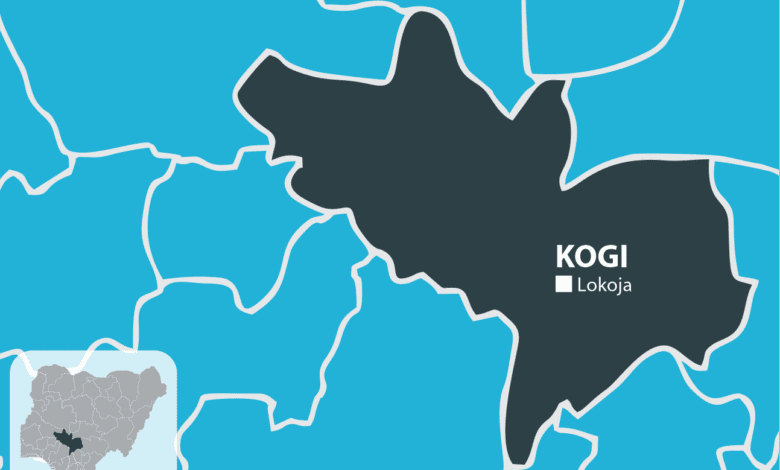
Thirty-five years after Kogi State was created, every substantive civilian governor has come from the East or the Central. Okunland, the Yoruba-speaking core of the West, has never produced one. The next election is the cleanest test the state has had of whether that is an accident or a design.
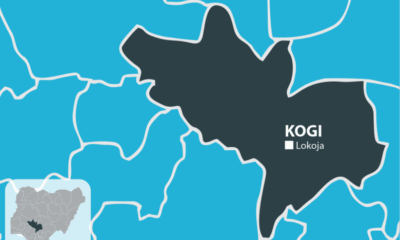
Kogi calls itself the Confluence State. The Niger and the Benue meet at Lokoja. Three major nationalities were also meant to meet there: the Igala of the East, the Ebira of the Central, and the Okun of the West, with smaller communities; Bassa, Oworo, Nupe-Koto, Ogori-Magongo, and Kakanda living inside that triangle. Thirty-five years after creation, the rivers have kept their appointment.
This is not a plea for ethnic charity. It is an argument about the character of a multi-national state. A state that can be governed, in rotation, by only two of its three legs is not a tripod. It is a duopoly with a voting bloc attached. The next governorship, due in 2027, is the moment that arrangement can be broken, or confirmed.
A bit of historical context here; Kogi State was carved out on 27 August 1991 from parts of Kwara State and Benue State. The Okun and Ebira came largely from the old Kabba Province in Kwara State. The Igala came largely from Benue State. The promise of the new state was that peoples who had been minorities in larger states would finally govern themselves together.
The military interregnum does not settle the argument, but it belongs in the record. Brigadier Danladi Mohammed Zakari administered the new state from August 1991 to January 1992. Colonel Paul Omeruo held it from December 1993 to August 1996, Colonel Bzigu Afakirya from 1996 to 1998, and Brigadier Augustine Aniebo from 1998 until the handover of 29 May 1999 to a civilian rule. These were posted officers, not products of an Okun, Ebira or Igala mandate.
The civilian record is the one the state chose. Prince Abubakar Audu of Ogbonicha, Ofu, an Igala man of Kogi East, was the first elected governor, from January 1992 until the coup of November 1993, and again from May 1999 to May 2003. Alhaji Ibrahim Idris of Omala, also Igala and also East, governed from May 2003 until January 2012, interrupted only by the roughly sixty days in early 2008 when Speaker Clarence Olafemi, an Okun man of Yagba, acted as governor after a court removed Idris and his deputy. Captain Idris Ichala Wada of Dekina, Igala, East, governed from January 2012 to January 2016. That is three Igala governors, and something close to nineteen years of elected executive power, before a single non-Igala civilian took the oath as substantive governor. Alhaji Yahaya Adoza Bello, Ebira, of Kogi Central, took office on 27 January 2016 after the death of Prince Audu during the 2015 election, and served two full terms to January 2024. Ahmed Usman Ododo, also Ebira and also Central, succeeded him on 27 January 2024. If the present term is completed, Central will have held Lugard House for twelve uninterrupted years. A second term would stretch that hold toward sixteen.
Set beside that, Kogi West’s substantive governorship tally is zero. The only Okun name on the executive roll is Olafemi’s acting stint of about two months, and Yomi Awoniyi’s tenure as deputy to Wada. Deputies and sixty-day regencies are not the office. No Okun man or woman has been elected and sworn in as governor of Kogi State, not in the Third Republic, not in the Fourth, not once since the state was created. A former Commissioner for Information, Dr Tom Ohikere, himself an Ebira man from Okene, has put the arithmetic in terms his own zone cannot comfortably defend: East has had the years, Central has had the years, West has had none. His phrase for the emerging equation, if Central runs to 2032, was “17-16-0”. Even on the more cautious count, the zero does not move.
In a Nigerian state the governor is not one politician among many. The governor appoints the cabinet, the heads of boards, the permanent secretaries who survive a purge, the local-government caretakers when elections are delayed, and the contractors who build or abandon the roads. Thirty-five years in which that pen has never been held by an Okun indigene is not a run of bad luck. It is a structure.
Kogi East used the early years to stock the civil service. Critics of that era still argue that Igala numbers in the state workforce came to exceed that of the Ebira and the Okun combined, a head-start that outlives any single administration because pensions, promotions and the culture of the service reproduce it. Kogi Central, after 2016, did not dissolve that advantage so much as build a second one beside it. West inherited neither.
The deputy governorship has been the consolation prize, and a poor one. Patrick Adaba and Philip Salawu, both of Kogi Central extraction, deputised Igala governors. Yomi Awoniyi, Okun, deputised Wada from 2012 to 2016, four years in the waiting room, not in the room. Simon Achuba and Edward Onoja served under Bello; Joel Salifu serves under Governor Usman Ododo. Kogi West has held the number-two office once in the Fourth Republic, and even that tenure is cited by Okun leaders as proof of the ceiling. A deputy does not write the budget. Asking Okunland to accept another deputy slot in 2027 is an invitation to renew the exclusion in a more polite costume.
In an open letter during the President Muhammadu Buhari years, Clarence Olafemi complained that a single week’s federal nominations from Kogi State all went to Kogi East, a zone that already held the deputy governorship and the chief of staff, while Kogi Central held the governorship and the state’s ambassadorial slots, and Kogi West held nothing. The Okun Development Association has repeated the charge across administrations: employment, political appointment and project execution are the three fields in which Okunland has been the most excluded of the state’s three major groups.
Institutions make the exclusion visible in brick, and it not timely and properly addressed, may descend into a norm. Roads do the same work more slowly. The oft-cited 11.7-kilometre Odokoro-Gbede to Iyara link, which would cut journeys inside Ijumu and Kabba-Bunu, has sat unfinished across governments. Banditry along the western axis has emptied farms and villages. A district that does not produce the governor is easier to brief as a security footnote than as a headquarters problem.
There is a federal version of the same trap, and it is peculiar to Okun. The people are counted as northerners when constituencies, party offices and federal character are drawn, and treated as Yoruba outsiders when power inside Kogi is shared. They sit inside the North-Central arithmetic and outside the South-West one. Votes travel. Interests do not.
Okun governorship bids have been a newspaper ritual for three decades, and a government never. Parts of Okun opinion have revived the call for an Okun state, or for a political realignment toward the South-West. Those demands are symptoms. Treating them as disloyalty, rather than as the bill for a 35-year absence, is how the marginalisation reproduces itself. Marginalisation of this duration does not stop at the budget. It reaches language, memory and the story a people tell their children about where they belong. The Okun land is not a costume worn at a rally. It is a Yoruba-speaking nationality; Owe, Ijumu, Bunu, Yagba, Oworo, with Kabba as the old provincial capital, a documented claim of origin in the wider Yoruba world, and a public life conducted in a dialect that Lagos, Ibadan and Akure recognise and that Lokoja has never quite made official. For thirty-five years that culture has lived inside a state whose symbols, school texts, appointment lists and state occasions have been written, overwhelmingly, in the image of the two zones that govern.
A child in Isanlu or Ayegunle can grow up fluent in the politics of Anyigba and Okene and uncertain whether their own naming customs, chieftaincy titles and festival calendar count as Kogi culture or as a private inheritance. The first cultural casualty is confidence. A nationality that never sees itself in the governor’s office learns, quietly, that its history is folklore and other people’s history is the state. When the motorcade comes west it comes as a visitor. When it sits in the east or the centre it sits at home. Over a generation that difference becomes taste. Young professionals leave for Ilorin, Abuja and the South-West not only for jobs, but because the cultural mirror is clearer there. What remains is an ageing hometown and a diaspora that remits money and resentment in equal measure.
The second casualty is language. Okun Yoruba has no state machinery behind it. It is not the language of the cabinet, the judiciary or the campus founded by government. It survives in compounds, churches, mosques and the markets until the ambitious stop speaking it to their children.
Parents who believe the route to a permanent secretary’s office runs through another zone’s network do not invest in the dialect that marks them as peripheral. The loss is a thinning: fewer praise names used in full, fewer festivals kept on the old date, a slow translation of public life into whatever language the current government speaks. The third casualty is memory, and it is the one with political consequences. Kabba Province was an administrative fact before Kogi was a state. Okun leaders remember that they entered the new state from Kwara, not as a remnant to be absorbed. When that memory is never honoured in the distribution of power, it curdles.
The call, now open, for Okunland to be joined to the South-West is not only a constitutional gambit. It is a cultural verdict. One community voice put the feeling without diplomacy: a fish plucked from water, surrounded by peoples to whom it is not related. That sentence is harsher than the politics requires. It is also what thirty-five years of being the third name in a two-name government sounds like from the inside. Cultures do not die because they miss an election. They thin when the state that contains them treats them as a campaign stop and a deputy’s constituency. An Okun governorship would not invent a culture. It would make Okun memory part of the official story of the state, rather than a grievance nursed in Kabba and explained, badly, in Lokoja.
The case is not that an Okun candidate is owed the office as compensation. Compensation politics produces weak governors. The case is that a state of this composition cannot keep recycling the same two zones and still call the outcome unity. Rotation of this kind is already how serious multi-ethnic Nigerian states buy peace. Enugu, Anambra, Cross River and Akwa Ibom have, at different times, treated zoning as a covenant rather than a law. Kogi’s diversity is sharper than most of those examples, not milder. Refusing the covenant here is not a defence of pure democracy. It is a decision that the largest, or the currently organised, bloc may keep the seat for as long as it can organise.
The two zones that have governed have already had long enough to show what exclusive hold produces. Kogi East’s years under Audu, Idris and Wada built institutions and also hardened the belief that the East was the natural party of government. Kogi Central’s years under Bello and Ododo broke that monopoly, an achievement that should not be dismissed, and then replaced it with a second monopoly. Former Governor Yahaya Bello’s rise in 2016 was possible partly because Okun votes and Okun structures joined an Ebira candidate against the old eastern succession. That alliance was cashed. It has not been repaid at the level that matters.
Okunland has produced senators, ministers, senior civil servants, soldiers, academics and a deputy governor. The claim that the zone must wait until it “is ready” is the oldest alibi in Nigerian patronage politics. Parties are free to demand capable candidates. They are not free to pretend that capability has a postcode in Ofu and Okene but not in Kabba, Isanlu or Iyara. An Okun governorship is also the only outcome that resets the tripod without humiliating either of the others. Kogi East has governed. Kogi Central has governed, and is governing. A single Okun term or, better, an agreed eight years in the manner of a charter of equity, would let the state say something it has never been able to say: that every major nationality has held the pen. After that, rotation can proceed on a basis all three can defend.
The strongest objection is constitutional, and it should be met plainly. Zoning is not justiciable. Any indigene may contest. That is true, and it is also how every unjust pattern in Nigerian politics survives. Parties adopt zoning every cycle they find it convenient, then discover high principle when the inconvenient zone asks for its turn. The second objection is numerical. The Igala are the largest group, and the 2023 register still showed East ahead, with 952,369 voters against 505,731 in West and 474,554 in Central. Majority status is a reason to win elections, not a reason to own the governorship in perpetuity. If population alone allocated the office, Central would not be on the road to a twelfth year in 2028, and West, second on the register, would not still be on zero. The third objection is that Kogi Central also waited. It did, until 2016. The answer to a past exclusion is not a new one. Breaking a monopoly in order to found another is not equity. It is succession. The fourth is that Okun candidates have lost fairly. Some have. Others have lost inside party arrangements that treated West as a deputy-governor zone and a campaign stop. A fair primary in 2027, in which the major parties accept that the ticket should go west, would test the “they cannot win” claim under conditions that have never actually been offered.
Kogi can continue as it is. East and Central can keep sorting the governorship between them, offer West the deputy slot, a senatorial seat and a road contract, and call the arrangement EBIGO. It will win elections. It will also keep feeding the quiet argument, already audible in Okunland, that this state was a merger in name and a hierarchy in practice. Or the parties can treat 2027 as the year the third leg is allowed to bear weight. Not an Okun governor because Okun is owed a favour. An Okun governor because a confluence that only two rivers are permitted to enter is a confluence in slogan only. Thirty-five years is long enough for an experiment in exclusion. The next four should be the experiment in belonging.
Lanre Toluhi (MLT), a public affairs analyst and strategic communications professional, writes from Kabba.















You must be logged in to post a comment Login