
Opinion
Seyi Makinde’s 1966 Coup Gambit Is a Confession of Character, Not a Strategy for Nigeria -By Jeff Okoroafor
The backlash was immediate and instructive. Nigerians accused Makinde of “tribal bigotry” and of “attempting to exploit one of the darkest chapters in Nigeria’s history for political advantage”. They recognised what Makinde’s spin doctors have tried to deny: that when you reduce a national election to a question of which region suffered more in 1966, you are not building national unity. You are poisoning it.

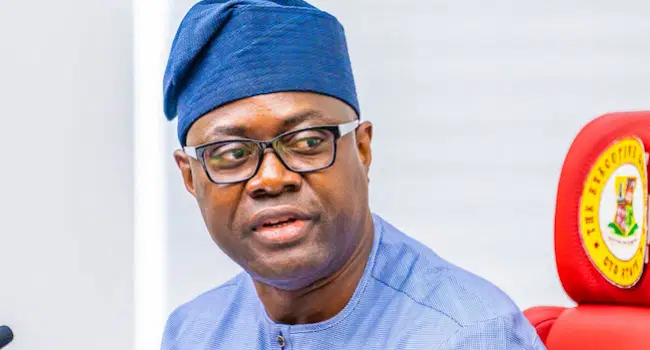
There are moments in politics when a candidate reveals, in a single sentence, the poverty of his ambition. Governor Seyi Makinde of Oyo State had such a moment last week. Asked a straightforward question—why should Nigerians choose him and his running mate, Lawal Daura, over Peter Obi and Rabiu Kwankwaso—Makinde did not talk about his “Reset Nigeria” manifesto. He did not point to his record in Oyo State. He did not speak of the future he intends to build. Instead, he reached back sixty years, into the graveyard of Nigeria’s first military coup, and tried to turn the corpses of 1966 into a campaign slogan. “If you even go back to the first military coup in Nigeria,” Makinde said, “the people that were wasted were basically the North and South-West because we’re always in the forefront of stability for the country”.
This is not statesmanship. It is not even ordinary politicking. It is the cynical manipulation of national trauma by a man who believes that the path to Aso Rock is paved with the graves of the dead.
Makinde’s defenders will insist he was merely making a historical argument about the “traditional South-West/North alliance” that, in his telling, has always provided stability in times of crisis. But even a cursory glance at the history he so casually invokes exposes the dishonesty at the heart of his claim. The January 15, 1966 coup was not a North-versus-South-West affair in which two regions nobly absorbed blows on behalf of a grateful nation. It was a mutiny planned and executed by a small circle of ambitious young officers whose ethnic composition was far more complicated than Makinde’s regional binary allows. One of the central figures in that plot was Major Adewale Ademoyega—a Yoruba man from the Western Region, the same region Makinde now claims as his political patrimony. Ademoyega was not a bystander. He was, by the account of those who have studied the coup, among its leading architects, a man who helped fix the date and shape the operation. If Makinde wants to talk about 1966, let him talk about Ademoyega. Let him explain how a Yoruba officer’s role in the coup squares with the claim that the South-West was simply a victim of other people’s violence.
The historical record, moreover, has been repeatedly clarified by those who were closest to power at the time. General Ibrahim Babangida’s recent book presentation confirmed what serious historians have long known: the 1966 coup was not a coordinated ethnic project, and its ringleaders were driven by a mix of youthful arrogance, personal ambition, and a misguided sense of national salvation—not by a desire to advance one region over another. To invoke that moment as proof of a timeless North–South-West “stabilising” alliance is not history. It is a fairy tale designed to flatter two regions at the expense of the rest of the country, and to dress up regional sectarianism as national wisdom.
But the deeper problem with Makinde’s remark is not merely that it is historically illiterate. It is that it is *strategically hollow*. A candidate who has spent nearly eight years as governor of one of Nigeria’s most consequential states should have a longer answer to the question “why you?” than a nostalgia trip to 1966. What about Oyo State? What has Makinde actually built, reformed, or transformed that he can point to as evidence he is ready for the presidency? His administration boasts of raising internally generated revenue from ₦26.95 billion in 2019 to over ₦103 billion in 2026, and of completing hundreds of kilometres of roads. Those are not trivial achievements. But they are also not the stuff of a compelling national campaign, and Makinde knows it. When critics have challenged him on the economy, his response has been found wanting; the opposition in Oyo has accused him of presiding over a state that has received record federal allocations without corresponding industrial growth. Rather than defend his record on the merits, Makinde chose to change the subject to a coup that happened before most Nigerians were born.
This is the tell. A politician confident in his own story does not need to borrow the tragedy of the past to make his case. A politician who invokes the dead to avoid discussing the living is a politician who has run out of ideas.
Makinde’s running mate, Lawal Daura, is a former Director-General of the Department of State Services—a man whose career was built inside the security apparatus of the Nigerian state. If the Makinde–Daura ticket wanted to talk about stability, it could have talked about the institutional reforms they would pursue, the security architecture they would rebuild, the way they would professionalise the agencies that Daura once led. Instead, Makinde chose the 1966 coup. He chose to frame the election as a contest between regional blocs, with the implied suggestion that a ticket from the South-West and the North is somehow more authentically “Nigerian” than a ticket that draws its support from other parts of the country. That is the politics of division dressed in the language of stability.
The backlash was immediate and instructive. Nigerians accused Makinde of “tribal bigotry” and of “attempting to exploit one of the darkest chapters in Nigeria’s history for political advantage”. They recognised what Makinde’s spin doctors have tried to deny: that when you reduce a national election to a question of which region suffered more in 1966, you are not building national unity. You are poisoning it.
Seyi Makinde has every right to seek the presidency. He has every right to argue that his experience in Oyo State qualifies him for higher office. But he does not have the right to rewrite history, to weaponise grief, and to insult the intelligence of the Nigerian electorate by pretending that a regional alliance forged in the shadow of a coup is the answer to the question of who should lead a country of over two hundred million people in the twenty-first century. That is not leadership. It is a character defect—a willingness to say anything, invoke anything, and divide anything in pursuit of power.
The Makinde who spoke so glibly about the “wasted” of 1966 is not the Makinde who promised a “Reset Nigeria.” The reset he is offering is not a programme for government. It is a reset of the moral compass—a reversion to the kind of ethnic arithmetic that has held Nigeria back for generations. Nigerians should reject it, and they should reject the man who has made it his closing argument.
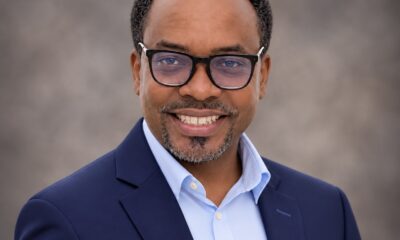
Jeff Okoroafor is a social accountability advocate and a political commentator focused on governance, accountability, and social justice in West Africa.















You must be logged in to post a comment Login