
Forgotten Dairies
President Tinubu’s 30-Day Fuel “Discount” Cannot Repair the Damage of Subsidy Removal, by Daniel Nduka Okonkwo
The president’s 30-day fuel discount should therefore be assessed for what it is: a temporary intervention whose effectiveness depends on its design, implementation, reach, and measurable impact. It should not be presented as a comprehensive solution to the economic consequences of subsidy removal or as a guarantee that the naira will recover. Lasting improvements require coordinated policies addressing inflation, foreign-exchange supply, domestic production, infrastructure, public transport, and household vulnerability. Without such measures, temporary relief may expire long before the economic pressures confronting ordinary Nigerians have eased.


The Federal Government has issued a stark warning: restoring petrol subsidies could push the exchange rate towards ₦3,000 to the dollar and petrol prices to at least ₦2,000 per litre. On October 8, 2026, Finance Minister and Coordinating Minister of the Economy Taiwo Oyedele presented these projections, as reported by Channels Television, arguing that subsidy restoration could weaken government revenue, increase borrowing costs, trigger capital flight, and undermine progress on inflation. The warning deserves serious consideration. But so does a fundamental question: what assumptions and calculations underpin these projections, and how can Nigerians independently assess them?
The economic risks of an expensive subsidy programme are real. If the government absorbs a substantial portion of petrol costs without a sustainable funding plan, it could face mounting fiscal pressure. Depending on how the programme is financed, the consequences could include increased borrowing, reduced spending on essential services, delayed payments, or higher taxes. A poorly designed subsidy could also distort prices and create opportunities for smuggling and diversion. However, acknowledging these risks is not the same as accepting that a particular exchange rate or petrol price will inevitably follow a policy reversal. Equally, a temporary fuel discount cannot automatically undo the economic consequences Nigerians have endured since subsidy removal.
The ₦3,000-to-the-dollar projection should be examined as a conditional scenario, not an established outcome. The government has described a possible chain of events involving lower revenue, a potential sovereign credit downgrade, costlier borrowing, capital outflows, declining foreign-exchange reserves, and further naira depreciation. But what is the model’s starting point? How much subsidy spending is assumed? What financing method is envisaged? What happens if crude oil prices, domestic refining output, foreign exchange inflows, or investor behaviour differ from the assumptions? Without these details, the public cannot distinguish a carefully modelled forecast from a warning based on a worst-case scenario.
The same scrutiny should apply to the claim that petrol would cost at least ₦2,000 per litre if the subsidy returned. The relevant factors include crude oil prices, the exchange rate, refining and distribution costs, taxes, profit margins, and the scope of the proposed subsidy. Would the estimate apply to imported petrol, domestically refined petrol, or both? Would it reflect prevailing market conditions or assume that restoring subsidies had already weakened the naira? The government should publish the assumptions behind its estimate so independent economists can test the calculations and explain the range of plausible outcomes.
Oyedele has argued that subsidies must ultimately be financed through measures such as higher taxes, unpaid salaries and pensions, or money creation. These are genuine risks, but they are not the only conceivable financing arrangements. The fiscal consequences would depend on the programme’s design, duration, eligibility rules, funding source, and budgetary controls. A targeted, time-limited intervention financed transparently through an approved budget is not economically identical to an open-ended subsidy funded by uncontrolled borrowing or monetary expansion. Those proposing to restore support must demonstrate how it would be funded; equally, the government must explain why its projected outcomes should be regarded as the most likely.
The minister’s reference to more than ₦30 trillion being printed under the previous administration also requires context. Nigeria’s history of monetary financing raises legitimate concerns about inflation and fiscal discipline. Yet that history does not, by itself, establish that any future subsidy would necessarily be financed through money creation. The relevant questions are whether a proposed programme would increase the deficit, how that deficit would be funded, and what safeguards would prevent costs from becoming unsustainable. The debate should focus on the actual financing mechanism rather than treating the worst possible option as inevitable.
Another unresolved issue is what Nigerians have received in return for the removal of the petrol subsidy. The Federal Ministry of Finance’s economic reform scorecard estimates subsidy savings of ₦15.8 trillion across the federation. It puts the Federal Government’s share at ₦5.43 trillion, the states’ share at ₦6.52 trillion, and local governments’ share at ₦3.88 trillion. These figures matter because the entire ₦15.8 trillion was not retained by the Federal Government as a single pool of cash. The ministry also reports ₦20.4 trillion in incremental federal resources from subsidy savings, other additional revenue, and incremental borrowing, against approximately ₦30.64 trillion in additional expenditure pressures. These are the government’s own figures, not an independent audit, and they should be examined alongside evidence of actual spending and outcomes.
This distinction changes the accountability question. It would be inaccurate to suggest that the Federal Government alone received all the reported savings. But it is entirely reasonable to ask what additional resources each tier of government received, how those resources were used, and whether citizens can see measurable improvements in public services. What additional funding reached hospitals, schools, roads, public transport, and social protection? What proportion went to debt servicing, wages, infrastructure, and other obligations? Where are the independently verifiable results? A fiscal scorecard is useful, but expenditure records, project-level disclosures, and measurable outcomes are necessary to establish whether the public has benefited.
Domestic refining presents another important test of the government’s argument. Greater local refining capacity can reduce dependence on imported finished petrol and may lower some supply-chain costs. Yet domestic production does not automatically guarantee cheaper fuel. Refineries still face crude oil costs, financing expenses, operational costs, distribution charges, and exposure to international market conditions. Where crude is priced at export-parity levels or refiners must purchase foreign exchange to meet their obligations, domestic production may not insulate consumers from global prices. The government should disclose how its projections account for local refining and what proportion of petrol supply it expects domestic refineries to provide.
The question is not simply whether Nigeria refines petrol locally, but whether domestic crude-supply arrangements and pricing rules allow Nigerians to capture the benefits of that capacity. If crude is supplied to local refineries at prices reflecting international market conditions, consumers may continue to face substantial price pressures even as imports fall. Conversely, any proposal to supply crude at preferential prices must identify who bears the cost and how the arrangement affects public revenue. Forward sales of crude to domestic refiners should therefore come with transparent terms, clear delivery obligations, and an explanation of their expected impact on petrol supply and prices.
Another significant development in the debate is the government’s proposed ₦1,350-per-litre ceiling on petrol’s ex-gantry or landing cost. According to the government’s briefing, the proposal is intended to moderate price volatility. Where costs exceed the ceiling, refiners and importers would initially absorb the shortfall and recover it later when market conditions allow. The government has said this arrangement is not a subsidy or price control. Crucially, however, the proposed ceiling does not mean petrol will sell for ₦1,350 per litre at filling stations.
This proposal raises questions that the public deserves to have answered. If suppliers must initially absorb costs above the ceiling, what precisely entitles them to recover those losses later? How will the amounts owed be calculated, verified, and disclosed? Over what period can recovery occur, and what happens if costs remain high for months? Will the arrangement be voluntary or contractually binding? Who bears the risk if a supplier exits the market or cannot recover its shortfall? Without clear answers, a policy designed to smooth price movements could create opaque liabilities, discourage supply, or shift costs into the future. The label attached to the mechanism matters less than its actual financial structure.
The distinction between subsidy and price modulation is not merely semantic. A traditional subsidy generally involves the government absorbing some of the cost, directly or indirectly, to keep the price paid by consumers below a specified level. Under the announced price-modulation proposal, suppliers would reportedly carry the shortfall initially and recover it later. That may differ from an immediate government payment, but it does not eliminate the economic cost. If suppliers are compensated, permitted to recover losses through later pricing, or protected by other commitments, the arrangement has financial consequences that should be made public. Trade union representatives have already questioned the government’s description of its fuel-price interventions.
For households, the debate is about much more than the price displayed at a filling station. Petrol costs feed into public transport fares, food distribution, farming, small businesses, and the cost of generating electricity where grid supply is unreliable. When transport and production costs rise, families pay more for necessities even if their incomes remain unchanged. This is why the removal of a fiscal burden cannot be judged solely by government revenue or foreign-exchange indicators. The assessment must also consider purchasing power, poverty, employment, real wages, and access to essential services. Macroeconomic stability is important, but it does not automatically translate into household relief.
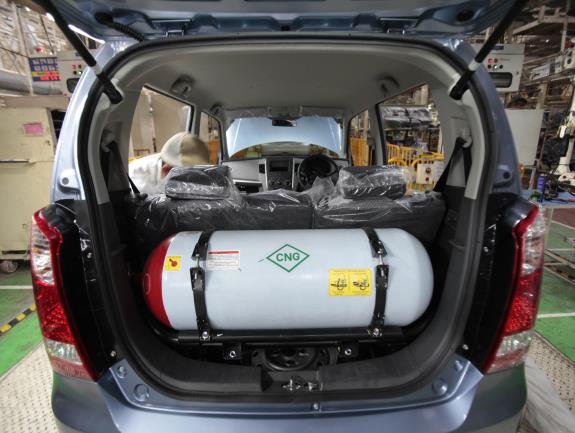
The government has announced cushioning measures, including a temporary discount on petrol dispensed by NNPC Limited, with priority for public transport operators, alongside support initiatives involving cash transfers, credit, and compressed natural gas. These interventions should be assessed by their implementation, reach, and results, not merely their announcement. How many eligible households and transport operators will receive support? What is the total cost? How are beneficiaries selected? What safeguards prevent political patronage, duplication, or diversion? How will the public know whether the discount has reduced transport fares and household expenses? Transparent reporting is essential if temporary relief is to build public confidence.
A 30-day discount may offer temporary relief to some eligible consumers, but it cannot, by itself, reverse the cumulative effects of higher transport costs, rising food prices, reduced purchasing power, and pressure on small businesses. Nor can a short-term discount guarantee stability in the foreign-exchange market. The naira’s value is influenced by several factors, including foreign-exchange supply and demand, export earnings, capital flows, investor confidence, and monetary and fiscal policies. Unless the government addresses the broader economic pressures affecting households and the currency, a temporary intervention risks providing only a brief reprieve while the underlying problems persist.
Fuel smuggling also deserves a more precise diagnosis. Price differences between Nigeria and neighbouring countries can encourage illegal cross-border trade, but smuggling is not proof that every form of consumer support is inherently unworkable. It also raises questions about border surveillance, enforcement, distribution controls, and the integrity of supply chains. A blanket subsidy can create opportunities for diversion, but removing support does not eliminate the need for effective enforcement. The government should publish credible estimates of illegal diversion, explain how those estimates are calculated, and report the results of measures intended to stop it.
The government’s argument will be stronger if it publishes the evidence needed to test it. That means disclosing the assumptions behind the government’s estimated ₦20 trillion annual subsidy cost, the model used to derive the ₦3,000 exchange-rate projection, the basis for the ₦2,000 petrol-price estimate, and the fiscal and contractual details of the proposed ₦1,350 ex-gantry ceiling. It also means publishing regular figures for the price-modulation arrangement, explaining how deferred supplier losses will be recovered, and providing independently verifiable information on the use of post-subsidy resources.
Those proposing a return to subsidy must meet the same standard. They should specify the intended beneficiaries, estimated annual cost, funding source, duration, safeguards against smuggling and diversion, and a credible exit plan. They should also explain whether support would apply to all petrol consumption or be targeted at public transport and vulnerable households. A policy cannot be defended merely because fuel is expensive, just as the government cannot establish that its current approach is beyond challenge merely by warning that an alternative could be costly.
The first set of questions concerns the promised discount: how much will the 30-day intervention cost, who will ultimately finance it and how will the government measure its impact? Will the discount reduce the actual prices paid by eligible consumers, or will some of the benefit be absorbed elsewhere in the supply chain? What happens when the 30 days expire? The government should disclose the eligibility criteria, implementation arrangements, total expenditure, and monitoring process before presenting the intervention as evidence that the hardship caused by subsidy removal is being adequately addressed.
The second set concerns the naira and the broader economy. What evidence supports the claim that restoring subsidies could push the exchange rate to ₦3,000 per dollar? What assumptions underpin the forecast, and what alternative scenarios have been tested? What specific measures are being taken to strengthen foreign-exchange inflows, increase productive capacity, support exports, and reduce structural dependence on imports? A temporary petrol discount is not a substitute for a credible economic strategy capable of improving productivity, strengthening public finances, and supporting currency stability over time.
The third set concerns accountability for the savings from subsidy removal. How much has each tier of government received, how much has been spent, and what measurable improvements have resulted? Can Nigerians access project-level information showing where the money went? Have independent audits established whether reported expenditures produced the promised benefits? These are not unreasonable demands. When citizens are asked to endure higher living costs in the name of economic reform, transparency about the use of public resources becomes an essential part of maintaining public trust.
The central issue is not whether Nigeria should ignore the dangers of an unsustainable subsidy. It should not. Nor should the public automatically assume that every government projection is exaggerated. The real issue is whether public policy is being tested against transparent calculations, clearly defined obligations, and evidence of results. The government is entitled to warn Nigerians about the fiscal dangers of restoring petrol subsidies, but it must disclose the assumptions behind its projections, explain the financial mechanics of its price-modulation proposal, and demonstrate what the savings from subsidy removal have achieved.
The president’s 30-day fuel discount should therefore be assessed for what it is: a temporary intervention whose effectiveness depends on its design, implementation, reach, and measurable impact. It should not be presented as a comprehensive solution to the economic consequences of subsidy removal or as a guarantee that the naira will recover. Lasting improvements require coordinated policies addressing inflation, foreign-exchange supply, domestic production, infrastructure, public transport, and household vulnerability. Without such measures, temporary relief may expire long before the economic pressures confronting ordinary Nigerians have eased.
Economic reform requires more than telling citizens what a policy might cost. It requires showing them the numbers, explaining who bears the burden, and proving whether the promised benefits are reaching the people expected to make the sacrifice. Nigerians should not be asked to accept indefinite hardship on the strength of projections they cannot scrutinise or assurances they cannot verify. If subsidy removal is intended to strengthen the economy, the government must demonstrate how that objective is being achieved in the lives of ordinary citizens. Thirty days may provide temporary relief, but rebuilding purchasing power, restoring public confidence, and strengthening the naira require transparent decisions, accountable spending, and sustained economic results.
Daniel Nduka Okonkwo is an investigative journalist, human rights advocate, and policy analyst based in Nigeria. He is the founder and publisher of Profiles International Human Rights Advocate (PIHRA), a platform documenting the courage of human rights defenders and examining issues of governance, accountability, security, and fundamental rights.
His reporting on Nigerian governance, security-sector accountability, public finance, and human rights has appeared in Sahara Reporters, Vanguard, Daily Trust, African Defence Forum, Opinion Nigeria, and Daily Intel.
Read more of his work on the PIHRA website:
https://www.profilesinternationalhumanrightsadvocate.com.ng/
For tips, feedback, or collaboration, contact him at dan.okonkwo.73@gmail.com.




















You must be logged in to post a comment Login