
Politics
30-day Fuel: Alálùpàídà And His Devil’s Water -By Festus Adedayo
I was however not one to meet the Lion in its lair and allow him take away my composure. So, I asked Dauda Lawal: “You made so much hoopla about the alleged corruption in Zamfara when you came on board, especially over the humongous amount hitherto spent on the airport by your predecessors, funds which you said you couldn’t track that ran into billions of Naira. It was also alleged that you computed the books and sent details to the EFCC to look into. Since you decamped to the APC, we haven’t heard you talk about inherited corruption, especially now that a politician in this state, who was barely making ends meet, bought the Geregu Power Plc for a billion Naira. What has changed?”

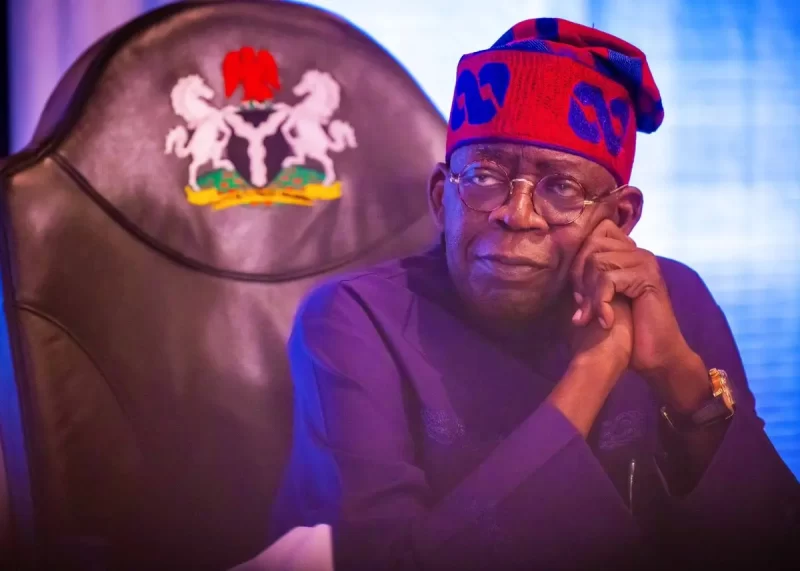
When the Nigerian government announced a 30-day temporary fuel price intervention last Thursday, likes began to attract likes. In the government’s announcement, petrol will henceforth be on offer at N1,350 per litre at designated NNPCL stations. That announcement immediately resonated in the Kenyan author, Ngugi wa Thiong’o’s debut novel, Weep Not, Child (1964). After all, life, so says Bob Marley, is a stream that will find its course. And, in the words of our elders, whilst the tortoise’s head bears striking resemblance with man’s big toe and the groundnut shell is a look-alike of the cocoon of the rat species called èlírí, comparison is allowed.
As Njoroge – the book’s young protagonist – walks past the hot, newly tarred road of colonial Kenya, he suddenly sees far off what looks like a puddle of water. He is excited. It will quench his thirst, he thinks so. Gradually, as he moves towards it, Njoroge discovers to his sadness that the water is an optical illusion, a mirage. Ngũgĩ calls the puddle “devil’s water”. The author wrote: “Further ahead, the road was trapped in the heat. It became a moving featureless line that shook with the rising waves of hot air. If you looked hard, you could see pools of water. But when you got there, the water had moved further ahead. Njoroge’s mother had told him that this was devil’s water, water that kept on retreating so that you could never reach it, however fast you ran.”
That is what Abuja offered last week – devil’s petrol. It brings Ngũgĩ’s ghost into the dreary day of the Nigerian. When you dissect the Kenyan’s “devil’s water” imagery, it gives you so many images. For me, it reminds me of my youth in Ikire, Osun State of today. As kids, in mere underpants, we used to rush to a place called Ori Eeru to watch a set of people called the Alálùpàídà and Pidánpidán. They were famously reputed with the power to make things vanish or change form, right before your eyes. If you remember “Ali and the Angel” in the classic New Oxford English Course book, you would relate perfectly with how the devil’s water prices itself out of the reach of the famished.
The Alálùpàídà and the Pidánpidán were masters of trickery. They were illusionists, conjurers and magicians. As Ngũgĩ said, no matter how fast you ran, you could never sidestep these folks in their artifice. So also couldn’t you outwit illusionists. In Ikire, we lined to watch the tricksters bring out various wiles from their pouch of deceit. In the background, the bàtá drum, famous for its sharp, harsh, and commanding sound, wedged its dry and powerful rhythm into our ears. As it did so, the bàtá then invoked its ritual authority and spiritual presence on us.
The crowd was held spellbound. Right before us, encircled by the crowd that had gathered, a man was lying on a mat, covered with a white cloth. There was an ensemble of singers beside the bàtá drummers. They had white loin cloths strapped round them, camwood decorating their faces. As they danced, they sang, “be careful, the world is not happy” — “se pèlé-pèlé, inú ńb’áráyé o…”.
Suddenly, a man folds the white cloth, like curtains opening a new scene in a cinema. Then we beheld, in place of the man we hitherto saw lying on the mat, a live crocodile. It flipped its huge mouth open and close intermittently. How this happened, you never could tell. It was like a chimera. The devil’s water.
Last Thursday, the life of an Alálùpàídà and Pidánpidán made sense to me. I was at the Adeleke University, Ede, Osun State. My friend of many years, Prof Adelaja Odukoya, was delivering this year’s Toyin Falola Annual Lecture. In that lecture, Odukoya reminded us of Brazilian Marxist scholar, Paulo Freire and his famous book, Pedagogy of the Oppressed (1968). A book that critically engaged the relationship between teacher, student, and society, it also explored the relationship between the colonizer and the colonized. I instantly remembered the oppression Nigerians go through under their leaders. Like a chimera, the devil’s water, Nigerian leaders lure their people with make-believe policies. Njoroge was lured, too. Nigerian leaders starve their people of water and lead them to the hot, asphalted road where a non-existent puddle of water appears to be what would quench their thirst.
I was just leaving Ede that Thursday when the news of Aso Rock’s most recent Alupaida stunt hit me. That day was Prof Toyin Falola’s day. At the Adeleke University, which holds an annual Falola Annual Lecture, it was another time to celebrate a man regarded as one of Africa’s most decorated and prolific historians. If you needed a modern day ẹbọra who lived in the forest, the African mythological god of the academy — the deity, divinity or earthly spirit made popular by D. O. Fagunwa — Falola is he. Rather than the forest, Falola however lives in books.
If a man has been invited to speak in all the countries of the world, received over 30 to 40 lifetime achievement awards, numerous honourary doctorates that range from 16 to over 28, and high national honours such as the Member of the Order of Niger (MON), he surely is an ẹbọra. Falola also has an institutional legacy as Chair of the Jacob and Frances Sanger Mossiker in the Humanities at the University of Texas, at Austin. He is credited with having authored or edited over 150 to 200 books on Africa, and has multiple annual conferences, prizes, and book awards named in his honour. Itt will be incongruous to name such a man as part of the ordinary human ensemble. He qualifies to be an ẹbọra.
My friend of many years, Prof Laja Odukoya, of the University of Lagos, was the Distinguished Lecturer for this year. With his clinical dissection of the lecture topic entitled, “History, Power and Accumulation: Re-imagining Africa in the Globally Disorderly Order,” I left the Adeleke University hall fired, only to be further ignited by the fire of Aso Rock’s Njoroge devil’s water – the 30-day illusion of presidential intervention.
That announcement of a N1,350 price ceiling on fuel to Nigerians provides a very sharp irony. On one side is what appears as a temporary cushion for the long-suffering Nigerian people. On another is an underline of how dramatically the goalposts have shifted. Before May 2023, same petrol sold for under ₦200 per litre. The Nigerian presidency has been waxing lyrical ever since about its economic wizardry stunts of bringing about a spike in macro-economic indicators. Yet, life is harshly unbearable for millions of our countrymen.
Like an Alálùpàídà bringing out the next stunt, FG has now framed its token reduction of petrol price by N60 as a Father Christmas “intervention.” In actual fact, that “reduction” is a transactional publicity stunt that comes far too late, too little and which underscores the administration’s deep disdain for the Nigerian public. It is a trickery that appears interventionist but which would scarcely and barely be felt by the people. The paradox of it is that a government which said, under it, things are looking up for the people, and their situation had improved, is giving out such tokenism and expects to be carried shoulder high. It exposes the magnitude of the economic shift citizens are navigating and the cruelty of their leaders. It also shows how Nigerians’ jugular is being fiddled with by our Alálùpàídà in power for whom everything is trickery. And our suffering, our deaths, make us guinea pigs for their morbid amusement.
Were this a humane government, since almost four years in power, as saner countries of the world have done to protect their people from inclement economies, they know mechanisms that can cushion the blow of “subsidy is gone.” However, the Alálùpàídà have deliberately chosen not to protect us until now when it seems politically convenient. Government has thus elected to treat our fundamental human survival as a temporary promo or seasonal clearance sale. This reflects a leadership that views us the people not as stakeholders, but as desperate subjects easily pacified by breadcrumbs.
Why the N60 “intervention” appears as morbid amusement is that, the characters behind this theatre know that Nigeria’s informal economy, where the poorest of the poor are trapped, relies heavily on petrol. If a Nigerian secures the kingdom of gasoline, all other things shall be added unto them. The Nigerian economy is held together basically by petrol. When pump prices hit exponentially as they have crazily been in years of this government, there is a skyrocket of food haulage costs. The poor are grilled to survive. Electricity grid is plagued by frequent collapses and heavens-high decimated bands’ electricity tariffs. Barbers’ pockets are shaved clean. Tailors are tailored to hell. Cold-room operators’ hearts become cold and deserted like a morgue. Transportation costs compete with the firmament. They are all dying due to the daily costs of keeping the lights on. It is even worse for micro-businesses. Daily fuel costs drill bitterly into their gross revenues, often turning self-employment into a loss-enterprise.
Today, Nigeria battles food inflation that has reached historically frightening highs. Real wages are like the stunts of the Alálùpàídà. Staple foods of middle- and low-income households like beans, bread, gari and rice have suddenly morphed from what they were — basic sustenance — into luxury items. Families become masters of dining table restructuring. They are daily trapped in a consumption and dietary compromise.
All efforts by the Tinubu government to make the crocodile look real have failed. Nigerians see them as Alálùpàídà stunts. Simplicita. The upward revision of the national minimum wage to ₦70,000, though looks high, is killed by a stunted purchasing power which has been eroded completely when compared to pre-subsidy purchasing power. That ₦70,000 wage can hardly fill a modest family salary earner’s car tank.
The economic hardship provoked by this government’s policies is benumbing. Outside the raw numbers of Nigerians dying and ones who are financially castrated lies a human fatigue imposed by the Tinubu economy. Drug costs have become inapproachable like the drum on Ibadan Cocoa House. The hardship is such that there is an intensity in mental health challenges. Husbands have been de-masculinized by Tinubu and his Alálùpàídà economic voodooists because they can no longer function effectively as breadwinners. Crime rates have spiked and family friction is huge. And the people have to be serially insulted by yet another stunt of a N60 decrease in fuel price.
In the midst of these grim statistics of suffering, what arithmetic did the Tinubu government use to determine that a N60 fuel reduction is what Nigerians need as an October policy relief present? We seem to be confronted, not merely with illusionists but cold-blooded power prostitutes who would do anything to safeguard power. The “subsidy is gone” pronouncement of Tinubu in May 2023, which has imposed extreme financial stress on us ever since – which we were told would be a temporary shock – has become a permanent state of living. Nigerians live in a concrete jungle, apologies to Bob Marley, under Tinubu. It is a grim situation. Painting the picture of a concrete jungle, Marley said: “No sun will shine in my day today/The high yellow moon won’t come out to play/Darkness has covered my light/And has changed my day into night.” That is the situation in an average Nigerian home today.
At the Toyin Falola Lecture, Prof Odukoya, gave me a clue to why our government is this cold-hearted and unfazed by our lot. He invoked an earlier Falola maxim that the lack of evidence is not an evidence of lack. Odukoya then enjoined us to move from the Walter Rodney template of how Europe underdeveloped Africa/Nigeria into interrogating how Nigerian political elites under-develop us as Nigerians. Our elites organize and accumulate wealth of society for themselves. If you then apply this theory of accumulation into the fuel war ongoing in Nigeria, you will see how the political elite in government have socialized costs of petrol, privatized its benefits in the hands of a microscopic minority and left the burden of their reform on all of us, old, babes and even the suckling alike. It is economic parasitism.
Prof Odukoya’s theory of an Agbèrò (tout or thug) economy captures what we have in Nigeria today. Agbèrò is an informal, predatory and street-level extortion tactics economy that is traditionally the exclusive preserve of motor-park gangs. An Agbèrò is less concerned about the condition of the bus, nor the passengers. He does not care whether you arrive your destination safely. Rather than the transparent, legal taxes or formal business fees, the Agbèrò extorts arbitrage from everyday workers – bus drivers, tricycle riders and market vendors. An Agbèrò is answerable only to the rules of the street, and, for him, the line between legitimate authority, protection rackets and violent coercion is blurred. Anyone who fails to “settle” a local tough, the Agbèrò, at a bus stop faces harrowing pushback of their overall safety threatened. He is just bothered about the arbitrage, the rent he can cream off your journey. It bred the mantra – wetin concern agbero with overload?
Similarly, Nigerian government runners are only interested in arbitrage. In an Agbèrò economy, officials of motorparks don’t just steal, stealing is official. Same is said to obtain in this government. From what we hear from the grapevine, under this government, none of its predecessors has had as much sleight of hand as the Agbèròs in Aso Rock. Like the Agbèrò, nothing bothers the runners of this government with the deplorable conditions of the people. The more dead, the better. All they do is filch, filch and filch.
All these find meaning in Ngũgĩ wa Thiong’o’s Weep Not, Child. The evocative imagery of “devil’s water” that describes a highway mirage fully sits with the so-called progress under this government. It is a mere deceptive illusion. While government promises economic fulfillment and societal advancement, what Nigerians see is constant retreats. It leaves us, the people, empty-handed. To think that any hope will come from promises of an economic redemption from people who are sworn to a life of illusory governance is to tug at empty air, a chimera. To think that the 2027 election will bring the people a step out of their deplorable trajectory of existence is to long after the mirage. Mirages are highways’ fake puddles of water. The N1360 fuel price is like that puddle. It is primed to look like relief or salvation, a water puddle from a distance, but when you get closer to it, it turns out to be an illusion born of scorching heat and barrenness.
As my chicks played with hawks of Zamfara…
Accepting to be in Zamfara State a little over a week ago appeared to me as the dangerous dalliance between the hawk and chicken chicks. Yoruba Sakara music lord, Yusuff Olatunji, succintly painted the danger I felt. When the hawk (Asa) turns the chick into her playmate and the chick relishes this pseudo unity, the chick is playing with fire, so sang Olatunji. As we landed in Gusau that torrid afternoon, in my subconscious, Yusuff Olatunji kept on singing about the danger that lay ahead of me. Àsá ńb’éyelé se’ré, eyelé ńyò, eyelé ńfi’kú seré…” the warning, like a gun’s ricochet, bounced off ceaselessly in my brain.
I had been in Gusau 26 years earlier. Governor Sani Yerima had just amputated the hand of Bello Jangebe as martyrdom for his Sharia experimentation. I was one of the journalists who spoke with Yerima at the Government House over this burning conflagration. Since that unconscionable decision, Zamfara had worn the badge of an extreme Islamic fundamentalist state, a no-go area for any decent creation of the Most High God. The few people who knew of my impending travel to Gusau recoiled as if stung by a rattlesnake.
Thirty-four years ago, I lived in Yelwa-Yauri, Kebbi State and as such, Northwest Nigeria was not strange to me. But here I was in Gusau as part of a six-member crew that would interview Governor Dauda Lawal on the occasion of Zamfara’s 30th anniversary. The Gusau I saw had changed tremendously. The new airport was my first pleasant shock. I had hitherto followed the huge opposition from Lawal’s predecessors, Bello Matawalle and Abdulaziz Yari, to this idea of a Gusau airport project. Beholding the imposing, aesthetically colonizing structure of the airport, with reports that the runway and facilities, including the control tower, were state-of-the-art, made me to connect with Lawal’s stubborn pursuit of the project. In a state marooned by terrible federal roads, with a journey connecting Gusau to the next airports of Sokoto and Birnin Kebbi a traveler’s nightmare, Lawal seemed to have drilled a path for investors to ply to his state.
In the evening of our arrival, Lawal asked to meet those who would grill him. And thus, we drove round Gusau till about midnight. Night life bubbled. Commerce went on unabated as we drove round town on dualized roads constructed by his administration. Gradually, the geography of dissent to Zamfara began to be recalibrated in my mind. Buoyed by this atmosphere of a peaceful Gusau, the ladies on the entourage even attended church service in Gusau the second day, Sunday.
We soon arrived at Lawal’s private residence in Gusau’s GRA It was my first encounter with a Northern Nigerian governor in this dispensation, which proved exhilarating. Youthful, modern in thought and trained in universities outside Nigeria, this son of a textile giant looked like a departure from Northern Nigerian fad of depositing Acheulian characters with scant education in Government Houses.
We later visited the Ahmad Sani Yerima Bakura Specialist Hospital along Zaria Road/Tudun Wada, which is the state’s primary tertiary healthcare facility. We saw a very clean hospital environment, newly procured hospital equipment like MRI, CT Scan, ultrasound machines etc. The whole hospital was completely off-grip, with almost a kilometer-long solar farm. I instantly became a photographer, taking photographs of all the eye-stopping equipment.
With his nostalgic recall of what Gusau used to be, Lawal bridged the North-South divide with history. He took his journalist guests on a historical journey of Gusau-Southern Nigeria interface of his growing up years. Gusau was historically associated with traditional crafts like blacksmithing, weaving, and leather, as well as mid-20th-century agro-allied manufacturing like cotton textiles and vegetable oil extraction, he told us. With railway’s arrival in 1927, Gusau became a major collection and processing hub for cotton, culminating in the major Zamfara Textile Industries plant. Gusai shipped textiles to Lagos and petrol was pumped from Lagos and Ogun depots to this foremost northern economic hub. It also had facilities like the historic Gusau Oil Mill processed groundnuts and agricultural seeds.
Over the years however, things went cumulatively bad for Zamfara. It regressed so badly that it boasts of not even a single befitting hotel today, except the 7-storey hotel Lawal is currently constructing in Gusau.
I was however not one to meet the Lion in its lair and allow him take away my composure. So, I asked Dauda Lawal: “You made so much hoopla about the alleged corruption in Zamfara when you came on board, especially over the humongous amount hitherto spent on the airport by your predecessors, funds which you said you couldn’t track that ran into billions of Naira. It was also alleged that you computed the books and sent details to the EFCC to look into. Since you decamped to the APC, we haven’t heard you talk about inherited corruption, especially now that a politician in this state, who was barely making ends meet, bought the Geregu Power Plc for a billion Naira. What has changed?”
The governor attempted to parry the question. He didn’t succeed. But I succeeded in seeing Zamfara State from a new telescope.
















You must be logged in to post a comment Login