
Breaking News
2027 Elections: ACF, Afenifere Reject Igbo Leaders’ Call for Suspension
The Igbo Leaders of Thought’s proposal for 10 regions, resource control and regional police sparks opposition from ACF, Afenifere and other Nigerian stakeholders.

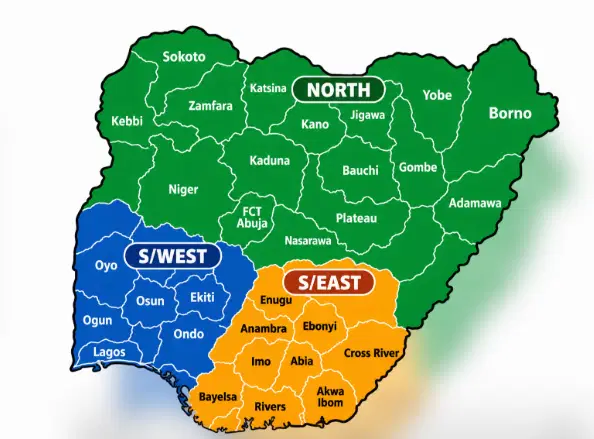
The proposal by the Igbo Leaders of Thought (ILT) to suspend the 2027 general elections until Nigeria is restructured has drawn strong opposition from the Arewa Consultative Forum (ACF), Afenifere and several South-West stakeholders, while other voices have called for inclusive negotiations over the country’s future political structure.
The controversy followed the ILT’s rejection of the communiqué issued at the Abuja restructuring conference of August 20, 2026, which the group accused organisers of producing without adequately reflecting the position of the Igbo delegation.
The ILT is proposing a 10-region federation with regional control of resources and regional police. It also wants the Igbo Region expanded beyond the five South-East states and the restructuring exercise completed before May 2027.
The group further called for the temporary suspension of the 2027 elections so that voting could take place under a new constitutional arrangement.
The proposals have reopened disagreements over regionalism, the future of Nigeria’s 36-state structure, resource control, security administration and the constitutional implications of postponing elections.
In reactions reported by Sunday Vanguard, South-West and northern leaders expressed differing views on restructuring but questioned the ILT’s approach, particularly its demand for an election suspension.
Adejumo: Igbo proposal is unrealistic
Mogaji Gboyega Adejumo, who led the South-West delegation to the Patriots Constitutional Conference in Abuja, described the ILT position as unrealistic, saying Nigeria’s ethnic groups had yet to agree on the nature of the country’s structural problems or how to resolve them.
“What I can say is this, the Igbo are as confused as any. Most of the tribes in Nigeria are in that kind of situation of confusion, of knowing absolutely what next to do,” Adejumo said.
He argued that the difficulties surrounding restructuring reflected long-standing problems with Nigeria’s political foundation.
He said dissatisfaction with the country’s arrangement extended beyond the Igbo, although he suggested that the North might be more comfortable with the existing structure than other regions.
Adejumo traced the restructuring debate to the Action Group government’s initiatives beginning in 1951 and the 1953 London Conference.
“Many attempts have been made but nothing so concrete has come out,” he said.
According to him, the disruption of Nigeria’s earlier political structure created the circumstances that eventually made restructuring a recurring national demand.
South-West and Igbo positions overlap
Adejumo said the proposals presented by the South-West at the Patriots Constitutional Conference were broadly consistent with the region’s long-standing demands and were not fundamentally different from the Igbo position.
“The only thing that is different is that the Igbo seem to not know what exactly is the situation with our problem, where the trouble lies,” he said.
He argued that Nigeria’s constituent groups should negotiate a workable political arrangement rather than approach the federation primarily as a contest over the distribution of benefits.
“Between the Igbo and the Fulani, somehow the idea of coming into a union is not about the spread. It’s about what each other can get. It is not about making sure that everybody has got something but trying to corner whatever is left to themselves,” he said.
Adejumo also recalled the political choices made by the Igbo and Yoruba at different points in Nigeria’s history, including alliances around independence and during the Second Republic.
On the 1966 coup, he cited former military ruler Ibrahim Babangida’s statement that it was not an Igbo coup.
He also revisited a statement attributed to the late Chief Obafemi Awolowo about the implications of the Eastern Region’s secession, arguing that Awolowo had been warning of the consequences for Nigeria’s balance of power rather than promising that the Yoruba would follow the Igbo out of the federation.
According to Adejumo, Nigeria’s major regions are interdependent, making dialogue and compromise necessary.
2014 National Conference remains contentious
Adejumo said the Yoruba had repeatedly advocated restructuring through constitutional processes and political initiatives, including the 1991 process associated with Alao-Aka Bashorun and the 2014 National Conference.
He criticised the failure to implement the 2014 conference recommendations, which he described as a significant opportunity to resolve the country’s constitutional challenges.
“Now, let us now look at the 2014 CONFAB, which was largely a nefarious affair. But at the same time, we had perhaps the best of all that has happened since the 1963 constitution,” he said.
He argued that regionalism should not necessarily mean eliminating states or forcing communities to accept regional authorities against their wishes.
“The Yoruba will always want regionalism, but along with statism,” he said.
Adejumo also questioned the practicality of campaigns for a separate Yoruba nation, arguing that advocates needed to explain how boundaries would be established and negotiations conducted.
He urged the Igbo Leaders of Thought to review their position, develop a realistic proposal and work with other groups.
“So, what the Igbo need to do is go back to the drawing board and come up with something realistic and begin to liaise with other groups,” he said.
Adejumo maintained that a peaceful agreement would be preferable to separation, warning that the experience of countries such as Sudan showed that breaking away did not necessarily guarantee stability.
“So I would rather we choose a dialogue so that we can at least know that we can settle things amicably,” he said.
Afenifere rejects imposed regionalism
Afenifere warned that restructuring Nigeria into regions imposed from above could create new political tensions, particularly in the South-South and North-Central areas, where minority groups might fear domination.
The organisation’s National Publicity Secretary, Justice Faloye, said Afenifere would continue to support the resolutions of the 2014 National Conference until a wider representative sovereign conference decided otherwise.
“Until another wider representative sovereign conference is held, Afenifere stands on the 2014 Confab Resolutions, made up with a wide and balanced delegation, which, after thorough deliberations, agreed on States as Federating Units,” Faloye said.
He cited the disagreement at the Abuja conference, where the Igbo delegation accused Yoruba representatives of supporting the Ijaws and walked out, as an example of the tensions regionalism could generate.
“Nigeria is made up of 371 ethnicities, so how do we allocate them to regions for representative governance?” he asked.
Faloye said the 2014 conference had favoured a voluntary process that would allow states with shared ethnic identities to merge into regions if their people approved. It also proposed allowing communities to vote to join neighbouring states.
He described compulsory regionalism as “internal colonization” and argued that it could undermine rather than advance genuine restructuring.
Afenifere Secretary-General, Chief Ademola Folarin, separately said the organisation was not involved in the Abuja conference and had not abandoned the 2014 resolutions.
Folarin said the conference had adopted 600 resolutions by consensus, including retaining the federal and state structure, potentially creating more states to accommodate minorities and devolving additional powers to states.
He said the creation of regions had been abandoned largely to protect minority interests, while states would retain the right to merge or separate through a constitutional process.
Omololu backs restructuring by consent
The Convener of the Conscience of Yoruba Nation Group, Apagun Kole Omololu, supported the establishment of autonomous regions but insisted that the process must be voluntary and inclusive.
“The South-West position is clear: we support the restructuring of Nigeria into autonomous regions within a voluntary, inclusive and cooperative federal system based on the consent of the people,” he said.
Omololu recalled that minority concerns had prompted the establishment of the Willink Commission in 1957, arguing that restructuring should not create new forms of domination.
He said communities must be assured that their cultures, languages, political rights and economic interests would be protected under any new arrangement.
“If Nigeria is to be restructured into autonomous regions, every constituent community must have confidence that its identity, culture, language, political rights and legitimate economic interests will be protected,” he said.
Omololu urged the ILT to consult the states and communities it wants included in the proposed enlarged Igbo Region and obtain their freely expressed consent.
He said the most important questions concerned who would decide regional boundaries, whether the affected communities agreed with the proposals, whether the regions would be viable and what safeguards would protect minorities.
He called for peaceful dialogue among all groups interested in restructuring, saying different proposals should be examined openly and negotiated.
Adeniran warns against democratic vacuum
Debo Adeniran, National Chairman of the Centre for Anti-Corruption and Open Leadership (CACOL) and President of the Committee for the Defence of Human Rights (CDHR), said the disagreement demonstrated that Nigerians remained divided over the form restructuring should take.
He said the ILT’s rejection of the Abuja communiqué should be viewed as a reminder that constitutional reform required genuine consultation, consensus and the consent of affected communities.
“The rejection by the Igbo Leaders of Thought, ILT, should not simply be dismissed as another ethnic disagreement,” Adeniran said.
He also cautioned against treating restructuring as a competition for territorial advantage, pointing to the questions raised by the proposed 10-region structure and enlarged Igbo Region.
On the proposed suspension of the 2027 elections, Adeniran said any such move would have significant constitutional and democratic consequences.
“A suspension of elections would have profound constitutional and democratic implications. It would therefore require a clearly defined legal framework, broad national agreement, an explicit timetable, institutional safeguards and mechanisms preventing a transitional arrangement from becoming indefinite,” he said.
He warned that Nigeria must not create a new governance crisis while attempting to address the existing one.
“Nigeria must not replace one governance problem with another. Restructuring should deepen democracy, not create a democratic vacuum.”
Adeniran said the national debate had moved beyond whether restructuring was necessary to the more difficult question of what the new arrangement should entail.
Ekujumi says ILT speaks only for itself
Public analyst and human rights advocate Comrade Nelson Ekujimi dismissed the ILT’s position, describing the group’s statement as an exercise of its right to free speech rather than a position that represented the wider Igbo population.
He accused the group of grandstanding as the elections approached.
“They are speaking for no one, but themselves and their self-interest, Nigerians are not amused by this theatrics from this group,” Ekujimi said.
Yoruba Council Worldwide calls for negotiations
President of the Yoruba Council Worldwide, His Royal Majesty, Aare Sooko Oladotun Hassan, argued that Nigeria had reached a point where restructuring could no longer be postponed for political convenience.
He said the country needed a fairer federal arrangement that would give every region a greater sense of ownership and responsibility.
Hassan said the ILT’s rejection of the Abuja communiqué deserved national attention, particularly because the group alleged that the Igbo delegation’s position had been disregarded.
He urged all parties to return to the negotiating table and address the grievances through an inclusive process.
According to Hassan, the proposed 10-region structure, regional resource control and regional police should be subjected to open and comprehensive national debate.
“The regions must have the authority to develop their economies, harness their natural resources and determine their development priorities without excessive dependence on the Federal Government,” he said.
He maintained that an over-centralised system would struggle to deliver genuine federalism.
Hassan also supported decentralised policing, arguing that local communities were better placed to understand their security challenges. However, he insisted that regional police must operate under constitutional safeguards, accountability measures and respect for human rights.
He warned that regional policing must not become a tool for political intimidation or ethnic persecution.
Hassan opposes using elections as bargaining tool
On the proposed suspension of the 2027 elections, Hassan said restructuring was urgent but should not be used to justify an unnecessary suspension of democracy.
“Restructuring is urgent, but democracy must not be unnecessarily suspended or used as a bargaining instrument,” he said.
He argued that elections and restructuring should be pursued as complementary national priorities rather than treated as mutually exclusive.
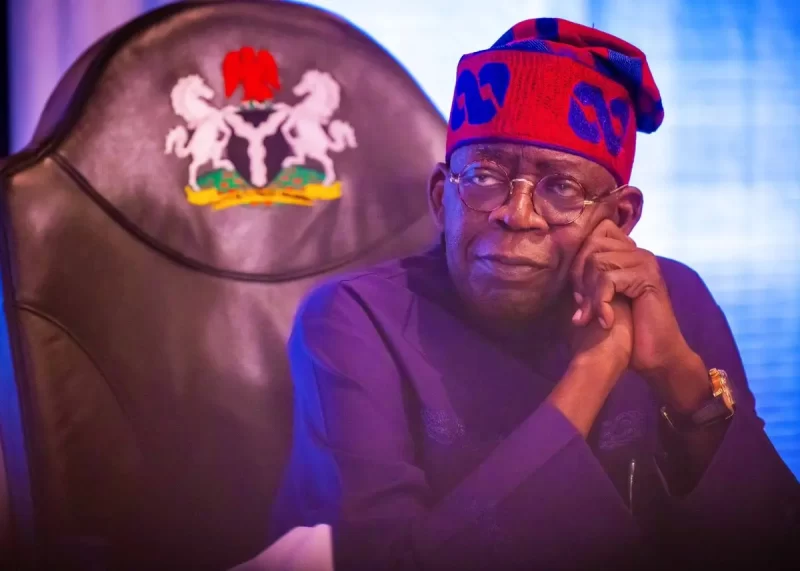
Hassan called on President Bola Tinubu, the National Assembly, political parties, traditional rulers and socio-cultural organisations to establish an inclusive platform for negotiating constitutional reforms.
He said the ultimate goal should be a federal arrangement that allowed regions to develop, brought security closer to the people and ensured that no nationality felt permanently disadvantaged.
ACF: Election postponement is unconstitutional
The Arewa Consultative Forum rejected the ILT’s call to suspend the 2027 elections, saying any postponement must be consistent with the Constitution.
ACF spokesperson Professor Tukur Baba said the circumstances under which elections could be delayed were clearly defined in the Constitution.
“The call for the postponement of the election is not in the constitution. The circumstances under which elections can be postponed, delayed or whatever is clearly stated in the constitution in the case of war or civil unrest and so on and so forth,” Baba said.
“The constitution clearly states what and how it should be done. The call is therefore not constitutional. We cannot postpone elections.”
Baba argued that the restructuring question was separate from the election timetable, noting that the National Assembly had already completed a stage of its constitutional review process and sent its position to state assemblies.
He said none of the 36 state assemblies had, to his knowledge, publicly announced a position on the proposed changes.
Baba disclosed that the ACF had submitted recommendations to the National Assembly during the constitutional review, including a proposal to remove the constitutional preamble describing Nigeria as an indivisible nation.
He said the forum had also recommended that the Constitution should, as far as possible, allow any constituent part of the federation seeking secession to pursue that option.
However, he said the ACF was yet to establish whether its proposals had been accepted, rejected or amended.
Baba stressed that the ILT was not a constitutional body and therefore had no authority to halt elections or dictate the terms of restructuring.
He said the group had the right to make demands but must consider the interests of other Nigerians and operate within constitutional provisions.
“I think it’s a bit arrogant to just come out of a country with 36 states, with over 400 ethnic groups, with various religious followings, with all the diversity that we have for one group to come and hold a brief and hold the nation back on behalf of everyone else,” he said.
He advised the group to pursue its demands through consultation, negotiation and state assemblies.
“I think the right place to go is to go back to the state assemblies and let’s see the way forward from there,” he said.
OPC condemns call to suspend elections
The Oodua People’s Congress Worldwide also condemned the proposal to suspend the 2027 elections, describing it as selfish and insensitive.
Its Deputy National Secretary, Otunba Babatunde Thompson, questioned the ILT’s rejection of the six geopolitical zones, which he said had become widely accepted as an administrative framework for Nigeria’s 36 states.
Thompson recalled that former Vice-President Alex Ekwueme and other prominent Nigerians had helped develop the six-zone arrangement.
He said the OPC supported restructuring and resource control, with each geopolitical region managing its resources while contributing to the Federal Government.
He added that the position reflected the longstanding demands of the organisation’s founder, Dr Frederick Fasehun.
However, Thompson strongly rejected the ILT’s proposal to suspend the elections.
“Moreover, this so-called Igbo Leaders of Thought coming up with the vulgar idea of suspending the 2027 elections amounts to complete selfishness and insensitivity.
“We say no in totality to their backward and retrogressive suggestion,” he said.
Thompson also called for a Sovereign National Conference to produce a people-driven constitution, arguing that the 1999 Constitution was handed down by the military.
He said the country needed a constitutional arrangement that would allow its constituent units to develop at their own pace, according to their aspirations and resources, without oppression.
Africans Angle News

















You must be logged in to post a comment Login