
Opinion
FoRB: Airports and Discrimination Against Minority Faith and Belief Groups in Nigeria -By Leo Igwe
Millions of Nigerians profess faiths and beliefs other than Christianity and Islam. Why is there no provision for them at airports? Why are there no religious or philosophical facilities at airports where these people can pray or reflect in ways consistent with their faiths or beliefs? How can the Nigerian government justify that it treats equally Nigerians of all faiths and none?

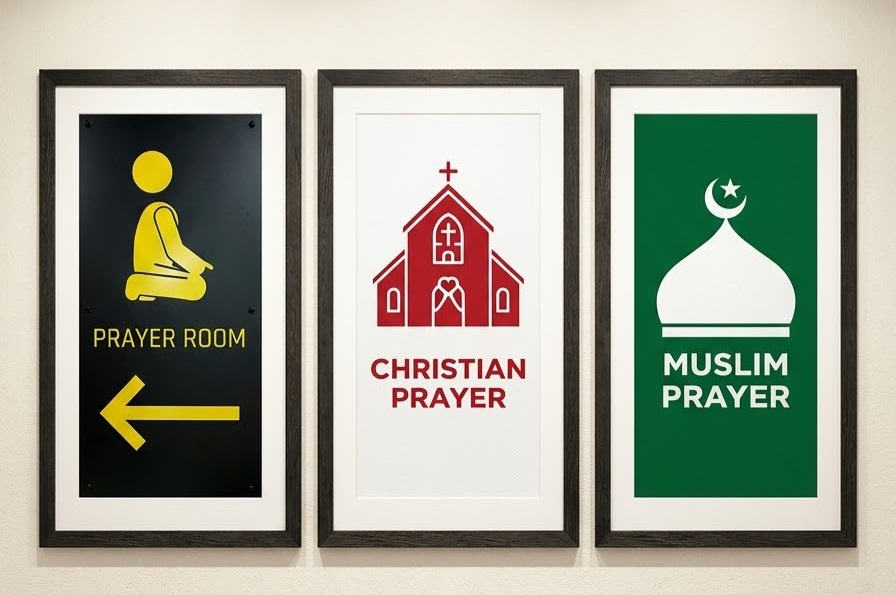
Nigeria must end official discrimination against minority faith and belief groups. The entrenched exclusion of citizens who are neither Christians nor muslims is evident at the airports. Existing statistics say that Nigeria is predominantly Christian and Muslim, with millions of the population professing, believing, or praying the Christian or Islamic way. But it is well known that many of those counted and identified as Christians and muslims in Nigeria do not profess these faiths. Millions of individuals are designated as Christians or Muslims because of where they were born or where they live. Millions people regarded as Christians or Muslims do not believe or profess these faiths. Many Nigerians pay lip service to these religions. Many Christian and muslim Nigerians cannot identify otherwise because they fear they would be persecuted, prosecuted, jailed, or murdered if they come out as non believers. The Nigerian state is constitutionally secular and prohibits a state religion at federal and state levels. Nigeria’s secularity is only on paper, not in practice, because Nigeria is a de facto Chrislamic state. In fact Christianity and Islam are state religions.
In addition, the constitution recognizes citizens’ right to Freedom of Religion or Belief(FoRB), including the right to change religion or profess no religion. However, this right is not protected. Blasphemy and apostasy laws exist and are enforced in various states. FoRB is largely misunderstood, abused, or used to favour or further Christianity and Islam. The government privileges these two main religions. It uses state funds to sponsor and subsize their activities including pilgrimages.
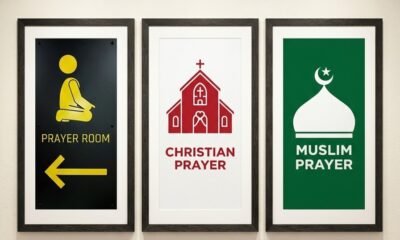
As shown at airports and in other aspects of national life, the Nigerian government is biased towards Christianity and Islam, and officially discriminates against minority faith and belief groups. Nigerian government compels citizens to profess Islam or Christianity and to pray in the Christian or Islamic way. Otherwise, how does one explain the situation at the airports where the government provides prayer rooms for only muslims and Christians? Why are there no prayer, meditation, or reflection facilities for Nigerians who are neither Christians nor muslims? Millions of Nigerians do not pray the Christian or Islamic way. There are Nigerians who are traditionalists, or atheists and humanists who pray or reflect in other ways.
Millions of Nigerians profess faiths and beliefs other than Christianity and Islam. Why is there no provision for them at airports? Why are there no religious or philosophical facilities at airports where these people can pray or reflect in ways consistent with their faiths or beliefs? How can the Nigerian government justify that it treats equally Nigerians of all faiths and none?
Nigerian government can make these prayer rooms inclusive. They could call them meditation rooms as it is the case at some airports overseas. This option allows people of various faiths and beliefs to pray or reflect together. Again, this could help maximize space; after all, airports are transit points. The government could consider including a third room, an ‘Other Room’ for persons of other faiths and none.
Nigeria has faced intense criticism for violating the FoRB of its citizens, and the government has always denied it, reiterating its commitment to protecting the freedom of religion or belief. But this situation at the airport belies the commitment.
Airports should showcase Nigeria’s best in respecting freedom of religion or belief. Because people from other parts of the world, including those who are neither Christians nor Muslims, use the airports and should be able to use ‘prayer’ facilities at these places despite their faith or belief.
So the government must rise to its constitutional duty and obligation to its citizens. It should demonstrate its commitment to protecting the FoRB of all Nigerians at airports and beyond.
Leo Igwe, a Nigerian Humanist, sent in this piece from Murtala Muhammad Airport in Lagos

















You must be logged in to post a comment Login