Economy
Is Nigeria Borrowing to Survive or to Build? -By Blaise Udunze
Deficits are not destiny. But when they become routine, they stop being temporary tools, unexamined, and politically convenient; they shape the destinies of Nigerians. From today, as a sovereign nation, Nigeria must decide whether it is borrowing to survive the present or to secure the future. The choice Nigeria makes about how it uses deficit financing will determine whether it becomes a growth ladder or locks it into a worsening cycle of debt that becomes harder and more expensive to escape over time, while it grows costlier each year.

Nigeria is no longer flirting with deficit financing. As a country, it is living with it, not occasionally but structurally, routinely, almost comfortably. It became evident when the National Assembly rose to defend the proposed N25.91 trillion deficit in the N58.47 trillion 2026 budget that it did more than justify another year of borrowing. It normalised it. Again, the message had been clearly defined that deficit financing is no longer a temporary response to shocks; it is now a structural feature of Nigeria’s fiscal architecture.
This was confirmed by the Senate, which, led by Senator Solomon Adeola, who defended continued borrowing as inevitable. In agreement with his defence, Senator Olamilekan Adeola argued that borrowing is inevitable in the face of unpredictable revenue and vast development needs. He is not wrong. No modern economy runs without deficits. The United States borrows. European economies borrow. Even fast-growing Asian Economies have used deficits strategically.
The real issue, as Adeola himself admitted, is how Nigeria borrows and what it borrows for.
That is where the debate becomes uncomfortable. Looking at it objectively, in a plain calculation, almost half of what the federal government hopes to earn will go straight to creditors. The chronic issue is that Nigeria’s projected revenue for 2026 stands at N33.19 trillion, while expenditure is estimated at N58.47 trillion, leaving a yawning gap of over N25 trillion. Debt service alone is expected to gulp nearly N15.9 trillion. In other words, before roads are built, before hospitals are equipped, before schools are renovated, almost half of the projected revenue is already committed to servicing yesterday’s loans.
Of paramount concern is that the action being discussed does not serve as a policy that supports the economy; it is a counter-cyclical stimulus during downtime to stabilise growth. It is a structural dependence. This is to say that at the core of Nigeria’s deficit dilemma lies revenue weakness. Despite the much-touted diversification of the economy, the country remains heavily dependent on crude oil for foreign exchange and for a significant share of public revenue. The fearful part is that when oil prices fall, when production drops due to theft or quotas, or when global demand weakens, government revenue collapses. Expenditure, however, does not fall with oil prices. Salaries must be paid. Pensions must be honoured. Political offices must function. Debt must be serviced. Borrowing fills the gap.
Beyond oil, the non-oil tax base remains shallow. Nigeria’s tax-to-GDP ratio lags far behind peer economies. One of the challenges is that, as a vast informal sector, weak tax administration, compliance gaps, waivers, and leakages mean that even in years of non-oil growth, revenue does not rise proportionately. One truth the country must yield to is the advice of Minister of Finance, Wale Edun, who rightly warned that Nigeria must reduce its dependence on debt and build a stronger domestic revenue base. This stems from his understanding that in a world of high global interest rates and retreating multilateral support, borrowing is becoming more expensive and less forgiving. Yet the borrowing continues.
One troubling fact from the disclosure of the Debt Management Office, is not that Nigeria’s public debt stood at over N152 trillion by mid-2025 but it is projected to climb further. What makes this figure more of a trouble is not just its size, but its purpose. Historically, Nigeria once escaped the weight of unsustainable debt through the Paris Club exit negotiated under President Olusegun Obasanjo. Two decades later, the country finds itself in a far more complex web of domestic and external obligations. The question is simple in the sense of what has the borrowing built?
If deficits finance productive infrastructure that expands the economy’s capacity, power plants that reduce production costs, rail lines that ease logistics, digital infrastructure that boosts exports, then borrowing can be justified. Future growth will expand the tax base and service the debt. Hence, it will be agreed that deficits, in that scenario, become bridges to prosperity.
But if deficits finance recurrent expenditure, salaries, overheads, fuel subsidies, political patronage, interest payments, then borrowing becomes a treadmill. The country runs harder each year, yet moves nowhere.
Nigeria’s fiscal pattern increasingly resembles the latter. Recurrent expenditure consumes a significant portion of revenue. In some years, debt service has exceeded the federal government’s retained revenue. This forces further borrowing simply to keep government machinery running. Borrowing to service old debt is the classic signature of a fiscal trap.
Meanwhile, the crowding-out effect is becoming pronounced. With the government aggressively issuing domestic debt instruments, over 70 percent of risk assets in the financial system are reportedly tied to government securities. Banks prefer lending to the government at high yields rather than financing private businesses. Lending rates, influenced by a high monetary policy rate, hover between 35 and 40 percent. For manufacturers, farmers, and tech entrepreneurs, such rates are prohibitive.
In effect, the state is absorbing liquidity that could otherwise power private-sector growth. The engine of sustainable revenue, the productive economy, is being starved.
Supporters of the current approach argue that deficits are necessary to close Nigeria’s massive infrastructure gap. Contrary to their argument, the roads are dilapidated. Power supply remains unreliable. Security spending has ballooned in response to persistent threats. With a fast-growing population, social spending pressures are immense. In such a context, refusing to borrow would mean freezing development.
That argument carries weight. Nigeria cannot austerity its way to prosperity. While slashing expenditure indiscriminately could worsen unemployment and deepen poverty.
However, borrowing without institutional reform is a lot more dangerous. Economist Adi Bongo has warned that asset sales, privatisations, and new borrowing will fail without strong oversight and accountability. Nigeria’s history of public-private partnerships and sectoral reforms, particularly in the power sector, offers cautionary tales. Assets sold to politically connected entities without capacity did not deliver efficiency gains. Institutions were created but not empowered. Data was published but not interrogated. Borrowing into weak institutions is like pouring water into a leaking basket.
There is also the issue of political budgeting. Election cycles often bring expanded spending and proliferating projects. Revenue does not necessarily rise in tandem. Structural deficits become politically convenient. Once normalised, they are difficult to reverse.
The Senate President, Godswill Akpabio, who recently framed the 2026 budget as a “moral document,” said it must therefore be judged not by its size, but by its outcomes. The question that should follow such a comment is, will the N26 trillion capital allocation translate into completed roads, functional health centres, and reliable electricity? Or will delayed releases, procurement bottlenecks, and weak oversight roll projects into yet another fiscal year?
Nigeria’s history of overlapping budgets and low capital implementation rates raises legitimate skepticism. Economists have cautioned that attempting to execute multiple large budgets concurrently strains administrative capacity and encourages rushed, low-value spending. When execution falters, the borrowed funds do not generate returns. Yet the interest meter keeps running.
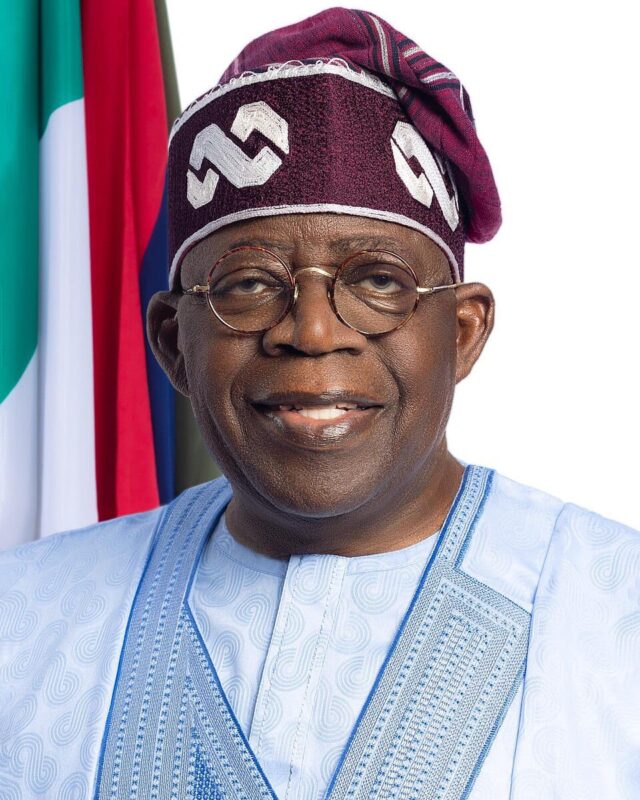
Subsidy reform illustrates both the promise and the risk. The removal of fuel subsidy under President Bola Tinubu was described as a turning point, which was commended by an international organisation. In theory, eliminating subsidies should free fiscal space for productive investment like infrastructure, health, or education, as expected. But transparency in how those savings are redeployed remains crucial, especially in how the subsidy removal is being used. The truth remains that trust erodes if citizens do not see tangible improvements in infrastructure and services to showcase how the money realized from subsidies is being expended. Compliance weakens because once trust and fairness decline, people will easily default or be less willing to obey rules (like paying taxes or following regulations). Revenue mobilisation becomes harder. Trust is the invisible currency of fiscal reform.
Exchange rate pressures add another layer of complexity. When the naira weakens, external debt servicing costs rise in local currency terms. Import-related spending increases. Even if reserves appear strong, they are not freely spendable funds; they are buffers against external shocks. Mistaking reserves for budgetary liquidity is a dangerous illusion.
The global context is also less forgiving. Developing countries now pay far more in debt service than they receive in aid. Capital flows are volatile. In such an environment, fiscal discipline is not optional; it is survival.
So, are Nigeria’s deficits building future revenue capacity or merely financing present consumption?
The evidence is mixed, but the tilt is worrying. There are genuine reform efforts underway, such as tax administration overhaul, digitised revenue monitoring, electricity sector reforms, and efforts to attract capital importation. There are signs of macroeconomic stabilization that are moderating inflation, improving reserves, and modest GDP growth. These are not trivial.
Yet the scale and persistence of deficits, the heavy burden of debt service, the crowding-out of private credit, and the lack of transparency around execution suggest that borrowing is increasingly funding continuity rather than transformation or driving meaningful structural change.
Deficit financing becomes a growth strategy only when three conditions are met, such as when borrowed funds are channeled into productivity-enhancing investments (such as infrastructure, energy, manufacturing, education, and these things must expand the economy’s capacity to produce); institutions ensure transparency and value for money; and economic growth outpaces debt accumulation, so the country can comfortably service and repay what it has borrowed. When those conditions weaken, deficits mutate into a fiscal trap.
Nigeria stands at that junction. The Senate is right that borrowing in itself is not evil. But normalising structural deficits without tightening or simultaneously enforcing expenditure discipline, expanding revenue beyond oil, strengthening institutions, and reducing the cost of governance, then the country is taking a significant risk.
A nation can borrow to build bridges. Or it can borrow to pay salaries. The former compounds growth. The latter compounds debt.
If Nigeria’s deficits do not translate into visible infrastructure, expanded industrial capacity, thriving private enterprise, and rising tax revenues, history will record this era not as bold reform, but as deferred reckoning.
Deficits are not destiny. But when they become routine, they stop being temporary tools, unexamined, and politically convenient; they shape the destinies of Nigerians. From today, as a sovereign nation, Nigeria must decide whether it is borrowing to survive the present or to secure the future. The choice Nigeria makes about how it uses deficit financing will determine whether it becomes a growth ladder or locks it into a worsening cycle of debt that becomes harder and more expensive to escape over time, while it grows costlier each year.
Blaise, a journalist and PR professional, writes from Lagos and can be reached via: blaise.udunze@gmail.com