Football
When the Beautiful Game Turns Ugly: The Price Athletes Pay for Human Error -By Damian Ugwu
Athletes are not machines programmed for perfection. They are human beings who have devoted their lives to entertaining us, representing us, carrying our dreams on their shoulders. They train in obscurity, endure injuries, and sacrifice time with loved ones, all for moments of glory that we share vicariously. And when they falter, as all humans inevitably do, we owe them something more than hatred.

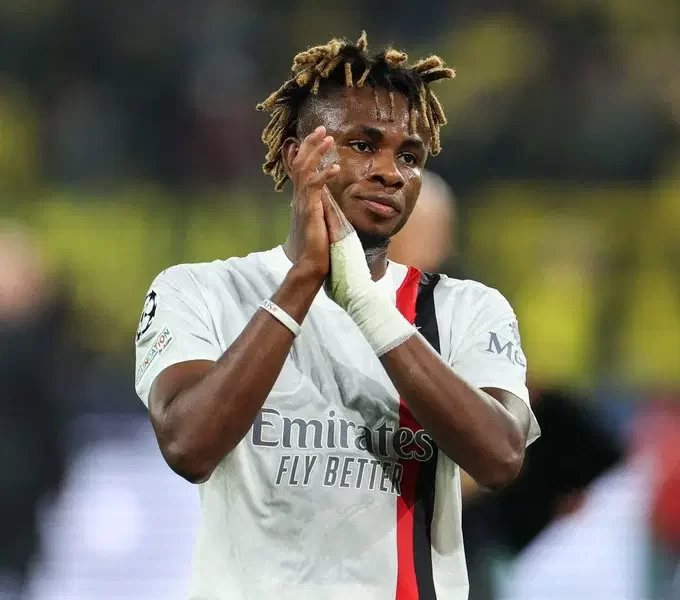
The pitch is unforgiving. One moment of misfortune, one split-second miscalculation, and a player’s life can change forever, not just on the field but off it as well.
In the wake of Samuel Chukwueze’s missed penalty during Nigeria’s AFCON semi-final against Morocco, the familiar chorus of vitriol has erupted once more, death threats and curses upon his family. A torrent of abuse that reduces a human being to a single moment of failure. But Chukwueze is merely the latest name in a tragic lineage of players who have learned that in football, the margin between hero and villain is razor-thin, and the consequences of crossing that line can be devastating.
The story of Godwin Odiye haunts Nigerian football like a ghost that refuses to rest. On November 12, 1977, in the 75th minute of a World Cup qualifier against Tunisia, Odiye’s attempted clearance became an own goal that ended Nigeria’s dreams of reaching their first World Cup. What followed wasn’t just disappointment. It was persecution. Fans cursed his family and ancestors. The next day, sitting anonymously on a bus, he listened to a stranger beside him rain curses upon “that Odiye” without knowing he was condemning the man sitting next to him. Even decades later, living in the United States, Nigerians he encountered told him they would have physically assaulted him for that error.
The cruelty cut deeper than public scorn. His own teammates abandoned him on the pitch, and only goalkeeper Emmanuel Okala offered comfort, asking why the strikers hadn’t scored earlier. Despite helping Nigeria win the 1980 Africa Cup of Nations three years later, Odiye never recovered his love for the game. The guilt and mistreatment killed his passion, and he eventually left Nigeria entirely, seeking refuge in education and teaching abroad.
This pattern of savagery transcends borders and generations. David Beckham’s red card against Argentina in the 1998 World Cup turned him into public enemy number one in England. Effigies of him were burned. The tabloids declared him a national disgrace. Yet Beckham’s story had a different ending. He rebuilt his reputation and became England’s most important player of his generation, a testament to resilience that few possess.
But not all stories allow for redemption. Andrés Escobar, the Colombian defender who scored his own goal during the 1994 World Cup in the United States, paid the ultimate price. Months after returning home, he was shot dead outside a nightclub in Medellín, reportedly while his killer shouted, “Goal!” with each bullet fired. His murder stands as the darkest reminder of how dangerously football fandom can metastasize into something monstrous.
What drives this bloodlust? Football represents more than sport in many nations. It is identity, pride, and hope wrapped into ninety minutes of play. When that hope is dashed, some fans don’t see a fellow human who made a mistake under immense pressure; they see a traitor who has stolen something precious from them. The anonymity of social media has only amplified this phenomenon, allowing people to unleash their worst impulses without accountability.
But we must ask ourselves: What have we become when we threaten to kill a man for missing a penalty? When do we make a player’s family suffer for an own goal? When we refuse to forgive an error made in a fraction of a second, despite years of dedication and sacrifice?
Athletes are not machines programmed for perfection. They are human beings who have devoted their lives to entertaining us, representing us, carrying our dreams on their shoulders. They train in obscurity, endure injuries, and sacrifice time with loved ones, all for moments of glory that we share vicariously. And when they falter, as all humans inevitably do, we owe them something more than hatred.
Godwin Odiye spent the rest of his life in exile, haunted by a single header. Samuel Chukwueze now faces similar demons. How many more players must we break before we remember that football is, ultimately, just a game? That the people playing it deserve our support, especially in their darkest moments, not our cruelty?
The beautiful game is only beautiful when we remember the humanity of those who play it. Otherwise, we’re just spectators at a gladiatorial arena, thirsting for blood and calling it passion. We can do better. We must do better.
Because the next time a player makes a costly mistake, they will be looking into the stands, and they should see understanding, not executioners.