Opinion
The Dangerous Trend of Court Judgements and Different Interpretations By Lawyers and Politicians -By Tochukwu Jimo Obi
Nigeria’s democracy can only thrive when the judiciary remains respected, trusted and properly understood by the public. Court judgements should bring clarity and stability, not confusion and political propaganda. If urgent steps are not taken to curb the dangerous trend of conflicting interpretations of court rulings, the nation risks further erosion of public confidence in both the judiciary and the democratic process itself.

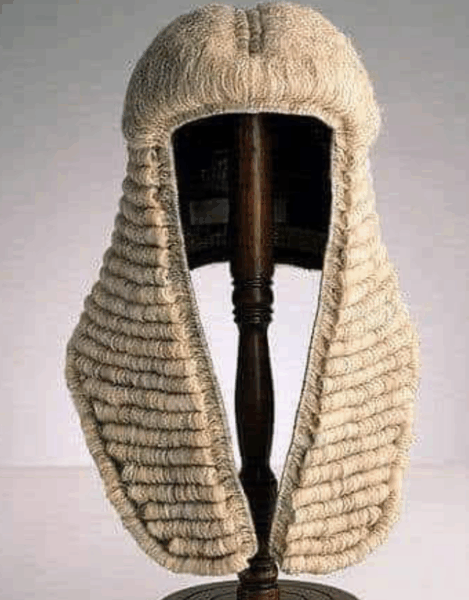
Nigeria’s democracy is increasingly witnessing a disturbing trend where court judgements, especially on political matters, are subjected to conflicting interpretations by lawyers, politicians and even journalists. This development is gradually creating confusion within the polity and weakening public confidence in the judiciary. Instead of court decisions bringing finality to disputes, they now often generate fresh controversies because different parties interpret the same judgement to suit their political interests.
In the last few years, several courts across the country have delivered landmark judgements and rulings on political disputes involving political parties, elections and leadership tussles. Unfortunately, rather than allowing the judiciary to remain the final arbiter, interested parties have turned court pronouncements into subjects of endless debate. Political actors now rush to television stations and social media platforms to present interpretations that favour their camps, while opposing sides equally present contrary meanings to the same judgement.
Lawyers, who ordinarily should guide the public with professionalism and clarity, are also becoming active participants in these conflicting narratives. Senior lawyers often appear on different media platforms giving opposing explanations on the same judgement. This has left ordinary Nigerians confused as to what the courts actually decided. While legal arguments and differing opinions are part of democracy, the current situation has become excessive and dangerous because it fuels political tension and uncertainty.
The media is equally contributing to the confusion. In the race for breaking news and political relevance, some journalists publish headlines and analyses that sometimes misrepresent the actual decisions of the courts. In highly sensitive political matters, inaccurate or selective reporting of court rulings can inflame passions and deepen divisions among supporters of political parties. The consequences of such misinformation can be far-reaching in a fragile democracy like Nigeria’s.
The latest example is the Supreme Court judgement on matters concerning the Peoples Democratic Party (PDP), particularly issues surrounding the suspension of some key members of the party. Since the judgement was delivered, different interpretations have emerged from lawyers, politicians and party loyalists. While some insist the apex court validated certain actions within the party, others maintain that the judgement said no such thing. The result is that Nigerians are left wondering what exactly the Supreme Court decided.
A major factor responsible for this confusion is the delay in the release of Certified True Copies (CTC) of court judgements. In many cases, days or even weeks pass before the official documents are made available to parties and the public. Within that vacuum, politicians and lawyers exploit snippets of oral pronouncements made in court to advance personal or political agendas. This situation creates unnecessary controversies and encourages dangerous speculation.
The timely release of Certified True Copies of judgements would significantly reduce these misunderstandings and manipulations. Once the complete judgement is available, legal experts, journalists and the public can properly study the reasoning of the court instead of relying on partial accounts or politically motivated interpretations. It would also strengthen transparency and reinforce confidence in the judicial process.
The Chief Justice of Nigeria (CJN) therefore has an important role to play in addressing this growing challenge. As a matter of urgency, the CJN should direct judges and court registrars across the country to ensure that Certified True Copies of judgements and rulings are released immediately or within a very short period after delivery. Modern technology has made document processing faster and easier, making delays less justifiable in today’s digital age.
Nigeria’s democracy can only thrive when the judiciary remains respected, trusted and properly understood by the public. Court judgements should bring clarity and stability, not confusion and political propaganda. If urgent steps are not taken to curb the dangerous trend of conflicting interpretations of court rulings, the nation risks further erosion of public confidence in both the judiciary and the democratic process itself.
Tochukwu Jimo Obi writes from Obosi in Anambra state.