Forgotten Dairies
The Pertamina Corruption Scandal Exposes Indonesia’s Crisis of Governance and Accountability -By Fransiscus Nanga Roka
Beyond arrests and headlines, real accountability requires more. It calls for radical transparency in procurement systems, enhanced parliamentary oversight; independent forensic auditing; protection of whistleblowers as well as public disclosures duty and stronger judicial independence along with institutional safeguards against political meddling to ensure linchpins of strategic enterprises.

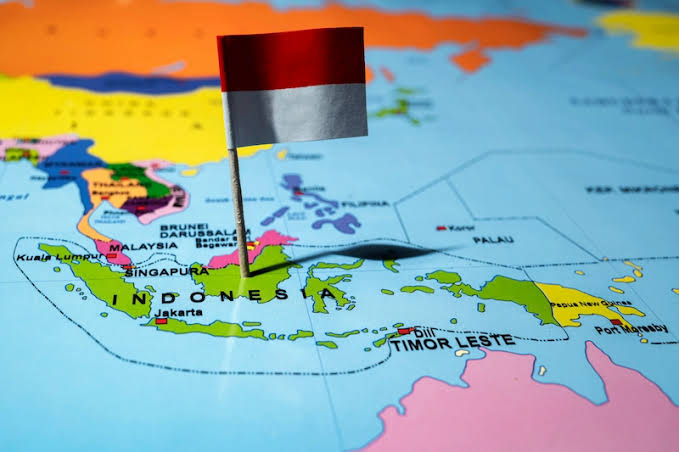
Pertamina corruption scandal is not just a crime case. It tells the story of an unholy political cocktail with closely overlapping quarters at play in one Southeast Asia’s largest economic circles where clout may hold far more meaning than democratic norms when it comes to intensifying impunity, ineffective institutional oversight and state dominance.
This is larger than corruption that unfolds. It is a test of governance fitness for the Indonesian state itself.
Pertamina has been at a strategic center of the architecture both Indonesia’s economy, and its politics for decades. Energy is more than just fuel and markets; it is about sovereignty, public welfare, credit for industry survival or government legitimacy. But corruption, once it infiltrates such an institution, does not stop at monetary loss. It erodes public trust, distorts democratic accountability and weakens regulatory integrity while turning state power into an engine of elite capture.
Internationally, this is why the Pertamina scandal concerns us. It also shows that corruption inside some key state owned companies can turn from isolated crimes into a systemic governance breakdown.
The most troubling aspect of the scandal is not just the alleged size of financial wrongdoing. What is more alarming, however, is the ingrained institutional nature which apparently enabled such practices to persist in a most strategic national industry. Such widespread corruption does not grow in a vacuum. It needs networks of tolerance, looseness in supervision structures, thin accountability systems, political immunity and opacity in regulation and silence by bureaucracy.
In other words, systemic corruption is rarely happenstance. This is typically an indication of mal institution adaptation to impunity. The Pertamina case also reflects an omnipresent paradox in many developing democracies: Anti corruption rhetoric is strongly promoted by the states at all levels, alongside extreme political-economic concentration and over-prescribed susceptibility of governance ecosystems around corruption. State owned enterprises are portrayed as national development and sovereignty tools. However, in the absence of robust transparency, independent auditing, judicial independence and mechanisms for public accountability these labs could become dark centres of financial and political power.
This is not exclusive to the Indonesia. Similar patterns have emerged globally from Petrobras in Brazil to 1MDB in Malaysia. To this day the lesson is still unchanged: executed strategically, if state corporations function with vast economic weight but limited democratic accountability, corruption no longer remains episodic. It becomes structural.
Yet structural corruption, is infinitely more dangerous than a little handsomely lined pocket. Because it reshapes institutions themselves.
It is a scandal that also highlights the fragility of accountability mechanisms in politically sensitive sectors, and this one is probably among them centred around Pertamina. When investigations touch upon elite interests, national economic issues or deep-seated patronage networks anti corrupting institutions usually become a target for strong pressures. Public confidence then rests not only on whether prosecutions happen, but also to what extent accountability reaches beyond symbolic defendants and targets the structural systems facilitating corruption. This distinction is crucial.
Without systemic reform, anti corruption risks becoming political theater through selective prosecution rather than decisive institutional transformation.
Just as serious are the international ramifications. Governance quality ground linking global investors, international markets and multilateral institutions moving up the economic credibility ladder. Wider corruption at large state-owned enterprises do raise systematic issues related to transparency, procurement integrity, fiscal governance and furthermore energy security (interconnectedness with Russia is high) & regulatory independence. Failures in domestic governance can no longer be avoided when the world economy has become increasingly interdependent.
But its deep consequences are social.
All the big corruption scandals of strategic public resource become in a way with harm to citizen. Money is not virtual concern over funds lost through corruption. They embody the scars of broken health systems, crumbling infrastructure, energy justice deficits and vulnerability to climate crisis impacts as well as increasing levels of public distrust in government delivery forms and shrinking state capacity for social justice. Energy corruption can also aggravate inequality by distorting subsidies, pricing structures and national development priorities.
Twice have the public pay; once through pilfered resources, second by diminished institutions. For this reason we must not regard corruption merely as an economic crime. Often, it morphs into a matter of human rights.
A state that cannot safeguard public goods from predatory powers has little chance of delivering economic justice, equality before the law and democratic legitimacy. Corruption that becomes entrenched in key institutions leads citizens to lose faith not only in political leaders, but also a belief any semblance of fairness is possible.
That is the real danger. You are not only bled of money but institutional cynicism.
Until today, Indonesia still posing itself with a key perception question; Is the pertamina scandal to become an anti corruption series or this issue will finally brings real structure reform?
Beyond arrests and headlines, real accountability requires more. It calls for radical transparency in procurement systems, enhanced parliamentary oversight; independent forensic auditing; protection of whistleblowers as well as public disclosures duty and stronger judicial independence along with institutional safeguards against political meddling to ensure linchpins of strategic enterprises.
Crucially, it means facing an uncomfortable political fact: Corruption doesn’t continue because people are greedy, but rather that many systems reward loyalty over accountability.
So, this is not simply a legal violation, but rather the Pertamina scandal. It is an architecture not just for governance. It reveals that power without commensurate transparency leads to public institutions serving networks not the citizen.
And this is now the universal message from Indonesia’s crisis: A corrupt how to keep capitalism in a golden cage state owned enterprise does not only endanger economic stability.
That endangers the credibility of democracy, legitimation of institutions and ultimately even the moral authority of the state itself.
Because a government incapable of protecting public money from organised or systemic corruption does not simply have a legal issue. It is facing a crisis of governance.
Fransiscus Nanga Roka
Faculty of Law University 17 August 1945 Surabaya Indonesia