
Forgotten Dairies
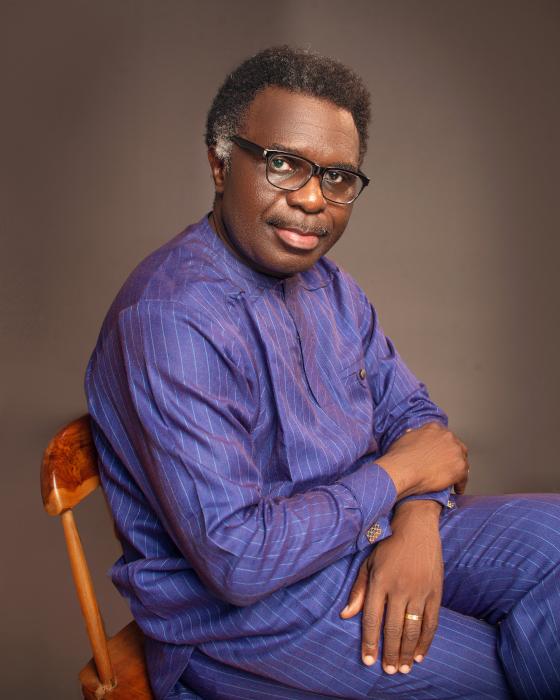
The Poverty of the Ivory Tower: Reclaiming the Lost Glory of Nigeria’s Academia -By Prof. Leonard Karshima Shilgba
In 1976, Nigeria proved it could lead the world in education. Fifty years later, the “professorial cadre” is a shadow of its former self. To save the Nigerian project, we must first save the Nigerian professor. We don’t need a miracle; we need the political will to treat education as the investment it is, rather than the charity it has become.

Fifty years ago today, a professorship at a Nigerian university was a global gold standard. In 1976, at the height of the oil boom, a Nigerian professor earned roughly ₦11,568 annually. While that number sounds modest today, its global weight was staggering: it was worth $18,658 in 1976 USD—the equivalent of over $108,000 (roughly ₦150 million) in today’s purchasing power!
This was an era when our lecture halls were truly international. The “brain drain” was a term applied to other nations; Nigeria was experiencing a “brain gain,” attracting top-tier expatriate academics from Europe and the Americas who were drawn by world-class facilities and a salary that commanded global respect.
Today, despite the recent January 2026 salary hike to about ₦1.36 million a month, the math tells a tragic story of decline. That ₦1.36 million is worth roughly $1,000 USD. In real terms, a Nigerian professor today earns just 11% of what their predecessor earned 50 years ago! We have traded the prestige of the ivory tower for a struggle for survival.
The Architect of Decay: Systemic Neglect
This financial freefall didn’t happen overnight. It is the result of decades of systemic neglect:
- Currency Devaluation: The naira has plummeted from being stronger than the dollar in 1976 to its current state, erasing the global mobility and research capacity of our scholars.
- Budgetary Starvation: Nigeria has consistently failed to meet the UNESCO recommendation of allocating 15-20% of the national budget to education, often hovering below 7%.
- The Proliferation Crisis: Politics has led to the creation of new universities without the funding to maintain existing ones, stretching a thin budget into invisibility.
The Bitter Harvest: Falling Standards
The consequences are no longer theoretical; they are visible in every crumbling lab and overcrowded lecture hall.
- The Brain Drain: Our best minds are no longer staying to build Nigeria; they are fueling the research engines of Canada, the UK, and the US.
- The Pedagogical Gap: When a professor earns less than a mid-level bank manager, the incentive for rigorous research vanishes. Teaching becomes a “side hustle,” and the quality of graduates—the future of our economy—suffers accordingly.
Bridging the Gap: Incentivising the Private Sector
Government funding alone cannot replicate the 1976 boom. We must create a robust framework that makes university investment a smart business move for Nigeria’s private sector:
- R&D Tax Credits & Deductibility: Expand current tax reforms to offer 100% tax deductibility for corporate funds donated to university research and endowments. Recent tax reforms by the Tinubu Government have already begun providing benefits for R&D expenses, which is a positive for the administration, but these must be aggressively promoted to multinational corporations.
- Corporate Social Responsibility (CSR) Re-alignment: Shift the “Expanded Corporate Social Responsibility” (ECSP) focus toward infrastructure development in higher education. Instead of building roundabouts, for instance, companies should be incentivised to build technology parks or specialized labs within universities in exchange for naming rights (named endowments) and priority access to graduates.
- Matching Grant Schemes: The government, through agencies like TETFUND, could establish a “Naira-for-Naira” matching scheme where every ₦1 a company invests in a university research project is matched by the state.
- Intellectual Property (IP) Protection: Strengthening IP laws would give companies the confidence to fund research and commercialize local innovations in sectors like agriculture and renewable energy.
- University Autonomy over Grants: Building on the September 2024 policy exempting third-party research grants from the Treasury Single Account (TSA), public universities can now offer private partners faster, more transparent financial management for their projects.
The Path to Restoration: A Final Blueprint
To restore the glory of 1976, we must move beyond cosmetic salary “top-ups” and embrace structural reform:
- Competitive Indexing: Index salaries against a stable currency basket to ensure global talent is paid global rates (see my latest novel Basket Residue Theory research paper).
- Autonomous Endowment Models: Empower universities to manage public-private partnerships and commercialise research.
- Infrastructure Marshall Plan: A dedicated fund for laboratories and campus housing to re-attract international scholars.
- Performance-Based Research Grants: Decouple income from basic civil service scales by rewarding high-impact publications.
- Strict Accreditation Moratorium: Consolidate resources into centers of excellence rather than creating new “political” universities. Furthermore, government (through the NUC) must introduce a requirement that any proposed new university must be backed by a professionally managed endowment fund (with a seed amount of at least 20 million USD) under registered trustees.
In 1976, Nigeria proved it could lead the world in education. Fifty years later, the “professorial cadre” is a shadow of its former self. To save the Nigerian project, we must first save the Nigerian professor. We don’t need a miracle; we need the political will to treat education as the investment it is, rather than the charity it has become.
Leonard Karshima Shilgba is a mathematics professor with extensive governance and administrative experience in the Nigerian university system.

Continue Reading























You must be logged in to post a comment Login