National Issues
Is Workers’ Day Still Worth Celebrating In Nigeria’s Harsh Economic Reality? -By Isaac Asabor
Perhaps it should no longer be seen as a celebration in the traditional sense. Instead, it should become a day of reflection, protest, and renewed commitment to change. A day not just for speeches, but for honest conversations about the state of labour in Nigeria. A day that challenges both leaders and citizens to rethink what it truly means to value work.

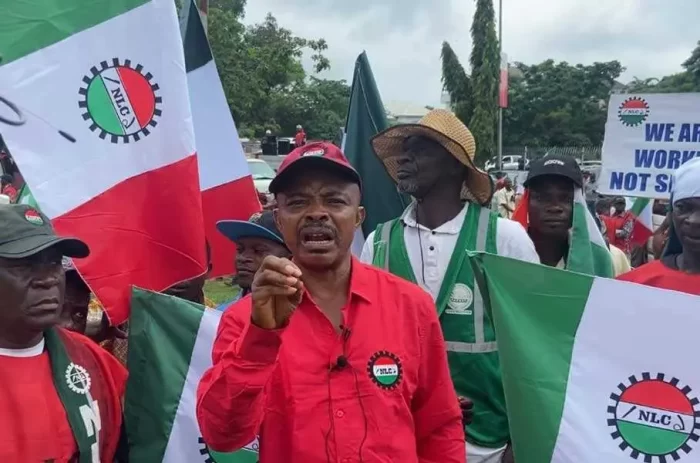
Every year on May 1st, Nigeria joins the rest of the world to commemorate Workers’ Day, a moment traditionally reserved for honoring the dignity of labour, the sacrifices of workers, and the contributions they make to national development. It is supposed to be a day of pride, reflection, and renewed commitment to fair wages and decent working conditions. But in today’s Nigeria, one uncomfortable question hangs in the air like harmattan dust: what exactly are workers celebrating?
For the average Nigerian worker, life has become a daily struggle for survival. The rising cost of living has not just eroded incomes; it has stripped away any illusion of financial stability. Prices of necessities, food, transportation, rent, electricity, have soared to levels that feel almost surreal. Meanwhile, wages have largely remained stagnant, leaving workers trapped in a widening gap between what they earn and what they need to survive.
Take a simple example: food. A few years ago, a modest salary could at least guarantee a family regular meal. Today, even middle-income earners are forced to cut down on essentials. Staple foods like rice, bread, and garri have become luxury items for many households. The irony is glaring workers who produce value daily cannot afford the basic fruits of their own labour.
Transportation is another relentless drain. With fuel prices skyrocketing, commuting to work has become an expensive burden. Many workers now spend a significant portion of their salaries just getting to their workplaces. In some cases, the cost of transportation alone eats so deeply into earnings that one begins to question whether going to work is financially worthwhile at all.
Housing tells a similar story. Rent increases in urban centres have pushed workers to the outskirts of cities, forcing them into longer commutes and additional costs. For those unable to keep up, overcrowded living conditions have become the norm. The dream of decent accommodation, a fundamental expectation of any working individual, has become increasingly unattainable.
Against this backdrop, the symbolism of Workers’ Day begins to feel hollow. The parades, speeches, and public holidays seem disconnected from the lived realities of the people they are meant to celebrate. What does it mean to “honour labour” when that labour cannot guarantee a dignified life?
The uncomfortable truth is that Workers’ Day in Nigeria has gradually shifted from a celebration of progress to a reminder of unmet promises. It exposes the growing disconnect between policy rhetoric and economic reality. Year after year, government officials and labour leaders deliver speeches about workers’ welfare, yet tangible improvements remain elusive for the majority.
This is not to dismiss the historical importance of Workers’ Day. The day emerged from struggles for fair wages, reasonable working hours, and safer working conditions. Those battles were hard-fought and remain relevant. But history alone cannot sustain meaning. A celebration must reflect current realities; otherwise, it risks becoming an empty ritual. So, is Workers’ Day still worth celebrating in Nigeria? The answer is complicated.
On one hand, abandoning the celebration altogether would mean surrendering a symbolic platform that highlights workers’ issues. Workers’ Day still provides an opportunity to amplify grievances, demand reforms, and remind those in power that the workforce is the backbone of the nation. Silence would be far worse.
On the other hand, continuing to celebrate without addressing the underlying problems risks normalizing hardship. It sends a subtle but dangerous message, that workers should endure economic pain while still finding reasons to celebrate. That kind of thinking is not just unrealistic; it is unfair.
Perhaps the real issue is not whether Workers’ Day should be celebrated, but how it should be observed.Instead of colorful parades and ceremonial speeches, the day should evolve into a moment of accountability. It should be a day when hard questions are asked: Why are wages not keeping pace with inflation? Why are workers’ benefits often delayed or denied? Why does productivity not translate into improved living standards?
Labour unions, too, must reflect on their role. While they have historically been the voice of workers, many Nigerians feel that the intensity of advocacy has weakened over time. Workers need more than symbolic representation; they need decisive action that delivers measurable results. Negotiations should not just focus on minimum wage increases but also on broader economic policies that affect workers’ livelihoods.
The government, for its part, must recognize that a struggling workforce is a threat to national stability. When workers cannot afford basic needs, productivity declines, morale weakens, and social tensions rise. Economic policies must prioritize not just growth, but inclusive growth, growth that translates into real improvements in people’s lives.
Private sector employers are not exempt either. While businesses face their own challenges, there must be a balance between profitability and employee welfare. A workforce that is overworked and underpaid cannot sustain long-term productivity.
At a deeper level, the question of celebrating Workers’ Day forces Nigeria to confront a broader issue: the value placed on labour itself. In many developed economies, work is rewarded in a way that allows individuals to live with dignity. In Nigeria, however, work often feels like a constant struggle with little reward. That imbalance undermines not just individual well-being, but also national progress.
There is also a psychological dimension to consider. When people feel that their efforts are not rewarded, it breeds frustration, apathy, and in some cases, desperation. The rise in side hustles, migration aspirations, and even involvement in informal or risky economic activities reflects a workforce searching for alternatives in a system that is failing them.
Yet, despite all these challenges, Nigerian workers continue to show remarkable resilience. Every day, they wake up, go to work, and keep the country running under conditions that would discourage many. That resilience is worth acknowledging. But resilience should not be mistaken for satisfaction. People endure not because they are content, but because they have no choice. So, where does that leave Workers’ Day?
Perhaps it should no longer be seen as a celebration in the traditional sense. Instead, it should become a day of reflection, protest, and renewed commitment to change. A day not just for speeches, but for honest conversations about the state of labour in Nigeria. A day that challenges both leaders and citizens to rethink what it truly means to value work.
Because at its core, the idea of Workers’ Day is simple: those who contribute to society deserve to live with dignity. Until that principle becomes a reality for the average Nigerian worker, any celebration will feel incomplete.
In the end, the question is not whether Workers’ Day is worth celebrating, it is whether Nigeria is doing enough to make it worth celebrating. And right now, the answer is hard to ignore.